
3D Printing Applications in Medical Industry
Comprehensive overview of 3D printing products and applications in healthcare
| Application Category | Specific Products | Applications and Features |
|---|---|---|
| Diagnostics and Surgical Planning | ||
| Anatomical Models | Organ replicas, Bone models, Pathological section models | 3D printed from patient CT/MRI data for preoperative planning, patient communication, and medical education |
| Surgical Guides | Customized surgical navigation instruments | Assist surgeons in precise intraoperative positioning, improving surgical success rates and accuracy |
| Implants and Prosthetics | ||
| Orthopedic Implants | Acetabular cups, Interbody fusion devices, Artificial vertebrae | Porous structure design promotes osseointegration, enhancing biocompatibility and fusion outcomes |
| Craniomaxillofacial Implants | Cranial repair plates, Maxillofacial prosthetics | Repair bone defects caused by trauma or surgery, perfectly matching patient anatomy |
| Dental Restorations | Crowns, Bridges, Dental implants | High-precision customization for perfect fit, improved comfort and longevity |
| Prosthetics and Orthotics | Prosthetic sockets, Orthoses, Hearing aid shells | Patient-specific customization significantly enhances comfort and fit while reducing manufacturing costs |
| Surgical Instruments and Tools | ||
| Surgical Instruments | Surgical forceps, Drill guides, Custom surgical tools | Tailored to specific surgical needs, improving efficiency and precision |
| Tissue Engineering Scaffolds | Biodegradable bone scaffolds, Cartilage scaffolds | Provide support for cell growth in tissue regeneration, promoting healing processes |
| Drug Delivery and In Vitro Diagnostics | ||
| Drug Delivery Devices | Microneedle patches, Customized drug delivery systems | Enable painless transdermal drug administration, improving absorption efficiency and patient compliance |
| Microfluidic Chips | Biochemical detection chips, Cell analysis chips | Used in precision medical diagnostics; their molds can be produced via high-precision 3D printing |
| Bioprinting (Emerging Field) | ||
| Artificial Tissues | Skin, Cartilage, Blood vessels | Primarily for research and experimentation, offering potential for future organ transplantation |
| Organoids | Miniature liver, kidney, and other organ models | Used for drug testing and disease research, reducing reliance on animal testing |
| Molds and Manufacturing Tools | ||
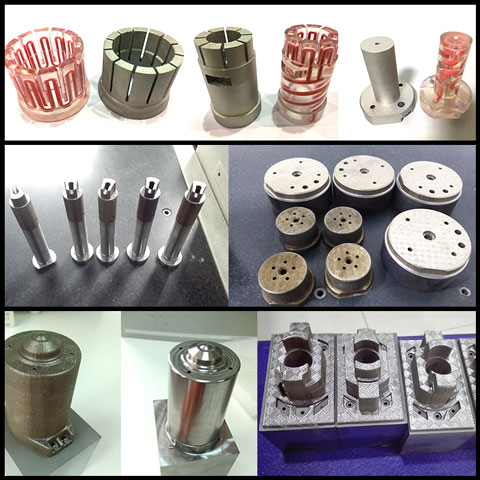
| Conformal Cooling Molds | Injection molds for medical components | Used for producing vial caps, laryngoscope parts, etc.; optimized cooling channels shorten production cycles |
| Silicone Casting Masters | Molds for anatomical model casting | Used to create silicone heart and other anatomical models, improving educational model quality |
The Dental 3D Printing Market: Nearly One – Third of the Entire Additive Manufacturing Market
The current situation, application areas, material development and industry trends of the dental 3D printing market are as follows:
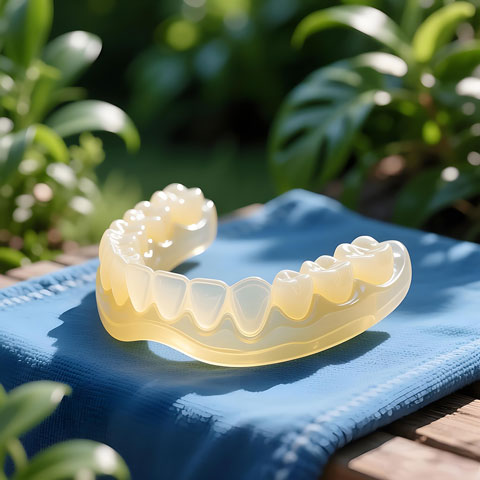
The dental 3D printing market is growing rapidly
Market size: The dental 3D printing market reached $5.2 billion in 2024, accounting for nearly one – third of the entire additive manufacturing market, and is expected to grow to $9.6 billion in 2033.
Driving factors: Population aging, increased awareness of oral health, and advancements in 3D printing technology (hardware/software/materials).
Application areas: Restoration (crowns, bridges, etc. account for the highest proportion, reaching 39.9%), orthodontics, and implantation.
The dental materials market and domestic breakthroughs
Material size: The market size of dental 3D printing materials was $965 million in 2024, and China is expected to dominate this market in the next decade.
Technical challenges: Materials need to meet requirements such as high strength, biocompatibility, and the bonding strength between metal and porcelain. Cobalt – chromium alloy has become the mainstream due to its excellent comprehensive performance.
Domestic production process: Leading domestic enterprises have achieved a breakthrough from import to independent production. The cobalt – chromium alloy powder they produce has obtained the Class III medical device registration certificate from the National Medical Products Administration of China and the US FDA certification.
Advantages of domestic products: The materials have a low coefficient of thermal expansion and high metal – porcelain bonding strength, reducing the risk of porcelain chipping, and have passed long – term market verification.
Product system: Developed various dental – specific materials such as CoCrW and Ti6Al4V to meet differentiated needs.
Industry supervision and quality requirements
Quality risks: In 2025, some enterprises were punished due to material process problems, emphasizing the need to strictly control indicators such as powder sphericity and oxygen content.
Future direction: Leading domestic enterprises will strengthen the closed – loop research and development of “powder – process – performance” to improve material traceability and application adaptability.
Outlook
The dental 3D printing market has great potential. Chinese enterprises are gradually breaking through technical barriers in the material field, promoting the industry to develop towards high – quality and standardization.