
After working with 500+ global manufacturing clients over the past decade, we’ve seen firsthand that injection molding is still the undisputed king for mass-producing plastic parts.
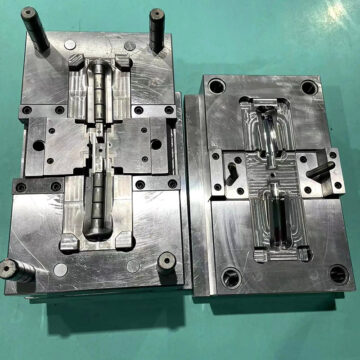
But it comes with two major pain points that drive our customers crazy:
- Eye-watering tooling costs: A single set of traditional metal molds typically costs $3,000 σε $50,000+
- Painfully long lead times: Tooling production takes 5-8 weeks on average
Today, more and more global enterprises are 3D printing injection molds for good reason. It is a total game-changer for rapid prototyping, small batch production, and complex structure optimization, allowing businesses to iterate and test product designs quickly and affordably during the prototype phase.
Γρήγορη δημιουργία πρωτοτύπων: From Weeks to Days
Case Study: Unilever 40% Faster Prototyping for Consumer Packaging
In recent years, Unilever’s Italian division implemented Stratasys multi-material 3D printing systems for injection mold production. Using these 3D printed molds, Unilever can produce small batches of ~50 prototype parts, including bottle caps, closures, and toilet cleaner blocks.
A Unilever R&D specialist explains: “With traditional mold-making, we’d wait weeks just to get prototype parts. That delayed our launch timelines and added extra costs every time we needed a design change. With 3D printing, we can modify mold designs in hours and produce prototypes using final production materials like polypropylene (PP)—that’s 40% faster than before.”
By using Digital ABS material for 3D printed molds, Unilever maintains the high quality of traditional prototypes while ensuring the molds can withstand the high temperatures and pressures of injection molding. Both costs and turnaround times have dropped significantly. Additionally, the company reduced concept-phase lead times for thermoforming molds by ~35%.
This speed advantage cuts your new product development cycle from 2-3 months down to 1-2 weeks, giving you a critical first-mover advantage in competitive global markets.
Case Study: Low-Cost 3D Printed Mold Inserts
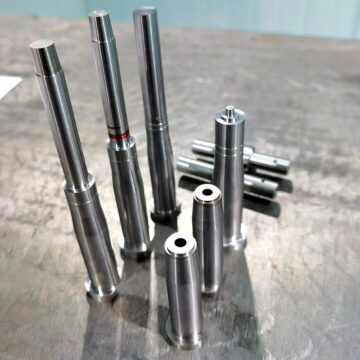
Lightweight desktop 3D printers offer an incredibly affordable validation solution for small and medium-sized businesses (SMBs).
Για παράδειγμα, mainstream desktop 3D printers are used daily in food packaging cap mold development: designers can print 1:1 cap prototypes in hours for visual inspection and functional testing, and even 3D print mold inserts directly using heat-resistant engineering plastics (like PC and ABS) for small-batch injection runs of tens to hundreds of parts.
Compared to hard tooling that costs thousands of dollars, this method only incurs material costs—making trial-and-error extremely low-risk. We’ve had clients test 5+ different cap designs in a single week for less than the cost of one traditional mold prototype.
Solve the Small Batch Production Dilemma
When production volumes are too low to justify the high cost of traditional tooling, small batch runs (typically hundreds to thousands of units) have long been stuck in a no-man’s-land: traditional injection molding is uneconomical, and direct 3D printing of finished parts is too slow.
This is exactly where 3D printed injection molds shine—and it’s the #1 reason our customers come to us for small batch production.
Case Study: 80% Lower Costs & 80% Faster Lead Times
Danish company 3DPMolds specializes in integrating 3D printed molds into injection molding workflows. After adopting Raise3D DF2 resin printing solutions, a 2025 Deloitte study found that 3DPMolds achieved impressive results across the board:
- 80% cost reduction
- 80% time savings
- 75% reduction in greenhouse gas emissions
Traditional metal molds take 4-8 weeks to produce and cost $2,000 σε $100,000+. In contrast, 3D printed polymer molds cost only $200-$2,000, and metal 3D printed molds cost 30-50% less than traditional metal molds. Most importantly, 3D printed molds let you start small-batch trial production in days instead of waiting weeks for tooling.
What’s the Cost Break-Even Point?
Xometry’s research shows that traditional injection molding only becomes cost-effective for production runs over 10,000 units.
3Εκτύπωση 3D, on the other hand, excels at small batches: it offers “zero upfront investment and fixed per-unit costs,” compared to traditional molding’s “high upfront cost, low per-unit cost” model.
3D printed injection molds make injection molding economically viable for runs as small as tens to hundreds of units—exactly the volume of most sample orders, trial runs, and custom small batch orders across industries.
Case Study: Academic Research, 250-Cycle Lifespan, 43% Cost Reduction
A joint study by the Philippines DOST Metal Industry Research & Development Center and De La Salle University systematically evaluated the sustainability and economics of 3D printed injection mold inserts. The team tested four different insert configurations using high-temperature resin and Rigid 10K resin.
Results showed that the most durable configuration—solid Rigid 10K inserts—withstood 250 injection cycles. Cost analysis confirmed that for production runs of 250 units or less, 3D printing reduces manufacturing costs by approximately 43.2% compared to traditional methods.
Conformal Cooling & Topology Optimization: Supercharge Your Metal Molds
Traditional mold manufacturing is limited by CNC drilling: cooling channels are straight lines that can’t conform to complex product geometries, leading to uneven cooling and longer cycle times. This is a problem we’ve seen plague manufacturers for decades—and 3D printing is the first technology that actually solves it.
3D printing breaks this barrier. It allows cooling channels to follow the exact contour of your part (“conformal cooling”), dramatically improving cooling uniformity and efficiency.
Case Study: Cupping Mold with Conformal Cooling, 35s → 10s Cooling Time
Zhongyuan New Materials showcased a standout 3D printed injection mold application at the 2026 Asia Mold Expo that perfectly illustrates this point.
For a plastic cupping mold, traditional straight cooling channels resulted in:
- 35-second cooling time
- Long overall cycle time
- Only 89% yield rate
After implementing 3D printed conformal cooling channels:
- Cooling time plummeted to 10 seconds
- Total cycle time dropped to 23 seconds
- Yield rate jumped to 97%
Based on 20 hours of production per day, daily output increases from ~2,057 parts to ~3,913 parts—a nearly 90% capacity boost that significantly lowers per-unit manufacturing costs.
Case Study: K-Rain Sprinkler Nozzle, 11s Shorter Cycle Time
One of our favorite customer success stories comes from K-Rain, a leading U.S. irrigation equipment manufacturer. They were dealing with a really frustrating problem: persistent surface sink marks on their sprinkler nozzles that were killing their yield rate.
They tried everything with their traditional molds—adding more cooling pins, adjusting injection pressures, even slowing down the entire cycle—but nothing worked. The root cause was simple: the complex curved shape of the nozzle made it impossible for straight drilled cooling channels to reach the hot spots.
That’s when we suggested 3D printed conformal cooling inserts. The results were dramatic:
- Mold surface temperature dropped 25% from 128°F (~53.3°C) to 96°F (~35.6°C)
- Total cycle time shortened to 41 seconds (11s reduction, 8s from conformal cooling alone)
- Cooling time reduced from 20s to 14s
- Mold opening time cut by over 2.6s
- And best of all? Those stubborn sink marks were completely gone.
Case Study: Automotive Electronic Connectors, 30°C Lower Mold Temperature
Injection molds for automotive electronic connectors have complex inner walls and tiny features. Traditional CNC drilling can’t place cooling channels in critical areas, leading to long cooling cycles, uneven cooling, part warpage, and dimensional instability.
Using Selective Laser Melting (SLM) metal 3D printing technology, we redesigned an automotive electronic connector mold to include conformal cooling channels that cover almost every part of the mold—including the top surface and inner walls.
Results:
- Maximum mold temperature dropped to 67°C (nearly 30°C lower than the non-conformal cooling design)
- Significantly improved temperature uniformity
- Reduced part warpage
- Higher product quality and consistency
Case Study: Fraunhofer Institute, 34% Lighter Molds, 60% Shorter Cycles
At the advanced design level, Germany’s Fraunhofer IWU Institute demonstrated the power of combining topology optimization with 3D printing through their “AdTopoTool” project.
The team used topology optimization to create intelligent material layouts and enhanced cooling channel designs for injection molds. The results were impressive:
- 34% reduction in mold weight
- Up to 60% shorter injection molding cycle times thanks to more efficient temperature control
In our experience, these numbers aren’t just theoretical—we’ve helped dozens of customers achieve exactly these kinds of efficiency gains with conformal cooling molds.
How Long Do 3D Printed Injection Molds Last?
3D printing isn’t just for making finished parts—it can also produce the injection molds themselves. This “print-to-mold, mold-to-produce” model opens up entirely new possibilities for small-batch, fast-iteration injection molding.
But by far the most common question we get from new customers is: “How durable are these 3D printed molds?” The table below shows typical lifespans based on mold type and material, based on our own testing and real-world customer projects:
| Mold Type | Compatible Injection Materials | Typical Lifespan (Cycles) |
|---|---|---|
| Standard resin 3D printed mold | PP, ABS, and other general-purpose plastics | ~100 |
| High-performance resin mold (Rigid 10K, κ.λπ.) | PP, ABS, and other general-purpose plastics (low-pressure injection) | 200-500 |
| Resin 3D printed mold | Glass-filled PC and other high-strength plastics | Tens of cycles |
| 3D printed metal mold (optimized conditions) | General-purpose and engineering plastics | 3,000+ |
| Traditional aluminum mold | All plastic types | 10,000+ |
| Traditional steel mold | All plastic types | Hundreds of thousands to millions |
While 3D printed molds have a shorter lifespan than traditional metal molds, they fully meet the requirements for prototyping (10-50 parts) and small batch production (50-3,000 parts). And for these volumes, their overall cost is significantly lower than traditional tooling.
Other Limitations of 3D Printed Injection Molds
Before we wrap up, let’s clear up one of the biggest misconceptions we hear all the time: “3D printed molds will replace traditional metal molds entirely.” That’s simply not true.
3D printed injection molds are incredibly powerful, but they’re not a one-size-fits-all solution. They’re currently best suited for three core applications: rapid prototyping, small to medium batch production, and complex structure optimization.
If you’re looking to produce 100,000+ identical parts, traditional steel molds will still be more cost-effective in the long run. But for anything under 3,000 parts? 3D printing will almost always save you time and money.
Case Study: The Trade-off Between Deformation and Strength in Polymer Molds
The AMRC Cymru (UK High Value Manufacturing Catapult) conducted a two-month, £30,000 study as part of their MiniMould project, exploring the technical challenges of polymer-based 3D printed injection molds. The biggest issue? The trade-off between warpage and structural strength.
The study found that SLS-printed nylon molds have better toughness and can withstand injection molding clamping forces, but their flatness variation is ~120% higher than resin molds. When researchers tried reducing wall thickness from 7.5mm to 3mm to reduce warpage, they encountered new structural strength issues. Additionally, polypropylene materials tend to stick to SLS mold surfaces, requiring proper use of mold release agents.
That said, we’ve solved these challenges for our customers. By optimizing printing parameters, mold structure design, and post-processing techniques, we effectively reduce warpage and dimensional inaccuracies in polymer molds. We also provide professional mold release process guidance to help you avoid production issues.
Final Thoughts
3D printed injection molds have proven their value across three key areas: rapid prototyping, small batch production, and complex cooling structure design.
From what we’ve seen working on 500+ 3D printed mold projects, scaling this technology successfully does require specific expertise in material selection, thermal response analysis, and design for additive manufacturing (DfAM) principles—since 3D printed molds do have clear limitations compared to traditional tooling.
But when used correctly, they can cut your costs by 80%, reduce your lead times from weeks to days, and help you get your products to market faster than ever before.
Συχνές ερωτήσεις
Q: How much does a 3D printed injection mold cost?
A: 3D printed polymer molds typically cost $200-$2,000, while metal 3D printed molds cost 30-50% less than traditional CNC-machined metal molds. The exact price depends on mold size, complexity, and material.
Q: How long does it take to make a 3D printed injection mold?
A: Most 3D printed molds can be produced and shipped in 3-7 ημέρες, σε σύγκριση με 4-8 weeks for traditional metal molds. Complex designs may take up to 10 ημέρες.
Q: Can 3D printed molds be used with all plastic materials?
A: 3D printed polymer molds work best with PP, ABS, and other general-purpose plastics. For high-temperature or abrasive materials (like glass-filled PC), we recommend 3D printed metal molds.
Q: Do you offer design support for 3D printed injection molds?
A: Ναι! Our engineering team provides free design for additive manufacturing (DfAM) support to optimize your mold design for 3D printing, ensuring the best possible performance and lifespan.
Ready to Try 3D Printed Injection Molds?
Get your free technical consultation and custom quote in 24 ώρες!
- ✅ Accept USD, EUR, GBP, and all major currencies
- ✅ Global shipping to 100+ countries
- ✅ 24/7 engineering support
Click the “Get Your Instant Quote” button below, or email us at bob@dt3dprinting.com. We’ll respond to your inquiry within 24 ώρες.