


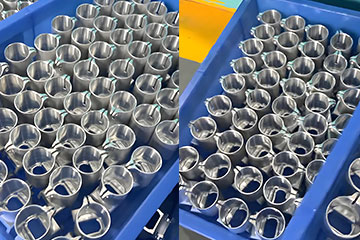
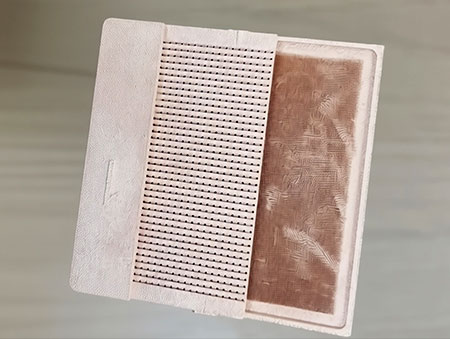
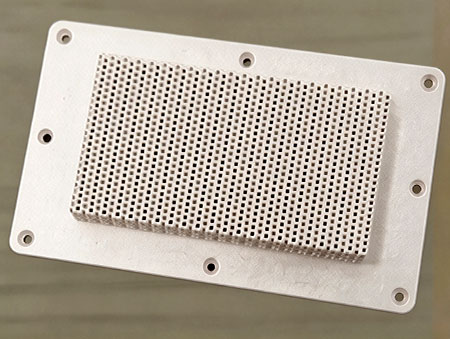
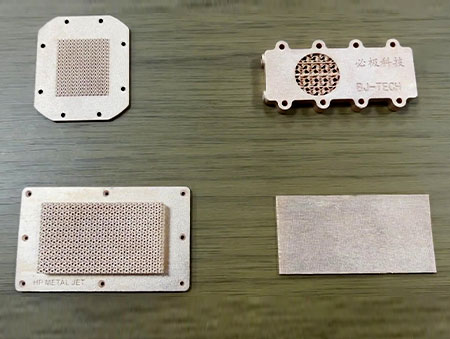

Let’s cut to the chase: thermal management isn’t just a “nice to have” anymore. As AI servers crank out more compute power, IGBT modules handle higher voltages, and 800G/1.6T optical modules pack more performance into the same tiny footprint, heat is the number one bottleneck holding your designs back.
Traditional manufacturing can only take you so far. Extruded aluminum heatsinks, machined cold plates, and brazed microchannels all hit a wall eventually—either in geometry, thermal performance, or leak risk. That’s where 3D printed pure copper and copper alloys come in. For the first time, you can build the exact cooling geometry you actually need—conformal flow paths, TPMS lattices, ultra-thin walls, and intricate microchannels—all in a material that moves heat better than almost anything else on the market.
This page is your complete rundown of how additive manufacturing is rewriting the rules for copper thermal parts, what solutions are available, and how to pick the right approach for your project.
Why Copper? And Why 3D Printing Finally Unlocks Its Full Potential
If you’ve worked in thermal design for more than five minutes, you already know copper is the gold standard for moving heat. Pure copper clocks in at roughly 400 W/m·K of thermal conductivity—nearly double that of 6061 Aluminium. It handles high temperatures, resists corrosion, and works beautifully with liquid cooling setups.
So why isn’t everything made out of copper already?
Simple: traditional manufacturing hates complex copper parts.
- Machining microchannels and thin walls in copper is slow, expensive, and prone to tool wear.
- Brazed or friction-stir-welded cold plates have seams—seams that can leak, especially under pressure and thermal cycling.
- Cast copper can’t hold the tight tolerances or fine features you need for high-performance cooling.
- For anything beyond a basic fin stack, the cost and lead time get out of hand fast.
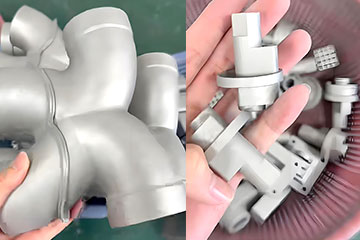
3D-Druck (specifically SLM/DMLS with optimized copper parameters) fixes all of that. You get the full thermal performance of copper mehr design freedom no traditional process can match. We regularly print parts with 0.2mm thin walls, internal lattice structures, and curved, conformal flow paths that would be impossible to machine. And it all comes out as one solid part—no welds, no seams, no leak points.
Our pure copper prints reach >99% density and thermal conductivity matching wrought copper (390–410 W/m·K after proper heat treatment). That’s not “good for 3D printed”—that’s good, period.
Our Core 3D Printed Copper Thermal Solutions
We build cooling components across every major high-heat application. Below are the core solutions we deliver most often. Click through to any dedicated page for deep specs, performance data, and real case examples.
1. Copper Liquid Cold Plates for High-Density Server Cooling
AI data centers are running hotter than ever, and air cooling can’t keep up with modern GPU and CPU densities. Direct liquid cooling is the answer—but standard tube-bonded or brazed cold plates leave a ton of performance on the table.
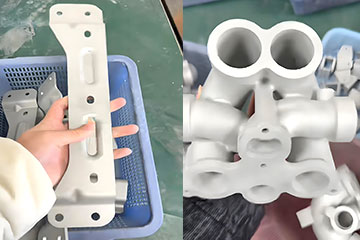
Our 3D printed copper liquid cold plates are built as single, monolithic parts with internal microchannels, pin fin arrays, or lattice cores optimized for your exact heat map. No glued inserts, no welded seams, no weak points. You get better heat transfer, lower pressure drop, and zero leak risk compared to assembled designs.
We work with both pure copper and high-strength copper alloys, depending on your pressure rating and durability needs.
→ Learn more: 3D Printed Copper Liquid Cold Plates for Server Cooling
2. IGBT & Power Electronics Heat Sinks
IGBT modules and power semiconductors in EVs, renewable energy systems, and industrial drives run hot—and they need reliable, uniform cooling to hit their rated lifespan.
Traditional skived-fin coolers work, but they’re limited to straight, uniform channels. 3D printing lets us put cooling exactly where the hotspots are, with variable channel widths, tapered fins, and integrated inlet/outlet ports that drop thermal resistance and improve temperature uniformity across the die.
We offer both air-cooled and liquid-cooled IGBT solutions, printed in pure copper or high-strength copper alloys to match your power level and operating environment.
→ Learn more: 3D Printed Copper Heat Sinks for IGBT & Power Electronics
3. Thermal Structures for High-Speed Optical Modules
When you’re packing 800G or 1.6T of bandwidth into a tiny transceiver package, every degree matters. Space is tight, power density is through the roof, and conventional die-cast housings just can’t move enough heat.
We print ultra-compact pure copper thermal structures and integrated housings with built-in micro-fin arrays and mini lattice features. By integrating the cooling structure directly into the package, we eliminate thermal interface resistance and drop core temperatures by 4–6°C in the same footprint—no redesign of your PCB or module outline required.
→ Learn more: 3D Printed Copper Thermal Components for Optical Modules
4. TPMS Lattice & Porous Heat Dissipation Structures
If you’re still using straight fin channels, you’re leaving a massive amount of surface area on the table. Triply Periodic Minimal Surface (TPMS) lattice structures—like Gyroid and Diamond cells—deliver far more heat transfer surface per unit volume than traditional fins, while also promoting turbulent flow for better liquid or air cooling.
We help teams make the jump from basic straight-channel designs to optimized porous lattice coolers. The result: significantly better heat dissipation in the same package size, or equal performance in a smaller, lighter package.
→ Learn more: TPMS Lattice Porous Structures for Next-Gen Copper Cooling
5. Microchannels, Thin Walls & Conformal Flow Paths
The highest-performing coolers all have one thing in common: they’re built around fine, precise internal features. With 3D printing, we can produce microchannels down to sub-millimeter sizes, ultra-thin walls, and curved, conformal flow paths that follow the shape of your heat source perfectly.
This is where the pure copper vs copper alloy decision really matters. Pure copper gives you maximum thermal conductivity, while copper alloys like CuCrZr deliver higher mechanical strength for high-pressure or high-vibration environments.
→ Learn more: Pure Copper vs Copper Alloy 3D Printing: Microchannels, Thin Walls & Complex Flow Paths
Pure Copper vs Copper Alloys – Quick Breakdown
One question we get every single day: should I use pure copper or a copper alloy?
There’s no universal answer—it depends on what your part needs to do. Here’s the short version:
Pure copper (99.9%+ Cu)
- Highest thermal conductivity (390–410 W/m·K)
- Best for maximum heat transfer
- Great for liquid cooling plates, optical module housings, and low-pressure static applications
Copper alloys (CuCrZr, CuNiSi, usw.)
- Lower but still excellent conductivity (typically 250–350 W/m·K)
- Much higher tensile strength and hardness
- Better for high-pressure systems, threaded ports, vibration-heavy environments, and parts that need post-machining
We go deep on material specs, printability, Kosten, and real-world use cases in our full comparison guide. If you’re on the fence, that page will give you everything you need to pick the right material the first time.
→ Dive deeper: Pure Copper vs Copper Alloy 3D Printing – Full Comparison
Where These Solutions Make the Biggest Difference
3D printed copper cooling isn’t for every project. If you’re building a simple low-power fin stack, standard extrusion will be cheaper. But when performance is critical and space is tight, additive manufacturing delivers gains you can’t get any other way.
Here are the industries we work with most:
Data Centers & AI High-Performance Computing
AI GPU clusters are pushing power densities past 1kW per chip. Air cooling can’t keep up. Our monolithic copper cold plates handle higher heat flux with lower pressure drop, helping you pack more compute into the same rack space.
Electric Vehicles & Power Electronics
IGBTs, SiC MOSFETs, and traction inverters need cooling that’s reliable, leicht, and vibration-resistant. 3D printed copper coolers deliver better temperature uniformity, which directly extends component lifespan.
Optical Communications & Photonics
800G and 1.6T transceivers run hot in tiny packages. Integrated copper thermal structures pull heat directly from the TOSA/ROSA dies, keeping temperatures within spec without increasing module size.
Luft- und Raumfahrt & Defense
Avionics, radar systems, and power electronics demand high performance and strict reliability. 3D printed copper parts deliver optimized cooling in weight-constrained, harsh-environment packages.
Medizin & Industrial Laser Systems
High-power lasers generate extreme localized heat. Conformal copper cooling structures wrap around the laser cavity, delivering precise, uniform temperature control for stable output and longer service life.
→ See full use cases: Industry Applications of 3D Printed Copper Thermal Solutions
What Sets Our 3D Printed Copper Parts Apart
Anyone can buy a metal 3D printer and say they print copper. Getting consistent, high-density, high-conductivity parts with repeatable quality—especially for fine thermal features—is a whole different story.
Here’s what you get when you work with us:
- Wrought-level thermal conductivity. Our optimized SLM process and post-treatment routine deliver pure copper parts with 98–100% IACS conductivity, matching forged copper performance.
- Proven fine-feature capability. We reliably print 0.2mm thin walls, 0.3mm microchannels, and sub-millimeter lattice struts without clogging or deformation.
- Leak-tight monolithic construction. Every cold plate comes out as one solid part. No welds, no brazes, no glued inserts—nothing to fail over time. We pressure-test every liquid cooling part before it ships.
- DFM support from day one. Our thermal and manufacturing engineers review your design upfront. We’ll tell you what works, what won’t print reliably, and how to tweak your geometry for better performance and lower cost.
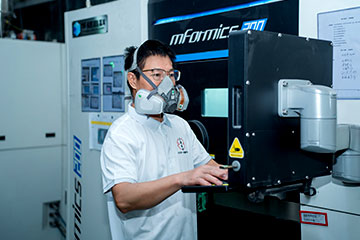
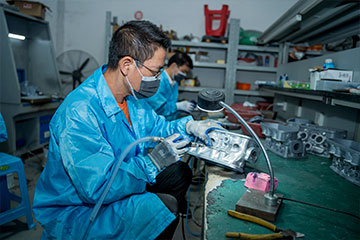
- Full in-house post-processing. From support removal and surface finishing to heat treatment, HIP, and precision machining—we handle the whole process under one roof.
Kundenstimmen von B2B-Kunden aus dem Ausland

“Ich hatte große Angst, dass etwas Schlimmes passieren würde. Aber nachdem du das Produkt erhalten hast, Ich habe festgestellt, dass meine Sorge völlig unnötig war. DT 3D Printing ist eine sehr zuverlässige Fabrik mit garantierter Qualität.”


“Die Produktqualität ist erstklassig – notch, Die Handwerkskunst ist exquisit, Der Druckeffekt ist hervorragend, und die Liefergeschwindigkeit ist wirklich schnell. Gesamt, Es bietet ein hervorragendes Preis-Leistungs-Verhältnis, und ich bin äußerst zufrieden.”


“Die Druckqualität ist wirklich super, und der Preis ist recht erschwinglich. Die Logistik ist ebenfalls schnell. Alles in allem, DT ist ein vertrauenswürdiger Hersteller, und wir werden langfristig weiter mit ihnen zusammenarbeiten.”



Häufig gestellte Fragen
Is 3D printed copper as conductive as regular copper?
Ja, when it’s done right. Our high-density pure copper parts reach 390–410 W/m·K after proper heat treatment, which is on par with standard wrought C11000 copper. Lower-quality prints with high porosity will underperform, which is why process control matters so much for thermal parts.
What’s the smallest feature you can print in copper?
For production parts, we reliably hit 0.2mm wall thickness and 0.3mm diameter internal channels. For lattice structures, we can go down to 0.15mm strut diameters depending on the overall part size and design. We always run a DFM review to make sure your features are manufacturable at consistent quality.
Will 3D printed liquid cold plates leak?
No—because there’s nothing to leak. Unlike brazed or friction-stir-welded plates, our cold plates are printed as one single solid piece. There are no seams, no joints, no bonded inserts. We pressure test every liquid part to your required specification before shipment.
How long does it take to get parts?
For prototype builds, we typically turn around first articles in 10–15 business days after design finalization. Production volumes scale based on part size and order quantity. We’ll give you a firm timeline with your quote.
Can you work from my existing cooling design?
Auf jeden Fall. Most clients come to us with an existing cold plate or heatsink design they want to upgrade. We can either print your geometry as-is (after a DFM check) or work with you to optimize it for additive manufacturing and better thermal performance.
Ready to See What 3D Printed Copper Can Do for Your Thermal Design?
If you’re hitting a thermal wall with your current manufacturing process, we should talk. Send us your CAD file, heat load specs, and performance targets, and our engineering team will get back to you with:
- A DFM (Design for Manufacturing) review
- Material recommendation (pure copper or alloy)
- Performance expectations
- Firm pricing and lead time
We don’t do generic sales pitches. You’ll get straight, actionable feedback from engineers who build copper thermal parts every single day.
Request your free design review today and let’s build a cooler that actually performs.
Need to keep reading first?
Explore our full guide library:
- Design Guide for 3D Printed Copper Heat Exchangers
- Post-Processing for 3D Printed Copper Thermal Components
- Pure Copper vs Copper Alloy: Complete Material Comparison


Über uns
1. We are a professional metal 3D printing manufacturer.
2. Wir drucken Metallteile für die Automobilindustrie im 3D-Druckverfahren, medizinisch, Flugzeug, Luft- und Raumfahrt, Drohne, und die Bootsindustrie, unter Verwendung von Materialien wie Edelstahl, Titan, Kupfer, Aluminium und Legierungsarten.
3. Wir bieten einen 3D-Druck-Service aus einer Hand.
Unsere Dienstleistungen umfassen:
SLM / BJ / SLA / MJF / FDM / SLS / DLP, CNC machining and post-processing
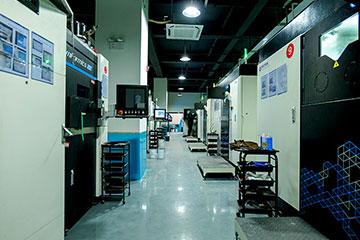
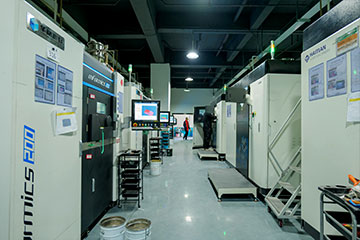
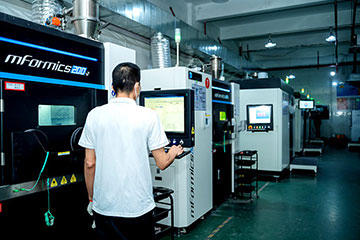
4. Wir besitzen 33 SLM-Metall-3D-Drucker, 14 CNC machining tools, 60 3D-Drucker für Kunststoff, 50 BJ 3D printers (owned by another company in which DT has invested), und die Zahlen steigen weiter.
5. We are a source factory for many global 3D printing service providers.
Warum du dich für uns entscheiden solltest?
- We have manufactured numerous thermal management components via 3D printing using copper and copper alloys for clients all over the world.
- Wir bieten Eigenfertigung mit 33 high-end industrial SLM metal 3D printers, 14 CNC-Maschinen und 50 BJ 3D printers (Owned by another factory in which we have an investment).
- Sonderangebot für Neukunden
- Unsere Stärke liegt im SLM-Metalldruck. Wir besitzen 33 Premium-SLM-Metall-3D-Drucker, die meisten kosten etwa $150,000 jeweils, und unsere Flotte wächst weiter.
- Keine Mindestbestellmenge (Mindestbestellmenge) erforderlich. Wir können sogar ein einzelnes Dokument für dich individuell anpassen.
Bei Fragen kannst du dich gerne an uns wenden.
Es gibt keine Mindestbestellmenge (Mindestbestellmenge) hier enden. Wir können auch nur einen einzigen Text für dich anpassen.
Willkommen bei consult.