
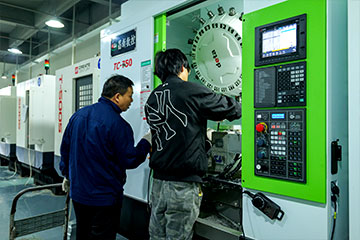
Metal 3D printed parts rarely come off the 3D printer ready to use. Almost all require post-processing, and CNC finishing is one of the most critical steps to turn a printed blank into a functional component.
If your metal 3D printing service provider doesn’t run its own CNC machines, they’ll have to outsource this work to a third party. This handoff creates unnecessary risks for quality, lead time, and accountability.
Let’s break down exactly why in-house CNC capability matters:
1. Why CNC Finishing Is Necessary for Metal 3D Printed Parts
1.1 Dimensional Accuracy Limitations of As-Printed Parts
For industrial-grade Selective Laser Melting (SLM) — the most widely used metal 3D printing process — parts under 100mm in size typically hold a tolerance of ±0.1mm. For larger components, tolerances scale proportionally with part dimensions, generally ranging from ±0.1% to ±0.3%.
If your project requires tighter tolerances, as-printed 3D printing alone cannot deliver. Precision CNC milling and boring operations can achieve tolerances as tight as ±0.01mm on critical fitting dimensions.
1.2 Poor As-Printed Surface Finish
As-printed metal 3D parts typically have a surface roughness of Ra 6–12 μm, with residual powder adhesion and visible layer lines across the surface.
CNC finishing removes this residual powder, eliminates layer lines, and produces a much smoother, more uniform surface finish.
1.3 Geometric Capability Limitations
Metal 3D printing also has constraints when it comes to certain functional features. It is very difficult to directly produce high-precision threads, deep narrow grooves, small dowel pin holes, and flat datum surfaces with 3D printing alone. For these features, CNC machining is far more efficient and consistent.
Here’s how the two processes complement each other:
- 3D printing handles complex internal channels, lattice structures, and lightweight organic geometries
- CNC machining handles datum features, mating surfaces, sealing faces, and high-precision holes and threads
They work together — neither replaces the other.
2. Clear Advantages of In-House CNC vs. Outsourced Machining
2.1 Proactive Process Planning to Mitigate Risks (Biggest Value Add)
When 3D printing and CNC machining happen under one roof:
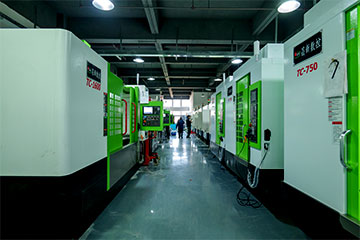
- Our print and CNC engineering teams review all drawings together before production starts. This ensures the right amount of machining stock is left during printing — typically 0.2–0.5mm, with custom allowances for curved surfaces and large-format parts.
- We optimize print orientation and support placement upfront to prioritize reliable fixturing for downstream CNC operations. This avoids the common problem of printed parts with irregular shapes or no clamping surfaces that can’t be securely held for machining.
- We account for thermal distortion — an inherent challenge of metal 3D printing — as well as additional distortion from post-print heat treatment. Our in-house CNC team can build compensation into the print geometry upfront. Outsourced shops often only discover distortion after they receive the blank, leading to disputes and wasted material.
The core problem with outsourcing: Muchos talleres de impresión 3D solo se encargan de la impresión y envían las piezas en bruto a talleres mecánicos externos. Sus operarios de máquinas no tienen ni idea de cómo se ha impreso la pieza ni de dónde es más probable que se deforme. Si hay muy poco stock, la pieza se desecha; Demasiado stock y el tiempo de mecanizado se dispara, que encarecen los costes.
2.2 Plazos de entrega más cortos, Menos logística & Desperdicio en la comunicación
Compara los dos flujos de trabajo:
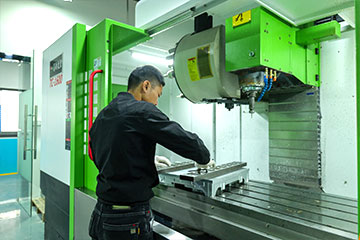
- Flujo de trabajo integrado interno: Impresión → Despolvorización → Tratamiento térmico → Chorro de arena → Acabado CNC interno → Inspección & Envíos
- Flujo de trabajo de CNC subcontratado: Impresión → Despolvorización → Tratamiento térmico → Embalaje & Shipping → External Shop Receipt → Fixturing & Machining → Return Shipment → Re-inspection
All the back-and-forth shipping, coordination, and potential rework typically adds 3–7 days to the lead time. If rework is needed, the timeline can easily double. This advantage is especially critical for export orders, trade show samples, and urgent prototyping projects.
2.3 Unified Quality Accountability, No Finger-Pointing
Metal 3D printed parts often have ambiguous failure points. When a part is out of tolerance, it can be hard to tell if the issue came from printing distortion or CNC fixturing stress.
- With in-house production: The same engineering team owns the entire process. They can quickly identify the root cause and implement a fix in one iteration.
- With separate vendors: Each side blames the other, and you’re stuck in the middle with costly rework and claim expenses.
This risk is especially high for pressure-containing components like high-pressure valve bodies, hydraulic parts, automotive/rail braking components, and aerospace structural parts — where dimensional stability and sealing performance are non-negotiable.
2.4 Predictable Costs, Better Value for Low-Volume Runs
- Prototyping phase: Iterate quickly without paying for repeated shipping of blanks. We can adjust machining strategies on the fly to reduce scrap.
- Production phase: Optimized stock allowances cut down CNC machining time. Unified management of tooling and fixturing reduces overhead costs.
3. Added Value to Win High-End B2B Orders
Many customers in the hydraulic, herramientas, aeroespacial, and automotive industries don’t buy raw 3D printed blanks — they buy finished, ready-to-assemble parts.
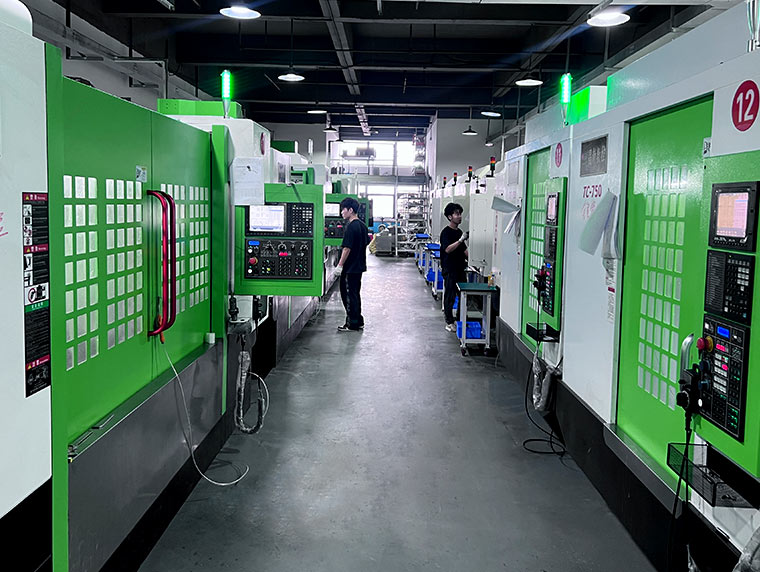
With in-house CNC capabilities, we deliver a complete one-stop solution: 3Impresión en 3D, tratamiento térmico, mecanizado, surface finishing, and CMM inspection, all delivered as a single finished part ready for your assembly line.
Key Takeaway
Metal 3D printing excels at creating complex-shaped blanks that would be impossible or uneconomical to make with traditional machining. CNC machining turns those blanks into precision parts that meet strict assembly requirements.
Bringing both processes under one roof creates a fully integrated workflow from design through printing, tratamiento térmico, finalización, and inspection. Compared to vendors that only supply raw printed blanks, this integrated approach delivers major advantages in lead time, quality control, and the ability to support high-end customer requirements.
Testimonios de clientes internacionales

“Me preocupaba mucho que pasara algo malo. Pero después de recibir el producto, Me di cuenta de que mi preocupación era totalmente innecesaria. DT 3D Printing es una fábrica muy fiable con calidad garantizada.”

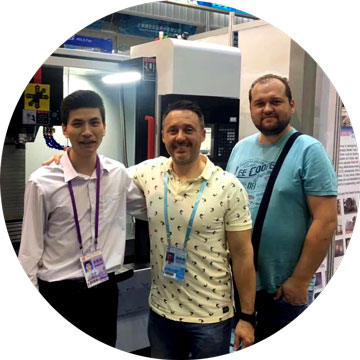
“La calidad del producto es excelente – notch, La artesanía es exquisita, El resultado de impresión es excelente, y la entrega es rapidísima. En general, ofrece una excelente relación calidad-precio, y estoy muy satisfecho.”


“La calidad de impresión es realmente excelente, y el precio es bastante asequible. La logística también es rápida. En resumen, DT es una fábrica de confianza, y seguiremos colaborando con ellos a largo plazo.”



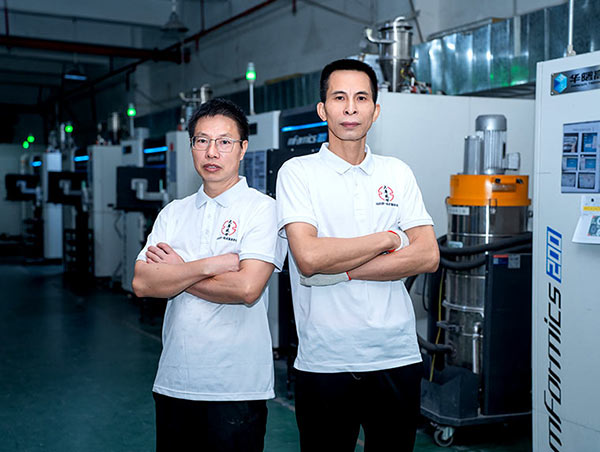
Directo de fábrica: costes más bajos & control total
SLM Servicio de impresión 3D en metal de una fábrica de referencia
Materiales metálicos de uso común:
Acero inoxidable (316L/304L/17-4/347), Aleación de aluminio (6061/AISi10Mg/7075), Aleación de titanio (TC4/TA1), Mold Steel (S136/CX/1.2709), Aleación rica en níquel (GH4169/GH3128/INCONEL625), Aleación de latón (Bronce de CuCrZr/estaño)…
Los materiales metálicos se pueden personalizar para la impresión a gran escala
¿Por qué elegirnos??
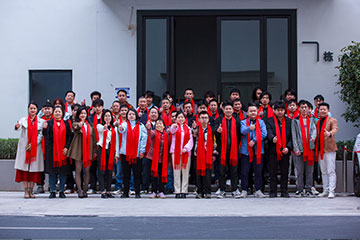
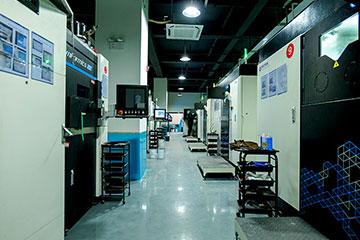
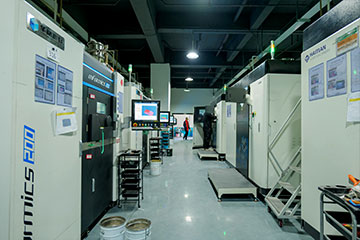
1. Source Factory: 33 Impresoras 3D de metal SLM, 14 Máquinas CNC, Docenas de instalaciones de posproducción, y 60 Impresoras 3D industriales de plástico, (Las cifras no dejan de crecer…)
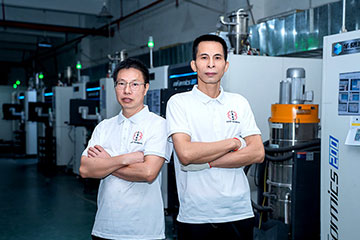
2. Experiencia en impresión 3D de metales industriales: equipo principal con 10+ años en impresión 3D & Mecanizado de precisión CNC
3. Servicio integral de impresión 3D: SLM / SLA / MJF / FDM / SLS / DLP / BJ
4. One-stop in-house Manufacturing: 3Impresión en 3D / Mecanizado CNC / posprocesamiento
5. 3Soporte del modelo D: diseño, optimización & corrección
6. Prototipado rápido: El plazo de entrega podría ser de 24 horario (después de los planos & confirmación del pedido)