
Zum Inhalt springen
  • Kundenstimmen
  • Werksbesichtigung
  • German
    • English
    • Japanese
    • French
    • German
    • Italian
    • Spanish
    • Swedish
    • Irish
    • Dutch
    • Portuguese
    • Korean
    • Greek
    • Turkish
    • Vietnamese
    • Thai
    • Indonesian
    • Malay
    • Danish
    • Finnish
    • Hindi
    • Hebrew
    • Icelandic
    • Romanian
    • Russian
DT 3D Printing Neues Logo

DT 3D-Druck-Service

OEM-Hersteller – SLM (3D-Druck mit Metall) Fachleute

  • Startseite
  • 3D Druckdienst
    • SLM (Selektives Laserschmelzen)
    • SLA (Stereolithografie)
    • SLS (Selektives Lasersintern)
    • DLP (Digital Light Processing)
    • FDM (Fused Deposition Modeling)
    • MJF (Multi Jet Fusion)
    • BJ (Binder Jetting)
  • CNC-Bearbeitung
    • CNC-Drehen
    • CNC-Fräsen
    • Nachbearbeitung
  • Material-Leitfaden
        • 3D-Druckmaterialien aus Kunststoff
          • Harz (ABS-ähnlich, PC-ähnlich)
          • Nylon (PA6, PA12, TPU)
          • Red Wax
          • PLA, TPU, PA, Kohlefaser, PC
        • Materialien für den 3D-Metalldruck
          • Aluminiumlegierung (6061 / AlSi10Mg / 7075)
          • Edelstahl (316L / 304L / 17-4 / 347)
          • Titanlegierung (TC4 / TA1)
          • Formstahl (S136/HB/CX/1.2709)
          • Nickelreiche Legierung (GH4169 / GH3128 / INCONEL625)
          • Messinglegierung (CuCrZr / Bronze-News)
        • Metallwerkstoffe für die CNC-Bearbeitung
          • Aluminium / Legierung / Titan / Nickel
          • Edelstahl / Werkzeugstahl / Legierter Stahl
          • Kohlenstoffstahl / Messing / Kupfer / Bronze
        • Kunststoffe für die CNC-Bearbeitung
          • ABS / Acryl / Delrin / Nylon / PP
          • HDPE / PE / PC / PEI / ULTEM
          • PEEK / POM / TECAFORMAH
  • Kundensupport
        • Branchenlösungen
          • Mold / Schimmel
          • Aerospace & UAV
          • Autoteile
          • Telekommunikation
          • Unterhaltungselektronik
          • Medizinbranche
          • Robotics & Automation
          • Kunsthandwerk / Geschenke
        • Design Studio
          • Kostenlose 3D-Zeichnungsanpassung
          • Kostenlose 3D-Zeichnung (begrenzt verfügbar)
        • Bestellvorgang
          • Zurück & Rückerstattungsrichtlinien
          • Versandbedingungen
          • Häufig gestellte Fragen (FAQ)
        • Blog
          • Video zur Werksbesichtigung
  • Kundenstimmen
  • Über DT
  • Kontaktiere uns

SLM vs DMLS: Metal 3D Printing Technology Selection Guide

Updated on 24/04/2026 By DT 3dprint
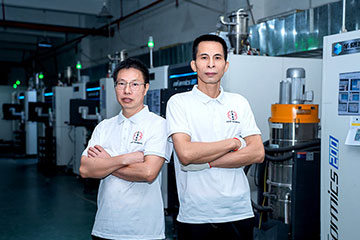
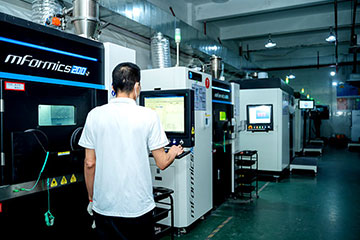
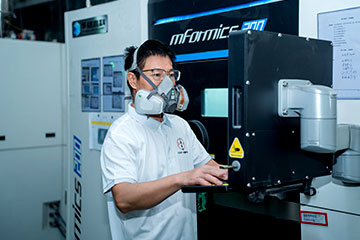
DT's Workers in Front of Our SLM Metal 3D Printers
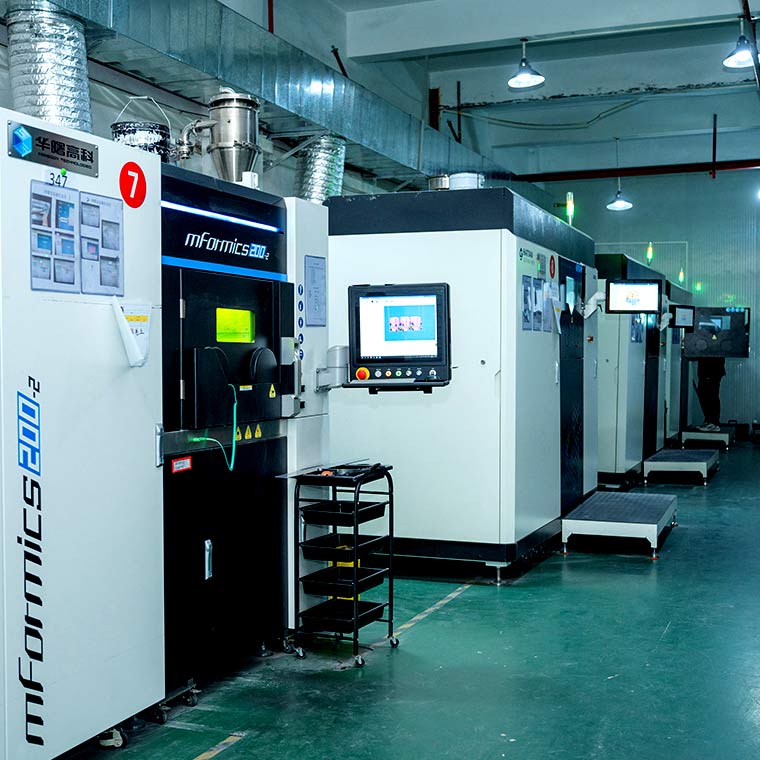
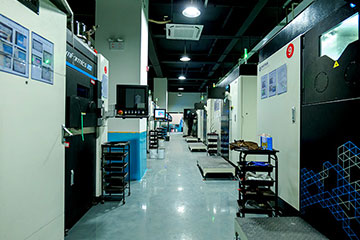
Die industriellen SLM-Metall-3D-Drucker in der DT Factory
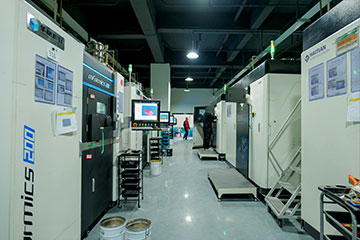
Die hochpräzisen industriellen SLS-3D-Drucker in der DT Factory

SLM vs. DMLS 3D Printing Technology Basics

Comparison DimensionSLM (Selektives Laserschmelzen)DMLS (Direct Metal Laser Sintering)
DefinitionA metal additive manufacturing (AM) technology that uses a high-power laser to fully melt metal powder, building up parts layer-by-layer to form dense, solid metal components.A metal 3D printing technology where a laser partially melts and sinters metal powder particles, causing them to fuse on a surface level to create near-net-shape parts.
Working Principle 1. Powder Recoating: A recoater blade spreads a thin, even layer of metal powder across the build platform.
2. Laser Melting: A high-energy laser beam selectively scans and fully melts the powder based on CAD cross-section data.
3. Layer-by-Layer Buildup: The build platform descends, and the process repeats until the part is complete.
1. Powder Layering: Metal powder is evenly distributed across the build platform.
2. Laser Sintering: A laser beam scans to partially melt powder particles, sintering them together through surface fusion.
3. Solidification: The sintered layer cools and solidifies, and the process repeats for subsequent layers.
Characteristics of Products Printed – Very high density (near 100%), excellent mechanical properties.
– Higher surface quality (Ra 5-15 μm).
– Primarily suited for single-metal alloys (e.g., Titanium alloys, Aluminum alloys).
– Often requires post-processing (e.g., heat treatment, polishing) to improve surface finish.
– Slightly lower density (95-99%) with minimal porosity.
– Higher surface roughness (Ra 10-25 μm).
– Compatible with multi-material powders and high-temperature alloys (e.g., Nickel-based superalloys, Stainless steel).
– Lower residual stress, but often requires support structures to prevent warping.
Industrial 3D Printer: SLM vs. DMLSSLM 3D Printers (Picture from dt3dprint.com)
SLM 3D Printers (Picture from dt3dprint.com)
The cost of SLM 3D Printer is very high, and SLM is suitable for mass production
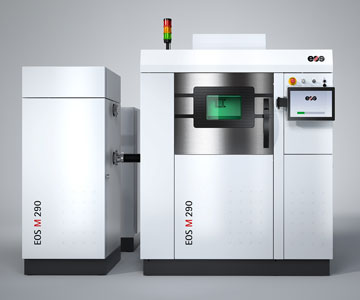
DMLS 3D Printer (Picture from jgvogel.cn)
The cost of DMLS 3D Printer is much lower, and DMLS is suitable for customization.
Extensiveness of Application SLM has a wider application scope.
Due to its characteristics of high density and high strength, it has become the preferred technology in fields such as aerospace, medical implants, and heavy – duty automotive components. Moreover, it is more suitable for large – scale production.
DMLS overall market share is relatively low.
It is applicable to specific scenarios. It has advantages in multi-material alloys and complex precision structures, such as medical dental implants and sensor housings.

SLM vs. DMLS Technology Application Comparison and Selection Recommendations

Comprehensive comparison and application analysis of Selective Laser Melting (SLM) and Direct Metal Laser Sintering (DMLS)

Choosing between SLM (Selektives Laserschmelzen) and DMLS (Direct Metal Laser Sintering) requires a comprehensive evaluation of material properties, performance requirements, geometric complexity, and cost-effectiveness.

This guide will help you understand the differences, suitable applications, and selection criteria for both technologies to make the optimal decision for your project.

SLM vs. DMLS Application Comparison

Application FieldSLM (Selektives Laserschmelzen) Typical ApplicationsDMLS (Direct Metal Laser Sintering) Typical Applications

🏭

Aerospace
Engine brackets, wing spars, rocket fuel nozzles, and other high-strength load-bearing structuresEngine turbine blades, fuel injectors, heat exchangers, and other high-temperature functional components

🏥

Medical & Healthcare
Pure titanium joint implants, orthopedic plates, cranial implants, and other dense biomedical implantsDental implants, surgical guides, bionic bone scaffolds, and other multi-material custom tools

🚗 Automotive

Steering Systems: Steering gear housing (AlSi10Mg aluminum alloy)
Engine Components: Cylinder heads with optimized cooling channels Custom pistons with internal lattice structures
Lightweight Structures: Suspension elements (titanium alloys) Battery brackets and enclosures for EVs (aluminum series)
Tooling & Fixtures: Custom jigs and fixtures for assembly lines End-of-arm tooling for robotics
Turbocharging Systems: Turbocharger blades with complex internal cooling channels (Haynes 282, Inconel)
Functional Testing Parts: Starter motor bushes (wear-resistant alloys) Transmission test components
Thermal Management: Heat exchangers for battery thermal systems (copper alloys) Coolant manifolds with integrated pathways
Performance Components: Exhaust manifolds for racing applications (heat-resistant superalloys) Lightweight brackets for motorsports
🏭Industrial ManufacturingInjection mold inserts, die-casting cores, and other high-precision toolingEngine valve seats, transmission gears, brake calipers, and other lightweight wear-resistant parts
⚡Energy & DefenseNuclear reactor cooling tubes, armor plating, and other corrosion-resistant pressure componentsMicrochannel heat exchangers, hydraulic manifolds, fuel cell bipolar plates, and other complex fluid systems
Characteristics & AdvantagesHigh density (≥99.5%), high mechanical strength, suitable for pure metals (Ti, Al, Edelstahl)Multi-material compatibility (Ni-based/Ti alloys), controlled porosity (95%-98%), excellent toughness, suitable for complex hollow structures

Selection Recommendations

Consideration FactorPrefer SLMPrefer DMLS
Material TypePure metals (Ti, Al, Edelstahl)Multi-component alloys (Ni-based, Ti alloys)
Density Requirement≥99.5% (load-bearing parts)95%-98% (toughness-critical parts)
Cost SensitivityHigh-volume production (lower equipment amortization)Low-volume customization (material flexibility)
Post-Processing LimitationsCan accommodate stress-relief heat treatmentRequires retention of controlled porosity functionality

Important Considerations

Critical Factors

Residual Stress: SLM’s full melting process can generate high residual stresses, requiring support structure design and heat treatment; DMLS sintering generates lower stress but may require infiltration (e.g., Kupfer) for densification.

Size Limitations: SLM is better suited for larger parts (e.g., aerospace structures); DMLS excels at small-to-medium components with complex features.

Industry Certification: Medical and aerospace applications require compliance with specific standards (e.g., ASTM F2924); verify process certification scope beforehand.

Typical Application Examples

Aerospace

  • SLM: Rocket engine components, satellite brackets
  • DMLS: Turbine blades, fuel nozzles

Medical

  • SLM: Titanium alloy orthopedic implants
  • DMLS: Cobalt-chromium alloy dental restorations

Industrial

  • SLM: High-precision injection molds
  • DMLS: Lightweight automotive components

Technology Overview

SLM Characteristics

  • Full melting of metal powder
  • High-density parts (≥99.5%)
  • Excellent mechanical properties
  • Suitable for pure metals & alloys
  • Higher build rates

DMLS Characteristics

  • Powder sintering (partial melting)
  • Controlled porosity (5%-8%)
  • Superior toughness
  • Multi-material compatibility
  • Supports complex internal structures

Key Decision Points

  • Part functional requirements
  • Material constraints
  • Budget & production volume
  • Post-processing capabilities
  • Industry standard compliance

Compatible Materials

  • SLM: Titanium alloys, Aluminum alloys, Stainless steels, Tool steels
  • DMLS: Nickel-based alloys, Cobalt-chromium alloys, Titanium alloys, Stainless steels
SLM vs. DMLS Technology Selection Guide © 2025 | Analysis based on real-world industrial applications

Blog

Post navigation

Previous Post: Free Custom 3D Drawing Service (Begrenzte Verfügbarkeit) and Free 3D Drawing Modification service
Next Post: Cost Comparison and Analysis of Shoe Molds Produced by Traditional Methods and SLM Metal 3D Printing

Related Products

3D Printing Injection Molds: Cut Costs & Speed Up Lead Times for Small Batch Production (Case Studies ) Blog
Custom 3D Printed Motorcycle Parts: Frame, Fairing, Seat & Dirt Bike Ti-6Al-4V Parts Blog
12 Things You Should Never 3D Print (2026) Blog
start a 3D printing service company with minimal investment Metal 3D Printing Blue Ocean: Low-Investment Opportunities, Partner With a Leading Source Factory Blog
Custom 3D Printing Statues Blog
3D Printed Silicone Molds: The Low-Cost, Fast Solution for Small-Batch Silicone Production Blog

Kundensupport
FAQ
Kostenlose 3D-Zeichnungsanpassung
Kostenlose individuelle 3D-Zeichnung (Begrenzte Verfügbarkeit)

Rechtliche Hinweise
Versandbedingungen
Rückgabe- und Rückerstattungsrichtlinien
Datenschutzerklärung
Nutzungsbedingungen
Impressum
Haftungsausschluss
Cookie-Richtlinie

Über uns
Video zur Werksbesichtigung
Blog
Zusammenarbeit
Über DT
Kontakt

YouTube Twitter TikTok Facebook Instagram Wenn LinkedIn Pinterest Reddit Medium


Copyright © 2025 DT 3D-Druck
Alle Rechte vorbehalten.
Powered by PressBook Grid Blogs Theme


Cookie-Einwilligung verwalten
Um das bestmögliche Erlebnis zu bieten, Wir nutzen Technologien wie Cookies, um Geräteinformationen zu speichern und/oder darauf zuzugreifen. Wenn du diesen Technologien zustimmst, können wir Daten wie das Surfverhalten oder eindeutige IDs auf dieser Website verarbeiten. Keine Einwilligung oder Widerruf der Einwilligung, kann bestimmte Features und Funktionen beeinträchtigen.
Funktional Immer aktiv
Die technische Speicherung oder der Zugriff ist für den legitimen Zweck unbedingt erforderlich, um die Nutzung eines bestimmten Dienstes zu ermöglichen, der vom Abonnenten oder Nutzer ausdrücklich angefordert wurde, oder zum alleinigen Zweck der Durchführung der Übertragung einer Nachricht über ein elektronisches Kommunikationsnetz.
Einstellungen
Die technische Speicherung oder der Zugriff ist für den legitimen Zweck der Speicherung von Präferenzen erforderlich, die nicht vom Abonnenten oder Nutzer angefordert wurden.
Statistiken
Die technische Speicherung oder der Zugriff, die ausschließlich zu statistischen Zwecken genutzt werden. Die technische Speicherung oder der Zugriff, die ausschließlich für anonyme statistische Zwecke genutzt werden. Ohne Vorladung, freiwillige Einhaltung seitens deines Internetdienstanbieters, oder zusätzliche Datensätze von einem Drittanbieter, Informationen, die ausschließlich zu diesem Zweck gespeichert oder abgerufen werden, können in der Regel nicht dazu verwendet werden, dich zu identifizieren.
Marketing
Die technische Speicherung oder der Zugriff ist erforderlich, um Nutzerprofile zu erstellen und Werbung zu versenden, oder um den Nutzer auf einer Website oder über mehrere Websites hinweg für ähnliche Marketingzwecke zu verfolgen.
  • Optionen verwalten
  • Dienste verwalten
  • Verwalten {Anzahl der Anbieter} Anbieter
  • Lies mehr über diese Zwecke
Einstellungen anzeigen
  • {Titel}
  • {Titel}
  • {Titel}
Cookie-Einwilligung verwalten
Um das bestmögliche Erlebnis zu bieten, Wir nutzen Technologien wie Cookies, um Geräteinformationen zu speichern und/oder darauf zuzugreifen. Wenn du diesen Technologien zustimmst, können wir Daten wie das Surfverhalten oder eindeutige IDs auf dieser Website verarbeiten. Keine Einwilligung oder Widerruf der Einwilligung, kann bestimmte Features und Funktionen beeinträchtigen.
Funktional Immer aktiv
Die technische Speicherung oder der Zugriff ist für den legitimen Zweck unbedingt erforderlich, um die Nutzung eines bestimmten Dienstes zu ermöglichen, der vom Abonnenten oder Nutzer ausdrücklich angefordert wurde, oder zum alleinigen Zweck der Durchführung der Übertragung einer Nachricht über ein elektronisches Kommunikationsnetz.
Einstellungen
Die technische Speicherung oder der Zugriff ist für den legitimen Zweck der Speicherung von Präferenzen erforderlich, die nicht vom Abonnenten oder Nutzer angefordert wurden.
Statistiken
Die technische Speicherung oder der Zugriff, die ausschließlich zu statistischen Zwecken genutzt werden. Die technische Speicherung oder der Zugriff, die ausschließlich für anonyme statistische Zwecke genutzt werden. Ohne Vorladung, freiwillige Einhaltung seitens deines Internetdienstanbieters, oder zusätzliche Datensätze von einem Drittanbieter, Informationen, die ausschließlich zu diesem Zweck gespeichert oder abgerufen werden, können in der Regel nicht dazu verwendet werden, dich zu identifizieren.
Marketing
Die technische Speicherung oder der Zugriff ist erforderlich, um Nutzerprofile zu erstellen und Werbung zu versenden, oder um den Nutzer auf einer Website oder über mehrere Websites hinweg für ähnliche Marketingzwecke zu verfolgen.
  • Optionen verwalten
  • Dienste verwalten
  • Verwalten {Anzahl der Anbieter} Anbieter
  • Lies mehr über diese Zwecke
Einstellungen anzeigen
  • {Titel}
  • {Titel}
  • {Titel}