

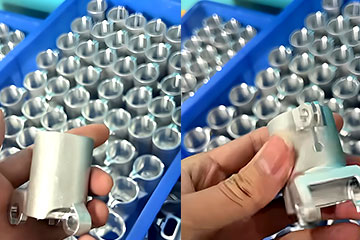
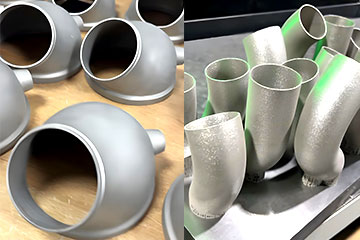
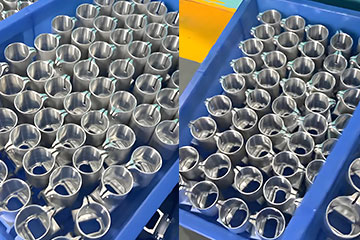
SLM vs. DMLS 3D Printing Technology Basics
| Comparison Dimension | SLM (Fusão Seletiva a Laser) | DMLS (Direct Metal Laser Sintering) |
|---|---|---|
| Definition | A metal additive manufacturing (AM) technology that uses a high-power laser to fully melt metal powder, building up parts layer-by-layer to form dense, solid metal components. | A metal 3D printing technology where a laser partially melts and sinters metal powder particles, causing them to fuse on a surface level to create near-net-shape parts. |
| Working Principle |
1. Powder Recoating: A recoater blade spreads a thin, even layer of metal powder across the build platform. 2. Laser Melting: A high-energy laser beam selectively scans and fully melts the powder based on CAD cross-section data. 3. Layer-by-Layer Buildup: The build platform descends, and the process repeats until the part is complete. |
1. Powder Layering: Metal powder is evenly distributed across the build platform. 2. Laser Sintering: A laser beam scans to partially melt powder particles, sintering them together through surface fusion. 3. Solidification: The sintered layer cools and solidifies, and the process repeats for subsequent layers. |
| Characteristics of Products Printed |
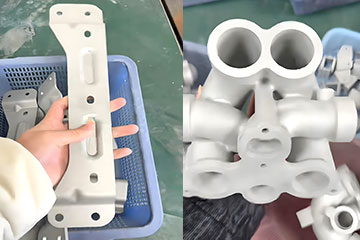
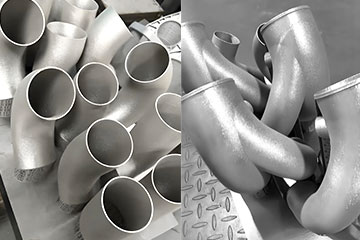
– Very high density (near 100%), excelentes propriedades mecânicas. – Higher surface quality (Ra 5-15 μm). – Primarily suited for single-metal alloys (Ex.:, Titanium alloys, Aluminum alloys). – Often requires post-processing (Ex.:, heat treatment, revisão) to improve surface finish. |
– Slightly lower density (95-99%) with minimal porosity. – Higher surface roughness (Ra 10-25 μm). – Compatible with multi-material powders and high-temperature alloys (Ex.:, Nickel-based superalloys, Aço inoxidável). – Lower residual stress, but often requires support structures to prevent warping. |
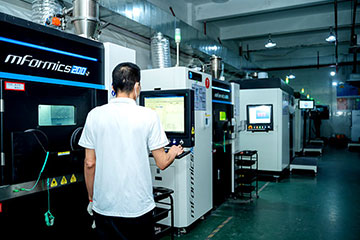
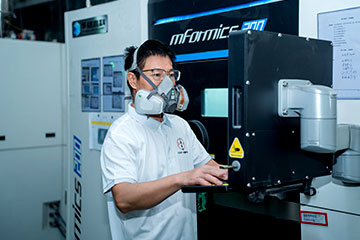
| Industrial 3D Printer: SLM vs. DMLS | 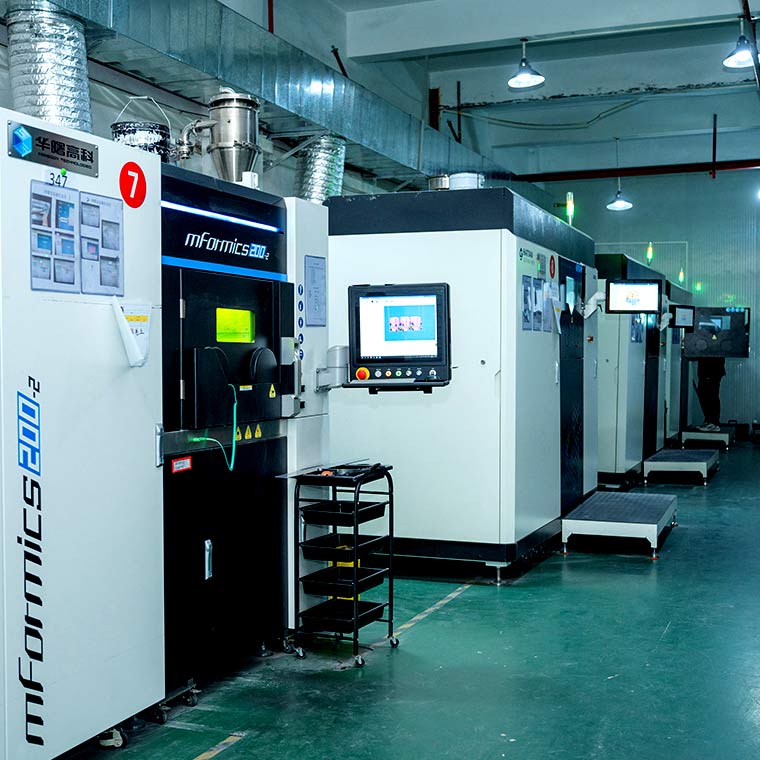 SLM 3D Printers (Picture from dt3dprint.com) The cost of SLM 3D Printer is very high, and SLM is suitable for mass production | 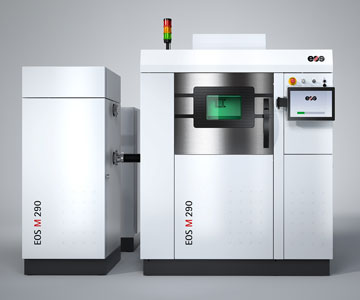 DMLS 3D Printer (Picture from jgvogel.cn) The cost of DMLS 3D Printer is much lower, and DMLS is suitable for customization. |
| Extensiveness of Application |
SLM has a wider application scope. Due to its characteristics of high density and high strength, it has become the preferred technology in fields such as aerospace, medical implants, and heavy – duty automotive components. Moreover, it is more suitable for large – scale production. |
DMLS overall market share is relatively low. It is applicable to specific scenarios. It has advantages in multi-material alloys and complex precision structures, such as medical dental implants and sensor housings. |
SLM vs. DMLS Technology Application Comparison and Selection Recommendations
Comprehensive comparison and application analysis of Selective Laser Melting (SLM) and Direct Metal Laser Sintering (DMLS)
Choosing between SLM (Fusão Seletiva a Laser) and DMLS (Direct Metal Laser Sintering) requires a comprehensive evaluation of material properties, performance requirements, geometric complexity, and cost-effectiveness.
This guide will help you understand the differences, suitable applications, and selection criteria for both technologies to make the optimal decision for your project.
SLM vs. DMLS Application Comparison
| Application Field | SLM (Fusão Seletiva a Laser) Typical Applications | DMLS (Direct Metal Laser Sintering) Typical Applications |
|---|---|---|
🏭Aerospace | Engine brackets, wing spars, rocket fuel nozzles, and other high-strength load-bearing structures | Engine turbine blades, fuel injectors, heat exchangers, and other high-temperature functional components |
🏥Medical & Healthcare | Pure titanium joint implants, orthopedic plates, cranial implants, and other dense biomedical implants | Implantes dentários, surgical guides, bionic bone scaffolds, and other multi-material custom tools |
🚗 Automotive | Steering Systems: Steering gear housing (AlSi10Mg aluminum alloy) Engine Components: Cylinder heads with optimized cooling channels Custom pistons with internal lattice structures Lightweight Structures: Suspension elements (titanium alloys) Battery brackets and enclosures for EVs (aluminum series) Tooling & Fixtures: Custom jigs and fixtures for assembly lines End-of-arm tooling for robotics | Turbocharging Systems: Turbocharger blades with complex internal cooling channels (Haynes 282, Inconel)
Functional Testing Parts: Starter motor bushes (wear-resistant alloys) Transmission test components Thermal Management: Heat exchangers for battery thermal systems (copper alloys) Coolant manifolds with integrated pathways Performance Components: Exhaust manifolds for racing applications (heat-resistant superalloys) Lightweight brackets for motorsports |
| 🏭Industrial Manufacturing | Injection mold inserts, die-casting cores, and other high-precision tooling | Engine valve seats, transmission gears, brake calipers, and other lightweight wear-resistant parts |
| ⚡Energy & Defense | Nuclear reactor cooling tubes, armor plating, and other corrosion-resistant pressure components | Microchannel heat exchangers, hydraulic manifolds, fuel cell bipolar plates, and other complex fluid systems |
| Characteristics & Vantagens | High density (≥99.5%), high mechanical strength, suitable for pure metals (De, Para, stainless steel) | Multi-material compatibility (Ni-based/Ti alloys), controlled porosity (95%-98%), excellent toughness, suitable for complex hollow structures |
Selection Recommendations
| Consideration Factor | Prefer SLM | Prefer DMLS |
|---|---|---|
| Material Type | Pure metals (De, Para, stainless steel) | Multi-component alloys (Ni-based, Ti alloys) |
| Density Requirement | ≥99.5% (load-bearing parts) | 95%-98% (toughness-critical parts) |
| Cost Sensitivity | High-volume production (lower equipment amortization) | Low-volume customization (material flexibility) |
| Post-Processing Limitations | Can accommodate stress-relief heat treatment | Requires retention of controlled porosity functionality |
Important Considerations
Critical Factors
Residual Stress: SLM’s full melting process can generate high residual stresses, requiring support structure design and heat treatment; DMLS sintering generates lower stress but may require infiltration (Ex.:, cobre) for densification.
Size Limitations: SLM is better suited for larger parts (Ex.:, aerospace structures); DMLS excels at small-to-medium components with complex features.
Industry Certification: Medical and aerospace applications require compliance with specific standards (Ex.:, ASTM F2924); verify process certification scope beforehand.
Typical Application Examples
Aerospace
- SLM: Rocket engine components, satellite brackets
- DMLS: Turbine blades, fuel nozzles
Medical
- SLM: Titanium alloy orthopedic implants
- DMLS: Cobalt-chromium alloy dental restorations
Industrial
- SLM: High-precision injection molds
- DMLS: Lightweight automotive components
Technology Overview
SLM Characteristics
- Full melting of metal powder
- High-density parts (≥99.5%)
- Excellent mechanical properties
- Suitable for pure metals & alloys
- Higher build rates
DMLS Characteristics
- Powder sintering (partial melting)
- Controlled porosity (5%-8%)
- Superior toughness
- Multi-material compatibility
- Supports complex internal structures
Key Decision Points
- Part functional requirements
- Material constraints
- Budget & production volume
- Post-processing capabilities
- Industry standard compliance
Compatible Materials
- SLM: Titanium alloys, Aluminum alloys, Stainless steels, Tool steels
- DMLS: Nickel-based alloys, Cobalt-chromium alloys, Titanium alloys, Stainless steels