



Let’s be honest: if you’re designing a high-heat cooling part, pure copper is the dream material. It moves heat better than almost any common engineering metal — roughly 2.5x faster than 6061 aluminium, the industry’s standard baseline. It’s durable, corrosion-resistant, and works perfectly with liquid cooling setups.
But for decades, there was a catch: you could have pure copper, or you could have a complex, optimized cooling geometry. You couldn’t have both. Traditional manufacturing methods just can’t do fine, intricate copper parts without blowing up your budget, adding weak points, or both.
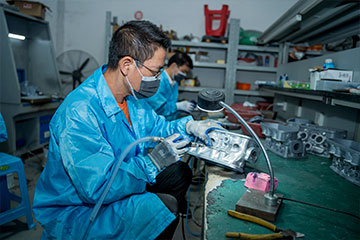
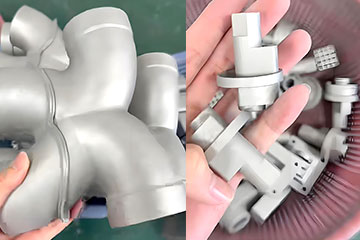
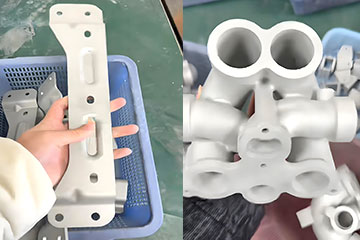
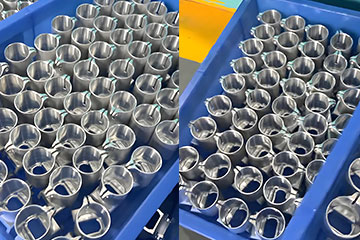
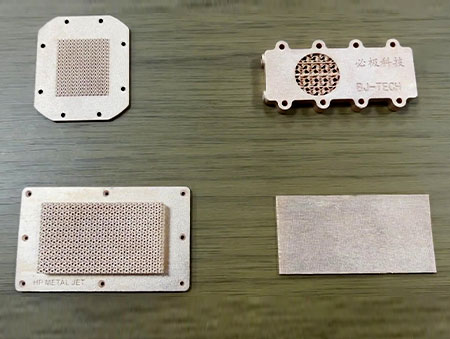
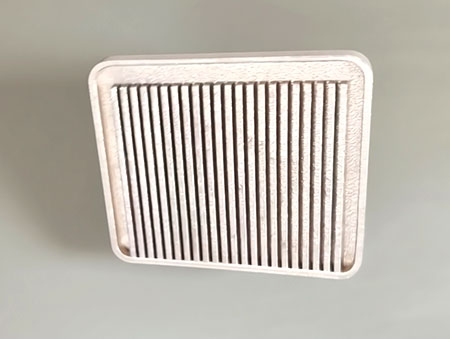
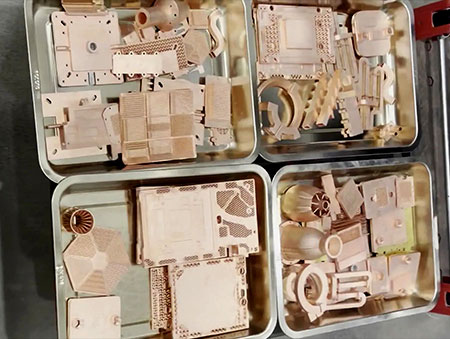
3D printing changed all that. Today, SLM pure copper 3D printing lets you build the exact cooling structure you need — tiny microchannels, ultra-thin walls, conformal flow paths, internal lattices — all in solid, high-conductivity pure copper, no assembly required. On this page, we’ll break down how the technology works, what it actually delivers, and where it makes the most sense for your thermal designs, and it’s the foundation of our full lineup of 3D printed copper & copper alloy thermal management solutions.
Why Pure Copper Is The Thermal Design Gold Standard?
If you’ve spent any time in thermal engineering, this won’t be news — but let’s recap for context. Pure copper (99.9%+ purity) clocks in at roughly 400 W/m·K of thermal conductivity. For reference, 6061 aluminum sits around 167 W/m·K. That means copper moves heat almost 2.5x faster.
For high-flux applications — think AI server chips, IGBT (Insulated-Gate Bipolar Transistor) modules, 800G optical transceivers — that difference is non-negotiable. You can only pack so much fin area or coolant flow into a given footprint. Better base material conductivity directly translates to lower thermal resistance and cooler operating temperatures.
Copper also holds up well over time. It resists corrosion in most liquid cooling loops, handles repeated thermal cycling without fatigue, and plays nicely with standard thermal interface materials. There’s a reason every high-end cooler on the market uses copper at the heat source. The problem has always been how to shape it.
The Catch: Traditional Manufacturing Wastes Copper’s Potential
Pure copper is amazing for cooling. Traditional manufacturing? It absolutely butchers the value proposition. Let’s walk through the real-world headaches you’ve probably dealt with:
- Machining is slow and expensive. Copper is gummy and hard on tools. Milling tiny microchannels or thin fins takes forever, and scrap rates add up fast. For anything beyond basic straight grooves, the cost gets out of hand quickly.
- Assembled parts have weak points. Want internal channels? You’ll need to mill two halves and braze, weld, or glue them together. Every seam is a potential leak point, especially under pressure and thermal cycling. More parts also mean more assembly labor and more things that can fail.
- Complex geometry is off the table. Curved flow paths, tapered channels, internal lattice structures? Machining can’t do most of it, and casting can’t hold the tight tolerances you need for high-performance cooling. You’re stuck with straight, uniform, boring designs that leave a ton of performance on the table.
For years, teams settled for aluminum 3D printed parts or lower-performance copper designs because there was no better option. That’s no longer the case.
How SLM 3D Printing Unlocked Pure Copper’s Full Potential
Let’s cut through the marketing noise: printing pure copper wasn’t always practical. Copper is extremely reflective to standard fiber lasers. For a long time, hitting copper powder with a laser just bounced most of the energy away, resulting in a porous, weak part with terrible thermal performance. It was a lab curiosity, not a production solution.
Today, that’s all solved. With optimized SLM process parameters, tuned laser settings, and tight process control, we can consistently print pure copper parts with >99% density. After a proper heat treatment cycle, thermal conductivity lands at 390–410 W/m·K — exactly matching standard wrought C11000 copper bar stock.
This isn’t “good for a 3D printed part” level performance. This is full-grade pure copper, built into shapes you could never make any other way.
Real-World Advantages For Your Cooling Components
Okay, so we can print complex pure copper parts. What does that actually do for your thermal design?
Monolithic, leak-free construction
Every part prints as one single solid piece. No welds, no brazes, no bonded inserts. For liquid cold plates, that’s the biggest win of all: zero seam lines mean zero leak points. You get better long-term reliability, no assembly labor, and no risk of delamination or failure under thermal cycling.
Ultra-fine microchannels and thin walls
We reliably print 0.2mm thin walls and internal microchannels as small as 0.3mm in diameter, at production-grade consistency. Thinner walls mean heat transfers faster from the base into the coolant. More, smaller channels mean way more surface area for heat exchange. You simply cannot get this level of detail with traditional milling — at least not without a massive price tag and high scrap rates.
Conformal flow paths that match your heat map
You’re no longer forced to use straight, parallel channels. We can design flow paths that curve, twist, widen, or narrow exactly where your hotspots sit. That means more uniform cooling across the entire part, no dead zones, and much better performance for uneven heat loads.
Internal lattice structures for maximum surface area
If you really want to push performance, we can print fully internal TPMS (Triply Periodic Minimal Surface) lattice structures (Gyroid, Diamond, et plus encore) right inside your cooler. These porous structures deliver far more heat transfer surface per unit volume than standard fins, while also promoting turbulent flow for better coolant mixing. It’s a step change in cooling performance, and it’s only possible with 3D printing. We break down the full performance comparison in our TPMS lattice structure guide.
Testimonials from Overseas B2B Clients

“J'avais très peur qu'il arrive quelque chose de grave. Mais après avoir reçu le produit, Je me suis rendu compte que mon inquiétude était totalement inutile. DT 3D Printing est une usine très fiable qui garantit la qualité de ses produits.”


“La qualité du produit est excellente – notch, Le savoir-faire est exquis, Le rendu à l'impression est excellent, et la livraison est vraiment rapide. Dans l'ensemble, c'est un excellent rapport qualité-prix, et je suis extrêmement satisfait.”


“La qualité d'impression est vraiment excellente, et le prix est tout à fait abordable. La logistique est également rapide. En résumé, DT est une usine de confiance, et on continuera à coopérer avec eux à long terme.”



Common Applications For 3D Printed Pure Copper Thermal Parts
Pure copper 3D printing isn’t for every project. If you’re making a simple low-power fin stack, standard extrusion will be cheaper. But when performance is critical and space is tight, it delivers gains you can’t get any other way.
Here’s where we see the biggest wins:
- High-density server liquid cold plates: AI GPU clusters are pushing power densities past 1kW per chip. Pure copper monolithic cold plates handle that heat flux with lower pressure drop than assembled alternatives. See our full breakdown of 3D printed copper liquid cold plates for servers.
- IGBT and power electronics cooling: High-power SiC and IGBT modules need uniform, reliable cooling to hit their rated lifespan. Pure copper coolers with optimized channel layouts deliver lower thermal resistance and better temperature uniformity.
- High-speed optical module structures: 800G and 1.6T transceivers run hot in tiny packages. 3D printed pure copper thermal structures pull heat directly from the TOSA/ROSA dies without adding bulk. You can see real sample parts on our optical module thermal components page.
If you’re trying to decide between pure copper and a copper alloy like CuCrZr for your project, we put together a full side-by-side comparison of performance, force, coût, and use cases. Check out our pure copper vs copper alloy 3D printing guide to pick the right material the first time.
Let’s Bust The Big Myth About 3D Printed Copper Conductivity
We hear this one every single week: “3D printed copper can’t be as conductive as regular copper, right?” The short answer: it can — if it’s printed correctly.
The long answer: conductivity all comes down to density. Porosity kills thermal performance. Even 2-3% internal voids can drop conductivity by 10% or more. A lot of shops advertise copper 3D printing, but their processes aren’t dialed in, and you end up with a part that looks great but underperforms thermally.
That’s why we prioritize process control above all else. Our standard pure copper parts come out at >99% density, and with heat treatment, they match wrought copper conductivity. For applications needing absolute maximum performance and zero internal voids, we also offer HIP (Pressage isostatique à chaud) post-processing to close any remaining micro-pores.
Bottom line: don’t write off 3D printed copper because you’ve seen low-quality parts. Done right, it’s identical to conventional copper — with way better design freedom.
Foire aux questions
Is 3D printed pure copper as conductive as regular wrought copper?
Oui, when it’s printed with high density and properly heat treated. Our standard parts reach 390–410 W/m·K, which is on par with C11000 wrought copper. Low-quality prints with high porosity will underperform, so process control is everything.
What’s the smallest feature you can reliably print in pure copper?
For production parts, we consistently hit 0.2mm wall thickness and 0.3mm diameter internal microchannels. For lattice struts, we can go down to 0.15mm depending on overall part size. We always run a DFM review upfront to confirm your features are manufacturable at consistent quality.
Do 3D printed pure copper cold plates leak?
No — because there’s nothing to leak. Unlike brazed or welded plates, our cold plates are printed as one single solid piece with no internal seams or joints. We pressure test every liquid cooling part to your specs before it ships.
Is pure copper 3D printing expensive?
It costs more than simple extruded or stamped copper parts, but it’s very competitive with complex machined or brazed assemblies — and you get better performance and higher reliability. For designs where traditional manufacturing can’t deliver the geometry you need, it’s almost always the most cost-effective way to hit your thermal targets.
Ready To Put Pure Copper 3D Printing To Work For Your Design?
If you’ve been stuck choosing between copper’s thermal performance and the cooling geometry you actually need, that tradeoff is gone.
Send us your CAD file, heat load specs, and performance targets, and our engineering team will get back to you with:
- A full DFM (Design for Manufacturing) review
- A clear recommendation on whether pure copper is the right fit
- Firm pricing and lead time
- Honest feedback on where you can optimize your design for better performance or lower cost
We don’t do generic sales pitches. You’ll get straight, actionable input from engineers who build pure copper thermal parts every day.
Request your free design review today and let’s build a cooler that actually delivers on copper’s full potential.
Keep exploring
3D Printed Copper Liquid Cold Plates for Server Cooling.
Pure Copper vs Copper Alloy 3D Printing: Full Comparison
TPMS Lattice Porous Structures for Next-Gen Copper Cooling


À propos de nous
1. We are a professional metal 3D printing manufacturer.
2. On imprime en 3D des pièces métalliques pour l'automobile, médical, avion, aérospatiale, drone, et les industries nautiques, en utilisant des matériaux tels que l'acier inoxydable, titane, cuivre, l'aluminium et les différents types d'alliages.
3. On propose un service d'impression 3D tout-en-un.
Nos services comprennent:
SLM / BJ / SLA / MJF / FDM / SLS / DLP, CNC machining and post-processing
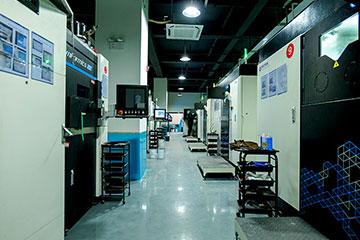
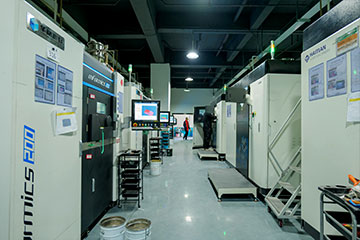
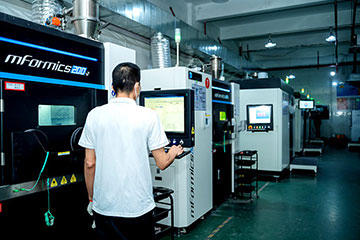
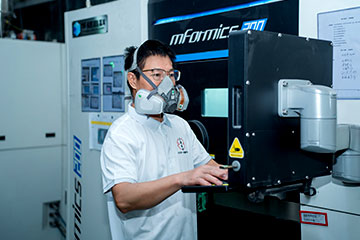
4. Nous possédons 33 Imprimantes 3D métalliques SLM, 14 CNC machining tools, 60 imprimantes 3D en plastique, 50 BJ 3D printers (owned by another company in which DT has invested), et les chiffres ne cessent d'augmenter.
5. We are a source factory for many global 3D printing service providers.
Pourquoi nous choisir?
- We have manufactured numerous pure cooper thermal management components via 3D printing using copper and copper alloys for clients all over the world.
- We provide in-house manufacturing with 33 high-end industrial SLM metal 3D printers, 14 Les machines CNC et 50 industrial BJ 3D printers (Owned by another factory in which we have an investment).
- Special Offer for New Clients
- Our strength lies in SLM metal printing. Nous possédons 33 premium SLM metal 3D printers, most costing around $150,000 chacun, and our fleet is still expanding.
- No MOQ (Quantité minimale de commande) required. We can customize even a single piece for you.
Feel free to contact us for inquiries.
Il n'y a pas de quantité minimale de commande (MOQ). (Quantité minimale de commande) limite ici. On peut personnaliser ne serait-ce qu’un seul document pour toi.
N'hésite pas à me contacter.