



Let’s cut straight to it: if you’ve ever maxed out a straight-channel heat sink or cold plate and still needed more cooling performance, you already know the pain.
Traditional fin stacks, skived channels, and even dense microchannel designs all hit a hard wall eventually. You can only pack so much surface area into a fixed volume before pressure drop skyrockets, features get too small to machine, or you end up with dead flow zones that don’t contribute anything to cooling.
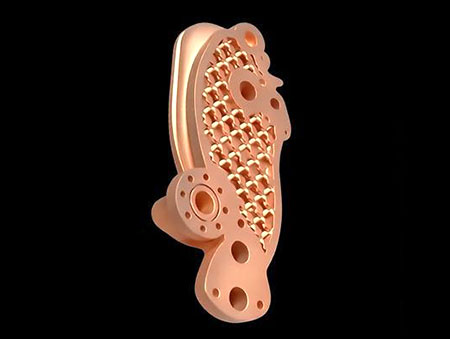
That’s where TPMS (Triply Periodic Minimal Surface) lattice structures come in. When printed in high-conductivity copper, these porous, three-dimensional geometries completely rewrite the rules for how much cooling you can fit into a given footprint.
On this page, we’ll break down how TPMS lattices work, why they outperform traditional cooling structures, and how to use them in your next thermal design. This is part of our full lineup of 3D printed copper & copper alloy thermal management solutions, so you can see how lattice cooling fits into your overall approach.
Why Traditional Cooling Structures Hit a Hard Ceiling
If you’ve spent time optimizing thermal designs, you’ve probably run into this exact problem: to get better cooling, you need more surface area. But with traditional manufacturing, there’s only so far you can go.
Skived fins and extruded heat sinks are limited to straight, uniform features. Once you hit a certain fin density, you run into diminishing returns — air or coolant can’t flow through the gaps properly, and most of the extra surface area goes to waste.
Machined microchannels work better for liquid cooling, but they still have hard limits. They’re all straight, parallel paths, so flow is mostly laminar at reasonable flow rates. Laminar flow means a thick boundary layer of slow-moving fluid right against the channel wall, which kills heat transfer. You can crank up flow speed to fix it, but pressure drop spikes and you waste pumping power.
Worst of all, you can’t tailor the geometry to match your actual heat map. You’re stuck with uniform channels across the entire part, even if only one small zone is running hot. You waste cooling capacity on cool areas and still undercool the hotspots.
For decades, that was as good as it got. Not anymore.
What Are TPMS Lattice Structures, Exactly?

Let’s keep this simple — no fancy math, just what matters for your cooling design.
TPMS lattices are a class of three-dimensional, porous structures that repeat smoothly in all three directions. They’re made of continuous, curved surfaces with no sharp corners or dead ends. Think of it like a complex, interconnected sponge, but engineered for precise flow and heat transfer.
The most common types we use for thermal designs are Gyroid, Diamond, and Primitive cells. Each has its own balance of surface area, flow resistance, and printability.
These structures aren’t a new idea — thermal engineers have known their theoretical benefits for decades. The problem was, you simply couldn’t manufacture them with traditional methods. Complex internal porous geometry with sub-millimeter features? Machining, casting, and brazing can’t touch it.
3D printing changed that. Now we can print fully functional copper lattice coolers with exact, repeatable geometry, at production scale.
Why 3D Printed Copper Lattices Crush Traditional Cooling Designs

It’s not just “more surface area” — though that’s a big part of it. Lattices deliver better cooling on multiple levels, all at once.
Far more heat transfer surface per unit volume
This is the most obvious win, and it’s a big one. Depending on the cell type and relative density, well-designed TPMS lattices can pack 60–100% more heat transfer surface area into the same footprint compared with dense machined straight microchannels.
More surface area directly means more heat pulled off your part, in the exact same package size. For space-constrained designs like optical modules or compact IGBT modules, that’s a complete game changer.
Built-in turbulent flow promotion
Traditional straight channels mostly run laminar flow at typical operating flow rates. Laminar flow creates a slow, insulating boundary layer of fluid right against the metal wall, which drags down heat transfer.
Lattice structures constantly disrupt that boundary layer. Fluid gets mixed and redirected as it flows through the porous structure, so fresh, cool fluid is always hitting the metal surface. That boosted turbulence delivers significantly higher heat transfer coefficients, even at moderate flow rates.
Uniform flow, no wasted dead zones
With straight channels, you almost always have areas where fluid moves slowly or not at all. That space contributes nothing to cooling, and it creates uneven temperatures across the part.
TPMS lattices have continuous, interconnected flow paths through the entire structure. Every cubic millimeter of the volume is actively participating in heat transfer. No dead zones, no wasted space, and far better temperature uniformity across your heat source.
Fully tunable to your exact requirements
This is the part that most people miss: lattices aren’t one-size-fits-all. We can tune cell size, strut thickness, and porosity to hit your exact targets.
Need maximum cooling and can handle higher pressure drop? We go denser. Have a strict pressure drop limit? We open up the cells to keep flow resistance low, while still delivering better performance than straight channels. We can even vary lattice density across the part — denser over hotspots, more open in cooler areas — to get the absolute best balance for your design.
Common Lattice Cell Types: Which Should You Use?

You don’t need to memorize all the geometry math, but here’s a quick breakdown of the three most common options and where they work best:
- Gyroid: The default workhorse. It balances heat transfer performance and pressure drop better than any other common lattice, with smooth, continuous flow paths that resist clogging. This is what we recommend for most liquid cold plate and general cooling applications.
- Diamond: Higher surface area and stronger heat transfer, but with higher pressure drop. Perfect for ultra-high-flux zones like IGBT die hotspots, where you need maximum cooling and can tolerate more flow resistance.
- Primitive: Simpler structure, easiest to print, slightly lower cost. Great for air-cooled designs and applications where pressure drop is very sensitive, but you still want more surface area than straight fins.
Testimoni dari Klien B2B Luar Negeri

“Saya sangat khawatir akan terjadi sesuatu yang buruk. Namun, setelah menerima produk, Saya menyadari bahwa kekhawatiran saya sama sekali tidak beralasan. DT 3D Printing adalah pabrik yang sangat andal dengan kualitas terjamin.”

“Kualitas produknya terbaik – notch, Keahlian pengerjaannya sangat indah, Hasil cetaknya sangat bagus, dan kecepatan pengirimannya sangat cepat. Secara keseluruhan, Produk ini menawarkan nilai yang sangat baik untuk harganya, dan saya sangat puas.”


“Kualitas cetaknya benar-benar bagus, dan harganya cukup terjangkau. Kecepatan logistiknya juga cepat. Secara keseluruhan, DT adalah pabrik yang dapat diandalkan, dan kami akan terus bekerja sama dengan mereka dalam jangka panjang.”



Where TPMS Lattice Coolers Deliver the Biggest Wins

Lattice cooling isn’t overkill for every project. But when you’re pushing the limits of space and performance, it delivers gains you simply can’t get any other way.
Here are the applications where we see the biggest improvements:
High-density server liquid cold plates
AI GPU clusters keep pushing power densities higher, and rack space doesn’t grow to match. Filling cold plates with optimized Gyroid lattices delivers far more cooling in the same footprint, without a major jump in pressure drop. → Learn more: 3D printed copper liquid cold plates for server cooling
IGBT & high-power electronics cooling
Power modules have concentrated hotspots right over the die. We can use dense Diamond lattice structures exactly in those high-heat zones, paired with more open flow in the rest of the cooler. The result: lower peak junction temps and better uniformity, without driving up overall pressure drop. → Learn more: 3D printed copper IGBT heat sinks
High-speed optical module cooling
Tiny transceiver packages have almost no room for cooling features. Miniature TPMS lattices let us pack massive surface area into the small space above TOSA/ROSA dies, delivering measurable temperature drops without growing the package outline. → Learn more: 3D printed copper thermal structures for optical modules
If you’re weighing material options for your lattice design, we break down the full performance and durability tradeoffs in our pure copper vs copper alloy 3D printing comparison guide.
The Big Myth: “Lattices Always Cause Unacceptable Pressure Drop”
We hear this one all the time, and it’s time to bust it: no, lattices don’t automatically mean sky-high pressure drop.
Pressure drop is fully tunable. We can adjust cell size, porosity, and strut thickness to hit almost any reasonable pressure target. The question isn’t “do lattices have high drop” — it’s “how much performance do you get for a given pressure drop.”
In almost every case, for the same pressure drop, a well-designed lattice will deliver significantly better heat transfer than a straight channel design. If you’re willing to accept slightly higher drop, the performance gap gets even bigger.
Bottom line: don’t write off lattices because you assume they’re too restrictive. Done right, they deliver better cooling at a pressure drop that works for your system.
Pertanyaan yang Sering Diajukan
How much better are TPMS lattices than straight channel cooling?
It depends on your exact geometry and operating conditions, but as a general rule, you can expect 30–80% better heat transfer in the same footprint at equal pressure drop. If pressure drop is less of a constraint, gains can be even larger.
What’s the smallest lattice strut you can print in copper?
For production-grade parts, we reliably print 0.15mm diameter struts, depending on overall part size and structure layout. We always run a DFM review upfront to confirm your design is manufacturable at consistent quality.
Will lattice structures clog up in my cooling loop?
Not when designed properly. We match the minimum flow gap size to your system’s filtration level, so standard coolant filtration will catch any particles large enough to cause clogging. Gyroid lattices feature continuous, smooth flow passages and tend to be less prone to particle buildup compared with other lattice topologies.
Can you tune lattice design to meet our pressure drop target?
Absolutely. We adjust cell type, unit size, porosity, and strut thickness to balance heat transfer and flow resistance for your exact requirements. We don’t just use a generic lattice — we optimize it for your system.
How long does it take to get prototype lattice coolers?
For standard prototype builds, we typically turn around first articles in 10–15 business days after design finalization. Production lead times scale with order quantity, and we’ll give you a firm timeline with your quote.
Do you help with lattice design optimization?
Ya. Our engineering team works with your thermal specs and system constraints to find the best lattice configuration for your project. We don’t just print what you send us — we help you make it better. For comprehensive design best practices, check out our design guide for 3D printed copper heat exchangers.
Ready to Unlock More Cooling in the Same Footprint?
If you’re hitting the limits of traditional straight-channel cooling, or you want to shrink your cooler size without giving up performance, let’s talk.
Send us your CAD file, heat load specs, and pressure drop targets, and our engineering team will get back to you with:
- A full DFM (Design for Manufacturing) review
- A recommended lattice type and material
- Expected thermal performance estimates
- Firm pricing and lead time
No generic sales pitches, just straight engineering feedback from people who design and print copper lattice coolers every day.
Request your free design review today and see how much thermal headroom you can unlock.
Keep exploring
- Pure Copper 3D Printing Technology for Advanced Thermal Management
- Pure Copper vs Copper Alloy 3D Printing: Full Comparison
- 3D Printed Copper Liquid Cold Plates for Server Cooling
- Design Guide for 3D Printed Copper Heat Exchangers


Tentang kami
1. We are a professional metal 3D printing manufacturer.
2. Kami mencetak komponen logam dengan teknologi 3D untuk industri otomotif, medis, pesawat, dirgantara, drone, dan industri perkapalan, menggunakan bahan seperti baja tahan karat, titanium, tembaga, aluminium dan jenis-jenis paduannya.
3. Kami menyediakan layanan pencetakan 3D satu atap.
Layanan kami meliputi:
SLM / BJ / SLA / MJF / FDM / SLS / DLP, CNC machining and post-processing
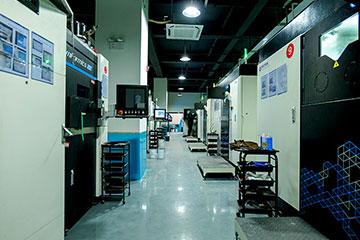
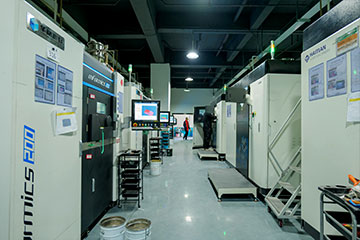
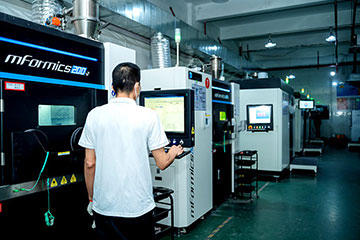
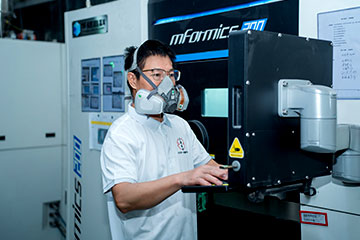
4. Kami memiliki 33 SLM metal 3D printers, 14 CNC machining tools, 60 printer 3D berbahan plastik, 50 BJ 3D printers (owned by another company in which DT has invested), dan angkanya terus bertambah.
5. We are a source factory for many global 3D printing service providers.
Mengapa memilih kami?
- We have manufactured numerous pure cooper and cooper alloy thermal management components via 3D printing using copper and copper alloys for clients all over the world.
- We provide in-house manufacturing dengan 33 high-end industrial SLM metal 3D printers, 14 Mesin CNC dan 50 industrial BJ 3D printers (Owned by another factory in which we have an investment).
- Special Offer for New Clients
- Our strength lies in SLM metal printing. Kami memiliki 33 premium SLM metal 3D printers, most costing around $150,000 masing-masing, and our fleet is still expanding.
- No MOQ (Jumlah Pesanan Minimum) required. We can customize even a single piece for you.
Feel free to contact us for inquiries.
Tidak ada MOQ (Jumlah Pesanan Minimum) batas di sini. Kami dapat menyesuaikan bahkan hanya satu bagian saja untuk Anda.
Selamat datang di layanan konsultasi.