

Seien wir mal ehrlich: 33D-Druck ist längst nicht mehr nur für Prototypen gedacht
Hier ist etwas, das du vielleicht über die Automobilindustrie weißt – oder auch nicht: 33D-Druck – oder additive Fertigung, Wenn man es ganz genau nehmen will – rückt langsam aber sicher von der Nebenrolle ins Rampenlicht.
Gerade jetzt, 33D-Druck in der Automobilbranche lässt sich auf drei Hauptanwendungsfälle reduzieren:
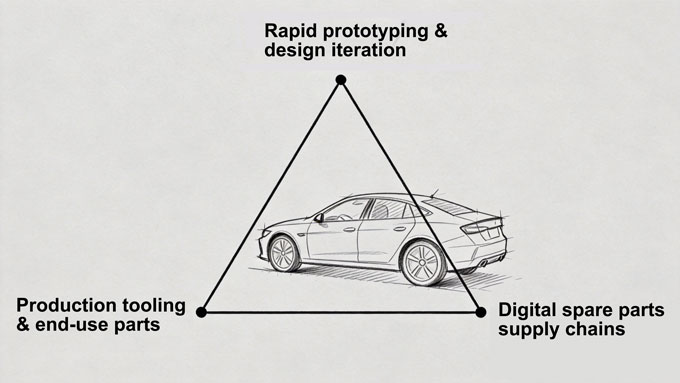
- Schnelle Prototypenerstellung und Designiteration
- Fertigungswerkzeuge und Endverbrauchsteile
- Digitale Lieferketten für Ersatzteile
Schauen wir uns das Ganze mal genauer an. Ich habe Beispiele aus der Praxis, konkrete Zahlen, und ein paar ziemlich verrückte Geschichten, um das Ganze zu untermauern.
Von CAD zur Rennstrecke in Stunden (nicht Monate)
Das ist die Sache bei der traditionellen Fahrzeugentwicklung: Früher dauerte die Herstellung eines Prototypenteils Wochen. Manchmal Monate.
Du müsstest die Werkzeuge kürzen, auf Formen warten, Drück die Daumen, und hoffe, es hat geklappt.
3D-Druck? Das dreht das Ganze komplett auf den Kopf.
Fallstudie: Ford Mustang GTD 3D-Druck “Hood Flicks”
In 2025, Der Ford Mustang GTD riss einen 6:52.072 Runde auf dem Nürburgring – damit ist es das erste amerikanische Serienauto, das die 7-Minuten-Marke geknackt hat. Dann im April 2026, Die noch extremere Mustang GTD Competition-Version hat noch einmal 11 Sekunden mit einem 6:40.835 lap.
Was ist also das Geheimnis??
3D-Druck.
Hier ist der Hintergrund: Die Ingenieure von Ford stellten fest, dass bei Geschwindigkeiten von über 300 km/h, Die Front des Mustang GTD fühlte sich ein wenig schwammig an. Nicht ideal, wenn du versuchst, Rundenrekorde aufzustellen.
Die traditionelle Lösung? Metallformen schneiden, Stempel überarbeiten, Monate warten. Das reicht einfach nicht, wenn du buchstäblich auf der Rennstrecke stehst und versuchst, Sekunden zu sparen.
Also, Greg Goodall, der Chefprogrammingenieur des Mustang GTD, hat angerufen: einen 3D-Drucker an der Rennstrecke einsetzen.
Sein Team hat diese winzigen Flugzeugteile entworfen, die man “Hood Flicks” — im Grunde kleine, erhabene Teile, die um die Lüftungsschlitze der Motorhaube herum sitzen. Sie lenken den Luftstrom subtil um, um den Abtrieb an der Front zu erhöhen, ohne den Luftwiderstand zu vergrößern.
Jetzt wird’s erst richtig gut: nach jedem Windkanaltest, Die Ingenieure würden das Design optimieren, Drucke direkt vor Ort eine neue Version aus, und kleb es für die nächste Runde aufs Auto.
Sieben oder acht Designentwürfe. Über 20 Luftwiderstandstests. Alles auf Tage statt auf Monate komprimiert.
Das ist die Kraft von “design-print-test” spontan. Und genau deshalb ist der Mustang GTD mittlerweile eines der schnellsten Serienautos der Welt.
Vom Prototyp bis zur Serienfertigung
Wenn Rapid Prototyping die Komfortzone des 3D-Drucks ist, dann 3D druckenfür echte Serienteile für echte Autos Hier wird es erst richtig interessant.
Fallstudie: BMW mit 35 Jahre im 3D-Druck, WAAM ist endlich da
BMW beschäftigt sich schon seit1990. Genau – dreieinhalb Jahrzehnte.
Zunächst, Es ging nur um Konzeptfahrzeuge und Prototypen. Aber heute? 33D-gedruckte Teile sind injede einzelne Marke der BMW Group — MINI, BMW, Rolls-Royce, und BMW Motorräder. Und sie sind in jeder Fabrik vertreten, die das Unternehmen weltweit betreibt.
Aber das hier finde ich am spannendsten: WAAM (Additive Fertigung mittels Draht-Lichtbogenverfahren).
Stell dir das wie 3D-Druck auf Steroiden vor. Bei WAAM wird Metalldraht mit einem Lichtbogen geschmolzen – ähnlich wie beim Schweißen, … aber gesteuert durch eine Software, die Schicht für Schicht aufbaut, bis ein fertiges Teil entsteht.
Der große Vorteil? Du kannst druckenmassiv, Einzelbauteile das normalerweise mehrere Teile erfordern würde, die miteinander verschraubt oder verschweißt werden müssen.
BMW begann mit der Entwicklung von WAAM im 2024, begann mit Tests auf Fahrzeugebene im 2025, und richtet sich an2027 für die Serienfertigung.
Das ist eine große Sache. Es geht darum, dass die additive Fertigung im industriellen Maßstab in der Automobilindustrie Realität wird.
Fallstudie: BYD Yangwang U9X – die weltweit erste 3D-gedruckte Serienkarosserie
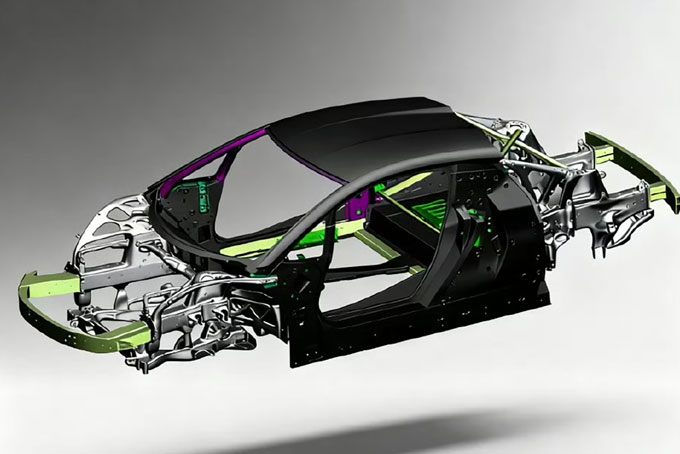
Bei EuroCarBody 2025 Konferenz, BYD hat eine Bombe platzen lassen: die weltweit erste integrierte, im 3D-Druck hergestellte Hochleistungs-Karosserie. Und das war nicht nur zur Show – es hatBestnote von der Fachjury.
Das macht den Text besonders beeindruckend:
BYD setzte 3D-Metalldruck ein (Laser-Pulverbett-Fusion, um genau zu sein) zum Bau einer hochfesten Karosseriestruktur aus einer Aluminiumlegierung. Durch Topologieoptimierung – was eine ausgefallene Umschreibung ist für “Lass den Computer herausfinden, wohin das Material tatsächlich gehören soll” — sie haben ein200% Erhöhung der Torsionssteifigkeit im Vergleich zu einem massiven Bauwerk mit demselben Gewicht.
Oh, und sie haben auch gekürztüber 30% des Gewichts im Vergleich zur traditionellen Fertigung.
Genauigkeit? Nach oben 90% der bedruckten Flächen wiesen Maßabweichungen innerhalb von±0,5 mm.
Aber Moment – da ist noch mehr. BYD hat außerdem gedruckt20 Bremssättersätze für das U9X. Durch Topologieoptimierung, Sie haben das Gewicht um 20–30 % reduziert und die Ölkanäle sowie die Einsätze direkt in den Druck integriert. Weniger Montageschritte, höhere Zuverlässigkeit unter extremen Bedingungen.
Fallstudie: Karsan 3D-Druck— 80% Kostensenkung bei Bus-Ersatzteilen
Hier ist eine Geschichte, die jedem in der Fertigungsindustrie aus dem Leben gegriffen ist.
Karsan, ein türkischer Hersteller von Elektrobussen, hatte ein Problem. Sie mussten Gewicht einsparen, um die strengen EU-Vorschriften zu erfüllen, aber das herkömmliche Spritzgießen war für Sonderteile in kleinen Stückzahlen viel zu teuer. Und die Auslagerung der Blechbearbeitung? Zu langsam.
Ihre Lösung: einen großformatigen FDM-3D-Drucker vom Typ Stratasys F770 ins Haus holen –.
Die Ergebnisse?
Die Kosten pro Teil sind gesunken von2.500 € bis 500 € — das ist ein80% Reduzierung
Produktionsvorlaufzeit um3 zu 4 Wochen.
Das ist keine kleine Verbesserung. Das ist ein echter Durchbruch für die Kleinserienfertigung.
Fälle: Immer mehr Autohersteller springen auf den Zug auf
Volkswagen bereits angekündigt im 2021 dass es plant, zu produzierenbis zu 100,000 3D-gedruckte Teile pro Jahr in seinem Werk in Wolfsburg durch 2025 — Einsatz von Binder-Jetting für Strukturteile wie A-Säulen.
General Motors abgeschlossen am 5,400 Projekte im Bereich der additiven Fertigung in 2024. Allein der Cadillac CELESTIQ bietetmehr als 130 33D-gedruckte Komponenten — darunter das bislang größte im 3D-Druck hergestellte Metallbauteil von GM (eine Lenkradblende).
Toyota bringt den 3D-Druck vom Designlabor in die Fertigung. Sie haben sich mit Stratasys zusammengetan, um die Vorlaufzeiten für den Werkzeugbau auf einen einzigen Tag zu verkürzen, und haben den weltweit größten, nahezu massiven, 3D-gedruckten Einsatz für eine Druckgussform entwickelt. (156 kg).
Ford kombiniert in seinem Lkw-Werk in Kentucky KI mit 3D-Druck für den Werkzeugbau und die Qualitätskontrolle.
Die Revolution in der Lieferkette von 3D-Druck Niemand redet darüber
Hier ist etwas, dem nicht genug Aufmerksamkeit geschenkt wird: 33D-Druck verändert nicht nur die Art und Weise, wie wir Teile herstellen. Es ändert sich, wo und wann wir sie treffen.
Das alte Modell? Jahrzehntelange Vorräte’ Wert der Ersatzteile in den Lagern. Hoffentlich hast du die Anforderungen richtig erraten. Hoffentlich wird nichts aus dem Sortiment genommen.
Das neue Modell? Digitales Inventar.
Anstatt physische Teile zu lagern, Du speicherst digitale Dateien. Brauchst du ein Teil?? Auf Anfrage drucken. Genau dann, wenn du es brauchst. Genau da, wo du es brauchst.
Fallstudie: Das dezentrale 3D-Druck-Netzwerk von BMW
BMW setzt das bereits in großem Umfang um.
Auf ihrem Campus für additive Fertigung in Deutschland, Sie verwerten Abfallpulver zu Filamenten und Pellets für 3D-Druck-Werkzeuge und -Vorrichtungen –.
Im Werk München, Sie verwenden 3D-gedruckte provisorische Positionierungsteile, um die Lenkgestänge bei der Fahrwerksmontage präzise auszurichten.. Sobald der Auftrag erledigt ist, Die Teile lassen sich abnehmen und wiederverwenden.
Der Clou? Dieses dezentrale Netzwerk kann Teile liefernin Stunden, nicht Tage.
Das ist genau die Art von Agilität in der Lieferkette, die früher reine Fantasie war.
Wohin die Reise geht
Wenn du dir die Entwicklung ansiehst, wirst du ein klares Muster erkennen:
Dann: Konzeptmodelle und Prototypen
Jetzt: Fertigungswerkzeuge und Endverbrauchsartikel
Weiter: vollständig integriert, Multi-Material, Großserienfertigung
3Der Druck beginnt an den Rändern. Jetzt geht es zum Kern der Sache.
Und die Fahrer? Sie werden immer stärker:
Elektrofahrzeuge Es werden leichte Teile benötigt, um die Reichweite zu maximieren
Störungen in der Lieferkette bringt alle dazu, das Just-in-Time-Lagermanagement zu überdenken
Kunden Ich möchte Anpassungen und Personalisierung
All diese Trends spielen direkt in die Stärken des 3D-Drucks hinein.
Das Fazit? Wenn du in der Automobilindustrie tätig bist und dich nicht mit additiver Fertigung beschäftigst, Du bist schon im Rückstand.