

Laten we eerlijk zijn: 33D-printen is niet meer alleen voor prototypes
Hier is iets wat je misschien wel of misschien niet weet over de auto-industrie: 33D-printen — of additieve productie, Als je het technisch wilt bekijken: het verschuift langzaam maar zeker van de zijlijn naar het middelpunt van de belangstelling.
Op dit moment, 33D-printen in de autowereld komt neer op drie belangrijke toepassingen:
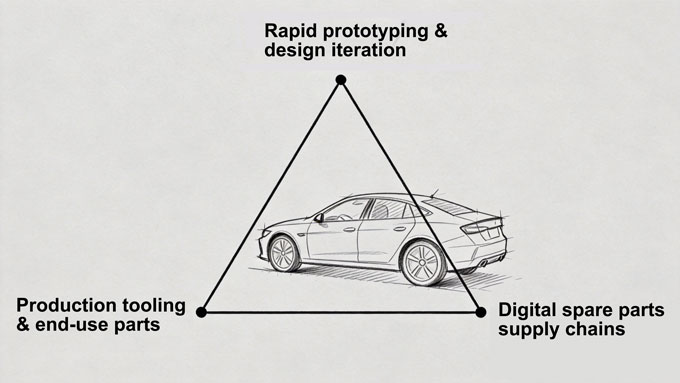
- Snelle prototyping en ontwerpiteratie
- Productiegereedschappen en onderdelen voor eindgebruik
- Digitale toeleveringsketens voor reserveonderdelen
Laten we ze een voor een bekijken. Ik heb voorbeelden uit de praktijk, harde cijfers, en een paar behoorlijk wilde verhalen om het allemaal te onderbouwen.
Van CAD naar het circuit in een paar uur (geen maanden)
Dit is het punt met traditionele auto-ontwikkeling: Vroeger duurde het weken om een prototype te maken. Soms maanden.
Je zou de bewerking moeten inkorten, wacht op mallen, duim maar mee, en ik hoop dat het gelukt is.
3D-print? Dat is een complete ommezwaai.
Casestudy: Ford Mustang GTD 3D-printen “buurtfilms”
In 2025, De Ford Mustang GTD scheurde een 6:52.072 een ronde op de Nürburgring — waarmee het de eerste Amerikaanse productieauto is die de grens van 7 minuten doorbreekt. En dan in april 2026, De nog extremere Mustang GTD Competition-versie schraapte nog eens 11 seconden met een 6:40.835 lap.
Dus wat is het geheime ingrediënt??
3D-print.
Dit is het achtergrondverhaal: De ingenieurs van Ford merkten op dat bij snelheden boven 300 km/u, De voorkant van de Mustang GTD begon een beetje te zweven. Niet ideaal als je ronderecords wilt vestigen.
De traditionele oplossing? Metalen matrijzen snijden, herformulering van tekstfragmenten, maanden wachten. Dat is niet genoeg als je letterlijk op het circuit staat en probeert seconden te winnen.
Dus Greg Goodall, de hoofdprogramma-ingenieur van de Mustang GTD, heeft gebeld: zet een 3D-printer in op het circuit.
Zijn team heeft deze piepkleine vliegtuigonderdelen ontworpen, genaamd “buurtfilms” — in feite kleine, verhoogde stukjes die rond de ventilatieopeningen in de motorkap zitten. Ze sturen de luchtstroom op subtiele wijze bij om meer neerwaartse druk aan de voorkant te creëren zonder de luchtweerstand te vergroten.
Nu wordt het pas echt leuk: na elke windtunneltest, de ingenieurs zouden het ontwerp bijstellen, print ter plekke een nieuwe versie uit, en plak het op de auto voor de volgende rit.
Zeven of acht ontwerpversies. Over 20 luchtweerstandstests. Alles samengevat in dagen in plaats van maanden.
Dat is de kracht van “ontwerp-druk-test” ter plekke. En dat is precies waarom de Mustang GTD nu een van de snelste productieauto’s ter wereld is.
Van prototypes tot productielijnen
Als rapid prototyping de comfortzone van 3D-printen is, dan 3D afdrukkenhet produceren van daadwerkelijke onderdelen voor echte auto’s daar wordt het pas echt interessant.
Casestudy: BMW met 35 jaren in de 3D-printindustrie, WAAM is eindelijk hier
BMW is al een tijdje aan het experimenteren met 3D-printen sinds1990. Dat klopt — drieënhalf decennium.
In het begin, het was alleen voor conceptcars en prototypes. Maar vandaag? 33D-geprinte onderdelen zijn inelk merk van de BMW Group — MINI, BMW, Rolls-Royce, en BMW-motorfietsen. En die vind je in elke fabriek waar het bedrijf wereldwijd actief is.
Maar dit vind ik het spannendst: WAAM (Additieve fabricage met draadboog).
Zie het als 3D-printen op steroïden. WAAM gebruikt een elektrische boog om metaaldraad te smelten — een beetje zoals bij lassen, maar aangestuurd door software die laag na laag opbouwt totdat je een compleet onderdeel hebt.
Het grote voordeel? Je kunt dit afdrukkenenorm, structurele onderdelen uit één stuk waarvoor normaal gesproken meerdere onderdelen aan elkaar vastgeschroefd of gelast zouden moeten worden.
BMW begon met de ontwikkeling van WAAM in 2024, is begonnen met testen op voertuigniveau in 2025, en richt zich op2027 voor volledige serieproductie.
Dit is een grote zaak. We hebben het over additive manufacturing op industriële schaal die werkelijkheid wordt in de auto-industrie.
Casestudy: BYD Yangwang U9X — de eerste 3D-geprinte carrosserie ter wereld die in serie wordt geproduceerd
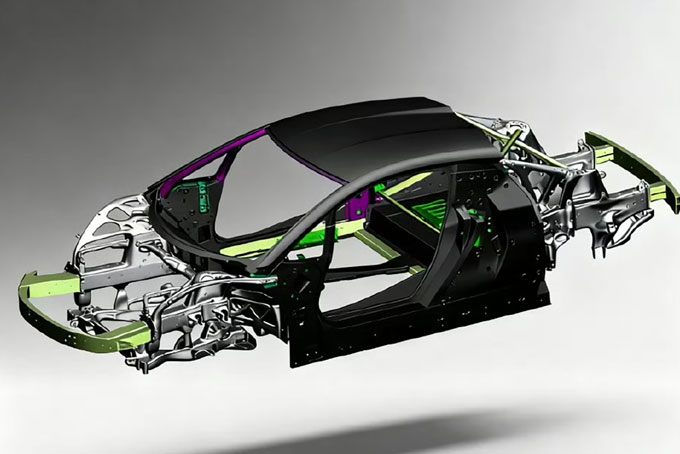
Bij EuroCarBody 2025 conferentie, BYD kwam met een verrassende onthulling: 's Werelds eerste geïntegreerde, 3D-geprinte carrosserie voor een high-performance auto. En het was niet alleen voor de show — het kosttetopscore van de professionele jury.
Dit is wat het zo indrukwekkend maakt:
BYD maakte gebruik van 3D-printen met metaal (laser powder bed fusion, om precies te zijn) om een carrosseriestructuur van een zeer sterke aluminiumlegering te bouwen. Door middel van topologie-optimalisatie — wat een chique manier is om te zeggen “Laat de computer maar uitzoeken waar het materiaal daadwerkelijk naartoe moet” — ze hebben een200% toename in torsiestijfheid vergeleken met een stevige structuur van hetzelfde gewicht.
Oh, en ze hebben ook gekniptmeer 30% van het gewicht in vergelijking met traditionele productie.
Nauwkeurigheid? Over 90% van de bedrukte oppervlakken bleef de maatafwijking binnen±0,5 mm.
Maar wacht even — er is nog meer. BYD heeft ook gedrukt20 sets remklauwen voor de U9X. Door middel van topologie-optimalisatie, Ze hebben 20–30% van het gewicht bespaard en de oliekanaaltjes en inzetstukken direct in het printontwerp geïntegreerd. Minder montagestappen, betere betrouwbaarheid onder extreme omstandigheden.
Casestudy: 3D-printen bij Karsan— 80% kostenbesparing op busonderdelen
Hier is een verhaal dat iedereen in de productiesector na aan het hart ligt.
Karsan, een Turkse fabrikant van elektrische bussen, had een probleem. Ze moesten gewicht besparen om aan de strenge EU-voorschriften te voldoen, maar traditioneel spuitgieten was veel te duur voor op maat gemaakte onderdelen in kleine oplagen. En het uitbesteden van plaatbewerking? Te traag.
Hun oplossing: Haal een Stratasys F770 grootformaat FDM 3D-printer in huis –.
De resultaten?
De kosten per onderdeel zijn gedaald van€ 2.500 tot € 500 — dat is een80% reductie
Productietijd drastisch verkort met3 naar 4 weken.
Dat is geen kleine verbetering. Dat is een echte doorbraak voor productie in kleine series.
Voorbeelden: Steeds meer autofabrikanten doen mee
Volkswagen aangekondigd in 2021 dat het van plan is te producerentot 100,000 3Aantal 3D-geprinte onderdelen per jaar in zijn fabriek in Wolfsburg door 2025 — het gebruik van binder jetting voor constructiedelen zoals A-stijlen.
General Motors voltooid op 5,400 projecten op het gebied van additive manufacturing in 2024. De Cadillac CELESTIQ alleen al biedtmeer dan 130 33D-geprinte onderdelen — inclusief het grootste 3D-geprinte metalen onderdeel dat GM tot nu toe heeft geproduceerd (een sierring voor het stuurwiel).
Toyota brengt 3D-printen van het ontwerplab naar de fabrieksvloer. Ze zijn een samenwerking aangegaan met Stratasys om de doorlooptijd van gereedschappen terug te brengen tot één dag en hebben ’s werelds grootste, bijna massieve, 3D-geprinte inzetstuk voor spuitgietmatrijzen ontwikkeld (156 kg).
Ford combineert AI met 3D-printen in zijn vrachtwagenfabriek in Kentucky voor het maken van gereedschap en kwaliteitscontrole.
De revolutie in de toeleveringsketen door 3D-print niemand heeft het erover
Hier is iets wat niet genoeg aandacht krijgt: 33D-printen verandert niet alleen de manier waarop we onderdelen maken. Het verandert waar en wanneer we ze maken.
Het oude model? Decennia opbouwen’ waarde aan reserveonderdelen in magazijnen. Ik hoop dat je de vraag goed hebt geraden. Hopelijk wordt er niets uit het assortiment gehaald.
Het nieuwe model? Digitale inventaris.
In plaats van fysieke onderdelen op te slaan, je slaat digitale bestanden op. Heb je een onderdeel nodig? Print het op aanvraag. Precies wanneer je het nodig hebt. Precies waar je het nodig hebt.
Casestudy: Het gedecentraliseerde 3D-printnetwerk van BMW
BMW doet dit al op grote schaal.
Op hun campus voor additive manufacturing in Duitsland, Ze recyclen afvalpoeder tot filament en pellets voor 3D-printgereedschap en -hulpstukken-.
In de fabriek in München, Ze gebruiken 3D-geprinte tijdelijke positioneringsonderdelen om de stuurstangen nauwkeurig uit te lijnen tijdens de montage van het chassis. Zodra de klus geklaard is, de onderdelen kunnen worden gedemonteerd en hergebruikt.
De clou? Dit gedecentraliseerde netwerk kan onderdelen leverenin uren, geen dagen.
Dat is het soort flexibiliteit in de toeleveringsketen dat vroeger pure fantasie was.
Waar het naartoe gaat
Kijk eens terug op het traject en je ziet een duidelijk patroon:
Dan: conceptmodellen en prototypes
Nu: productiegereedschappen en onderdelen voor eindgebruik
Volgende: volledig geïntegreerd, multi-materiaal, grootschalige productie
33D-printen begon aan de randen. Nu gaan we naar de kern.
En de drijfveren? Ze worden alleen maar sterker:
Elektrische voertuigen er zijn lichte onderdelen nodig om het bereik te maximaliseren
Verstoringen in de toeleveringsketen zorg ervoor dat iedereen zijn 'just-in-time'-voorraadbeleid heroverweegt
Klanten wil aanpassing en personalisatie
Al deze trends sluiten perfect aan bij de sterke punten van 3D-printen.
Waar het op neerkomt? Als je in de automobielindustrie zit en geen aandacht besteedt aan additive manufacturing, je loopt al achter.