
As manufacturing shifts toward small batches, more variety, and complex parts, traditional metal molds are becoming a bottleneck. They take too long, cost too much, and are a pain to modify.
That’s where 3D printed molds—especially those made with SLA or DLP—come in. They fill the gap between hard tooling and direct 3D printed parts.
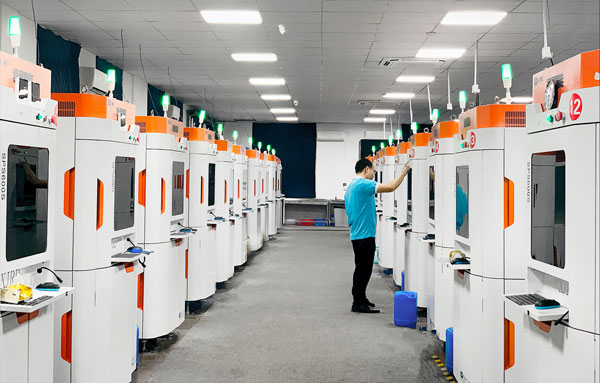
In this article, we’ll walk you through real-world examples and numbers to show you where 3D printed resin molds make sense (and where they don’t).
1. Why Bother with 3D Printed Resin Molds?
Traditional steel molds can last tens of thousands of shots. But they also take 3–6 months to make and cost anywhere from a few thousand to tens of thousands of dollars (or more).
When you’re iterating fast, dealing with small orders, or need custom parts, that old-school “heavy asset, long wait” model just doesn’t work.
Now, enter 3D printed resin molds—especially those from SLA or DLP. With layer thickness down to 0.025–0.05mm, turnaround times of 24–48 hours, and the ability to print complex shapes in one go, they’re becoming a go-to for prototype validation, low-volume trials, and custom parts. Let’s dig into the real value—and limits—with actual case data.
2. How It Works: Types of 3D Printed Resin Molds
Most resin molds are made with SLA (laser) or DLP (projector) printing. After 3D printing, they go through washing and post-curing.
Depending on what you need, resin molds fall into four buckets:
Injection mold inserts – Used with a metal mold base for small-batch injection molding. Typical life: 50–100 shots.
Investment casting patterns – Burnout resin replaces wax patterns for precision metal casting.
Master patterns for silicone molding – High-precision masters to make soft molds, then cast PU, epoxy, jne..
Prototype validation molds – For fit and assembly testing; longevity isn’t the goal.
Each type needs different resin properties (heat resistance, hardness, sitkeys). Let’s look at real cases.
3. Real-World Case Studies
3.1 Ilmailu ja avaruusteollisuus: SLA Resin Patterns for Investment Casting
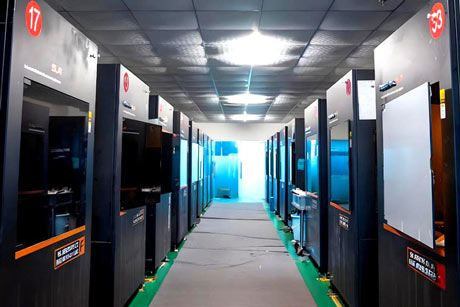
The challenge: Satellite brackets, turbine blades—aerospace parts are complex. Traditional metal tooling takes forever and costs a fortune.
Real example: Yunzhu 3D Technology runs dozens of industrial SLA printers. One of their main gigs? Printing resin patterns for investment casting in aerospace—think titanium parts and other precision castings. Take a satellite bracket pattern: the inside is a honeycomb lattice. That keeps it light while still strong.
The numbers: Compared to traditional metal tooling, 3D printed resin patterns cut lead time from months down to 1–2 weeks (exactly how much depends on part complexity). With high-precision SLA, dimensional tolerance typically stays within ±0.1mm—good enough for small to medium castings.
Bottom line: SLA resin patterns cut mold prep from months to days. Perfect for aerospace parts where annual demand is 50–200 units.
3.2 Small-Batch Injection Molding: Resin Mold Inserts
The challenge: Automotive parts, consumer electronics—startups and R&D teams often need just 50 to a few hundred plastic parts. Steel molds are overkill: expensive and slow.
Case A: An automotive parts company needed 50 sensor housings. A steel mold would cost $7,150 (50,000 RMB / 7) and take 20 days. Instead, they used a high-hardness, heat-resistant ceramic-filled resin insert with a small injection molding machine.
Total cost: under $430 (3,000 RMB).
Toimitus: 48 tuntia.
That’s 1/16th the cost of steel.
Case B: A dashcam mount bracket needed small-batch injection molding. The resin insert was printed in just 3.5 hours using a ceramic-filled resin (about 65% silica filler).
From design to trial shot: one week.
The data: A study found that for runs of 250 parts or less, 3D printed resin inserts cost 43.2% less than machined molds. Another data point: compared to traditional methods, overall cost can drop 80%, and lead time shrinks over 60%.
Bottom line: For 50–250 parts, 3D printed resin molds are the smart, cost-effective choice. Above 500 osat, steel starts to win again.
3.3 Investment Casting: 3D Printed Resin Patterns
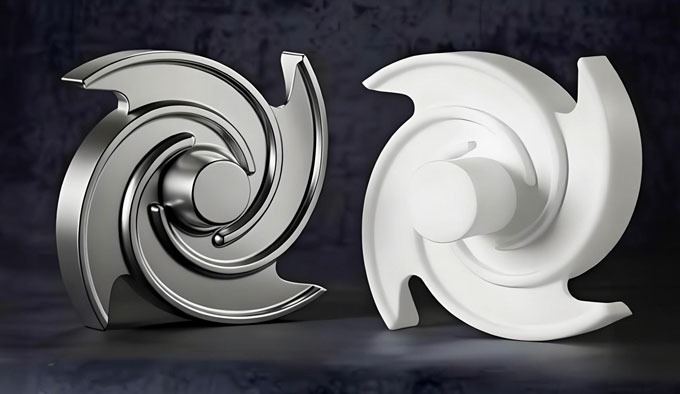
The challenge: Korut, lääketieteelliset implantit, precision parts—investment casting is the standard. The old way: make a metal mold, then inject wax. Long lead time and high cost.
Real example: The Cprint 3D wax printer from Zhongcheng Smart Tech prints burnable resin-wax patterns directly. That cuts the per part lead time from hours (not including mold making) down to tens of minutes or a few hours. But here’s the key: the traditional route first needs a metal mold—which takes weeks. 3D printing skips that entire step.
For investment casting, going with SLA resin patterns usually shaves 50%+ off the time from design to first cast part. One casting service provider told us: a sample that used to take 30 days now takes just 7–10 days with 3D printed resin patterns (exact timing depends on part size and post processing needs).
The sweet spot: Resin patterns for investment casting work best when annual volume is under 500 units and parts are complex. If you need over 1,000 simple parts per year, traditional wax injection with a metal mold is still cheaper.
Bottom line: Resin patterns eliminate metal tooling completely. You go straight from digital model to castable pattern.
3.4 Silicone Molding: SLA Master Patterns
The challenge: Silicone molding is great for 30–500 parts (low-volume appearance parts). The key is the master pattern’s precision and surface finish. 3D printed resin masters deliver fast and cheap.
What happened: An appliance maker needed 50 fridge door panels and AC panels for appearance validation. They printed SLA resin masters with surface roughness under Ra 0.6μm. Master pattern done in 48 tuntia, silicone mold poured in 3 days, all 50 parts delivered in 7 days. Compared to traditional steel tooling, that’s over 60% shorter lead time.
Bonus: During a smart washing machine project, they used this same process to test three different panel textures in one week. They quickly found the design users liked best, cutting total R&D time by 2 months.
Bottom line: SLA masters + silicone molding gives you medium-volume replication at very low mold cost (usually a few hundred dollars). It’s a proven path for design validation and pilot runs.
More Details about 3D printed silicone molds, please check here.
4. Material Properties: What Matters
Three key specs decide whether a resin mold actually works in production:
- Heat resistance (HDT – Heat Deflection Temperature)
Standard resins have HDT of only 60–65°C – useless for injection molding.
But specialty mold resins go much higher:
Henkel LOCTITE 3D IND147: HDT 230°C, modulus 3190 MPa
Formlabs High Temp Resin: HDT 238°C
Forward AM Ultracur3D RG 3280 (~65wt% silica): HDT over 280°C, stiffness over 10 GPa
2. Surface quality
With layer thickness 0.025–0.05mm and post-curing, surface roughness can hit Ra ≤ 0.2μm. Want a mirror finish? Hand-polish with 1000-grit sandpaper.
3. Durability & lifespan
With proper post-curing and mold release, a resin mold can handle 50–100 injection shots. But resin choice matters a lot: Rigid 10K inserts lasted 250 shots, while High Temp resin inserts cracked after just 4–5 shots. Match the material to your job.
5. Cost & Time Savings at a Glance
| Application | Traditional cost/lead time | 3D printed resin mold solution | Savings |
| 50 sensor housings (injection) | $7,150 / 20 days | $430 / 2 days | Cost ↓94%, time ↓90% |
| Aerospace titanium casting | 3–6 months | 2 viikkoja | Time ↓80%+ |
| Investment casting sample | 30 days | 7 days | Time ↓75%+ |
| 50 silicone molded parts | ~30 days (hard tooling) | 7 days | Time ↓60%+ |
| 250-shot injection insert | Machined | 3D printed | Cost ↓43.2% |
The takeaway: The sweet spot for 3D printed resin molds is under 250 osat. They cut R&D time by 60–80%. Above 500 parts or if you need over 1,000 shots, traditional metal molds still make more sense.
6. Rajoitukset & What’s Next
Current challenges with resin molds:
Short lifespan – 50–100 shots is nothing compared to steel’s tens of thousands.
Brittleness – Some resins can crack under repeated clamping force.
Material cost – High-performance ceramic-filled resins run a few hundred dollars per kg.
But things are improving fast: ceramic-filled resins now hit HDT above 280°C and stiffness over 10 GPa. Hybrid approaches (resin insert + metal mold base + surface coating) could push lifespan past 500 shots.
As materials and processes keep getting better, 3D printed resin molds will move beyond prototyping into larger-scale flexible production.