


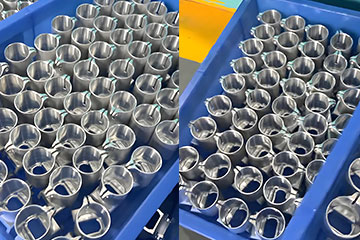

Let’s cut straight to it: if you design high-power electronics, IGBT thermal management is make-or-break. As SiC MOSFETs and next-gen IGBT modules pack more power into smaller footprints, even well-designed aluminum heatsinks and standard cold plates are hitting their limit. One unaddressed hot spot, one too many thermal cycles, and you’re looking at premature component failure and costly field returns.
Traditional cooling methods only get you so far. Skived fins work for low-to-mid power builds, but they can’t keep up with modern high-flux modules. Brazed liquid cold plates perform better, but they come with seams — seams that leak, degrade under thermal cycling, and fail in high-vibration environments. And you’re stuck with straight, uniform channels that waste coolant flow on cool areas while leaving hotspots undercooled.
That’s where 3D printed copper IGBT heat sinks come in. By printing the entire cooler as one solid part, we can optimize cooling exactly where your die runs hottest, pack in far more heat transfer surface, and eliminate the weak points that plague traditional designs.
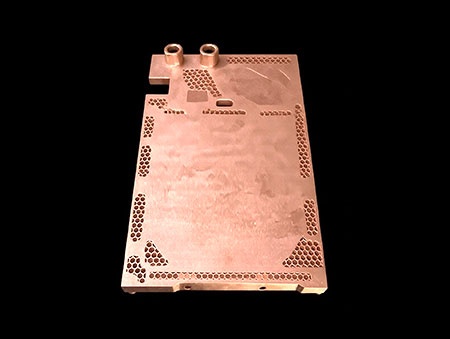
On this page, we’ll break down how 3D printed copper cooling works for IGBT and power electronics applications, what real performance gains you can expect, and why more automotive and industrial teams are making the switch. This is part of our full lineup of 3D printed copper & copper alloy thermal management solutions, so you can see how IGBT cooling fits into your broader thermal strategy.
Why Traditional IGBT Cooling Hits a Ceiling
If you’ve spent any time troubleshooting power electronics, you already know the standard playbook: skived aluminum fins for low power, brazed cold plates for higher power, and cross your fingers that hotspots don’t cause failures down the line.
The problem is, modern IGBT and SiC modules have outrun these old methods.
Skived aluminum heatsinks are cheap and reliable for basic industrial drives, but once you push past a certain power density, you hit a hard wall. You can add more fins, spin faster fans, or blow more air — but you’ll hit diminishing returns fast, and end up with a bulky, noisy solution that still can’t hit your thermal targets.
Brazed liquid cold plates perform better, but they have a fatal flaw: seams. Every joint between the base and the cover is a potential leak point, and after thousands of thermal cycles in harsh environments, those seams degrade. For automotive and outdoor industrial gear, that’s a huge reliability risk.
Worst of all, both methods lock you into straight, parallel channels. You can’t tailor cooling to match the actual die layout on your module. You end up overcooling the edges and undercooling the center hotspots, wasting coolant flow and leaving valuable thermal headroom on the table.
For a long time, that was as good as it got. Not anymore.
How 3D Printed Copper Solves IGBT Thermal Headaches
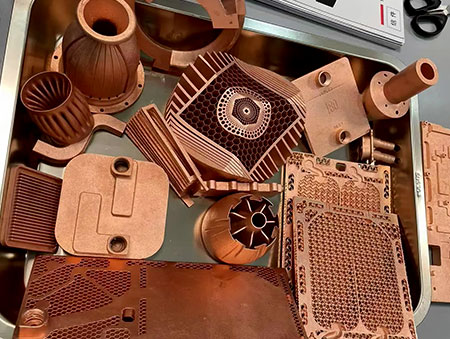
3D printing rewrites the rules by letting you build the exact cooling geometry you need, as one single solid part. No assembly, no seams, no design compromises forced by traditional manufacturing.
Here’s what that actually delivers for your power electronics designs:
Hotspot-aligned cooling geometry
Unlike one-size-fits-all straight channels, we can design flow paths and fin layouts that line up perfectly with the actual die map on your IGBT module. That means more cooling capacity right over the hottest parts of the chip, and less wasted flow where temperatures are already low.
The result: dramatically better temperature uniformity across the entire module, lower peak junction temperatures, and directly extended component lifespan. This isn’t a marginal gain — for high-flux SiC designs, it’s often the difference between hitting your reliability targets and missing them.
Hybrid microchannel + lattice structures
We can combine dense microchannels with TPMS (Triply Periodic Minimal Surface) lattice cores in high-heat zones to pack maximum heat transfer surface into a given footprint. Lattice structures promote turbulent coolant flow, which boosts heat exchange even further — something you simply can’t achieve with machined straight channels.
For ultra-compact, high-power designs, this is a step change in cooling density. We dive deep into how these structures perform in our full guide to TPMS lattice porous cooling structures.
Monolithic construction = zero leak points, better vibration resistance
Every cooler prints as one single solid piece of copper. No brazed seams, no welded joints, no bonded inserts.
For liquid-cooled designs, that means zero leak points — even after thousands of thermal cycles. For air-cooled designs, the monolithic structure holds up far better to constant vibration in automotive and industrial environments, with no risk of fins separating from the base plate over time.
Material options matched to your operating environment
Choose pure copper for maximum thermal conductivity (390–410 W/m·K) in static, low-vibration setups like stationary industrial drives. Or go with a copper alloy like CuCrZr (320–350 W/m·K) for high-pressure, high-vibration environments like EV traction inverters.
We break down the full performance, durability, and cost tradeoffs in our pure copper vs copper alloy 3D printing comparison guide, so you can pick the right material for your exact specs the first time.
Testimonials from Overseas B2B Clients
“J'avais très peur qu'il arrive quelque chose de grave. Mais après avoir reçu le produit, Je me suis rendu compte que mon inquiétude était totalement inutile. DT 3D Printing est une usine très fiable qui garantit la qualité de ses produits.”

“La qualité du produit est excellente – notch, Le savoir-faire est exquis, Le rendu à l'impression est excellent, et la livraison est vraiment rapide. Dans l'ensemble, c'est un excellent rapport qualité-prix, et je suis extrêmement satisfait.”

“La qualité d'impression est vraiment excellente, et le prix est tout à fait abordable. La logistique est également rapide. En résumé, DT est une usine de confiance, et on continuera à coopérer avec eux à long terme.”



Built for Real-World Power Electronics Environments
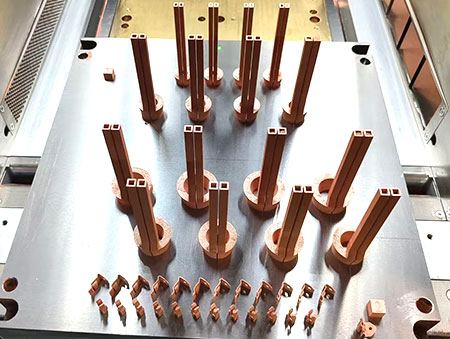
These aren’t lab-only parts. We design our 3D printed copper IGBT coolers to hold up in the same harsh conditions your equipment operates in every day.
Electric Vehicle Traction Inverters & OBCs (On-Board Chargers)
EV powertrains run hard, with constant vibration, wide temperature swings, and strict reliability requirements. Copper alloy monolithic coolers deliver the pressure resistance and fatigue life needed for automotive duty cycles, with better cooling density than brazed alternatives.
Solar Inverters & Energy Storage Converters
Outdoor power electronics need to handle decades of thermal cycling without failure. Pure copper coolers deliver excellent thermal performance for stationary deployments, with no seams to degrade from temperature swings and humidity.
Industrial Motor Drives & Automatisation
Heavy industrial equipment runs 24/7, and downtime is expensive. 3D printed copper coolers handle higher power densities in the same footprint, letting you upgrade drive performance without a full mechanical redesign.
Aérospatiale & Defense Avionics
Weight and reliability are non-negotiable in aerospace power systems. 3D printed copper delivers optimized cooling in lighter, more compact packages, with monolithic construction that stands up to shock and vibration.
The Big Misconception: “Aluminum Is Good Enough for IGBTs”
Look, aluminum heatsinks work fine for low-power, low-cycle-count applications. But for modern high-power SiC and IGBT modules, the math doesn’t add up.
Copper has roughly 2.5x the thermal conductivity of 6061 aluminium. That’s not a small difference — it directly translates to lower junction temperatures, better temperature uniformity, and significantly longer module lifespan. When you factor in the cost of field failures, warranty claims, and downtime, upgrading to a 3D printed copper cooler almost always pays for itself quickly.
And before you assume it’s too expensive: for complex, high-performance designs, 3D printed copper is often cost-comparable to a multi-piece machined and brazed aluminum assembly — with far better performance and reliability.
Foire aux questions
Can you match standard IGBT module footprints and mounting patterns?
Oui, most clients come to us with standard module packages (like 62mm, EconoDUAL, et plus encore) and we design the cooler to be a drop-in replacement. No full redesign of your power assembly needed.
Do you make both air-cooled and liquid-cooled IGBT heat sinks?
Absolutely. We design both, and we’ll recommend the right approach based on your power density, ambient conditions, and system constraints.
What pressure ratings can liquid-cooled designs handle?
That depends on material and wall thickness. Pure copper works great for standard industrial loops, while copper alloy designs can handle much higher pressures for heavy-duty and automotive applications. We’ll spec everything to your exact requirements.
How long do prototype parts take?
For standard prototype builds, we typically turn around first articles in 10–15 business days after design finalization. Production lead times scale with order quantity, and we’ll give you a firm timeline with your quote.
Do you provide thermal design support?
Oui. Our engineering team can work with your thermal specs to optimize cooler geometry for your exact heat load and flow conditions. We don’t just print what you send us — we help you make it better. For comprehensive best practices, check out our design guide for 3D printed copper heat exchangers.
Ready to Fix Your IGBT Thermal Bottleneck?
If you’re hitting thermal limits with your current cooling setup, or you’re designing a new high-power module that needs compact, reliable performance, let’s talk.
Send us your IGBT module specs, heat load data, and operating conditions, and our engineering team will get back to you with:
- A full DFM (Design for Manufacturing) review
- A clear material recommendation (pure copper or alloy)
- Expected thermal performance estimates
- Firm pricing and lead time
No generic sales pitches, just straight engineering feedback from people who build copper power electronics coolers every day.
Request your free design review today and knock out your IGBT thermal bottleneck for good.
Keep exploring

- Pure Copper vs Copper Alloy 3D Printing: Full Comparison
- Pure Copper 3D Printing Technology for Advanced Thermal Management
- TPMS Lattice Porous Structures for Next-Gen Copper Cooling
- Design Guide for 3D Printed Copper Heat Exchangers


À propos de nous
1. We are a professional metal 3D printing manufacturer.
2. On imprime en 3D des pièces métalliques pour l'automobile, médical, avion, aérospatiale, drone, et les industries nautiques, en utilisant des matériaux tels que l'acier inoxydable, titane, cuivre, l'aluminium et les différents types d'alliages.
3. On propose un service d'impression 3D tout-en-un.
Nos services comprennent:
SLM / BJ / SLA / MJF / FDM / SLS / DLP, CNC machining and post-processing
4. Nous possédons 33 Imprimantes 3D métalliques SLM, 14 CNC machining tools, 60 imprimantes 3D en plastique, 50 BJ 3D printers (owned by another company in which DT has invested), et les chiffres ne cessent d'augmenter.
5. We are a source factory for many global 3D printing service providers.
Pourquoi nous choisir?
- We have manufactured numerous pure cooper and cooper alloy thermal management components via 3D printing using copper and copper alloys for clients all over the world.
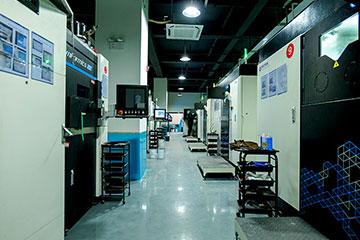
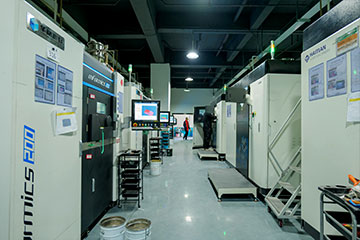
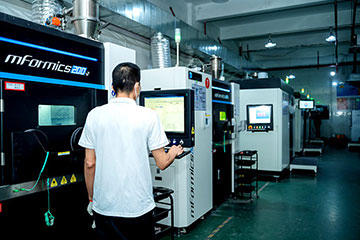
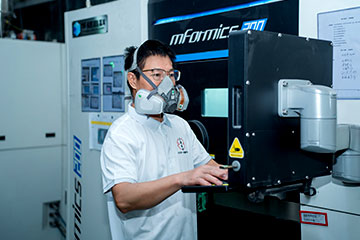
- We provide in-house manufacturing with 33 high-end industrial SLM metal 3D printers, 14 Les machines CNC et 50 industrial BJ 3D printers (Owned by another factory in which we have an investment).
- Special Offer for New Clients
- Our strength lies in SLM metal printing. Nous possédons 33 premium SLM metal 3D printers, most costing around $150,000 chacun, and our fleet is still expanding.
- No MOQ (Quantité minimale de commande) required. We can customize even a single piece for you.
Feel free to contact us for inquiries.
Il n'y a pas de quantité minimale de commande (MOQ). (Quantité minimale de commande) limite ici. On peut personnaliser ne serait-ce qu’un seul document pour toi.
N'hésite pas à me contacter.