

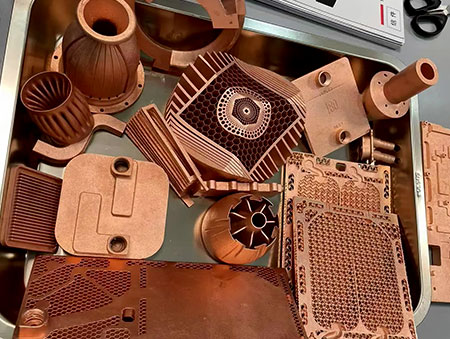
3D printed copper cooling isn’t a one-size-fits-all solution. If you’re working on a basic low-power fin stack for a simple industrial enclosure, standard extruded aluminum will be cheaper, faster, and perfectly fine. No need to overcomplicate it.
But when you’re pushing the limits of power density, packing more performance into a tight footprint, or building parts that need to hold up to harsh conditions for years? That’s where 3D printed copper delivers real, measurable gains you simply can’t get with traditional manufacturing.
On this page, we’ll break down the industries where this technology makes the biggest difference, the specific problems it solves, and the kind of results our clients see. This is part of our full lineup of 3D printed copper & copper alloy thermal management solutions, so you can see how each use case fits into the bigger picture.
Where 3D Printed Copper Cooling Delivers The Most Value
Data Centers & AI High-Performance Computing
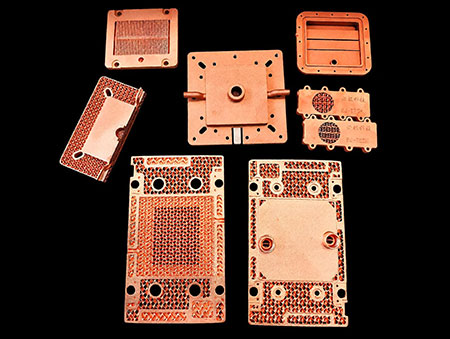
AI training clusters and high-density server racks are running hotter than ever. Modern AI GPUs easily push past 1kW of power per chip, and air cooling simply can’t keep up at those densities. Traditional brazed cold plates work, but they come with seam leak risks that can take out an entire tray of servers — and the downtime cost is brutal.
Our monolithic 3D printed copper cold plates fix both problems. We build them as single solid parts with internal microchannels and TPMS lattices optimized for your exact chip heat map. No seams, no leak points, and far better heat transfer per square inch than assembled alternatives.
The end result: you can pack more compute power into the same rack space, with far less risk of cooling-related downtime. → Learn more: 3D Printed Copper Liquid Cold Plates for Server Cooling
Electric Vehicles & Power Electronics

Traction inverters, on-board chargers, and industrial power drives run hard. IGBT and SiC MOSFET modules generate high heat flux, and they operate in environments with constant vibration, wide temperature swings, and strict reliability requirements. Traditional skived fin coolers hit a wall on performance, and brazed cold plates develop leaks over thousands of thermal cycles.
3D printed copper coolers solve this by combining optimized cooling geometry with monolithic construction. We use copper alloys for high-vibration builds, with flow paths tuned to target die hotspots directly. No welded joints, no failure points, and far better temperature uniformity across the module.
That directly translates to longer component life, fewer field failures, and more power in a smaller package. → Learn more: 3D Printed Copper Heat Sinks for IGBT & Power Electronics
Optical Communications & Photonics
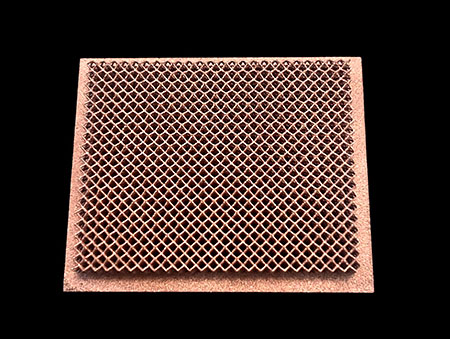
800G and 1.6T transceivers pack more bandwidth than ever into the exact same tiny form factor. Power density is sky-high, space is extremely limited, and even a few extra degrees can hurt signal integrity and shorten laser lifespan. Traditional cast aluminum housings and bonded heat spreaders just can’t move enough heat without adding bulk.
We print integrated pure copper thermal structures with micro-fins and mini lattice features right inside the package outline. By building cooling directly into the structure, we eliminate thermal interface resistance and drop peak die temperatures by 4–6°C — all without changing your module footprint or PCB layout.
It’s a drop-in thermal upgrade that lets you hit performance specs without a full mechanical redesign. → Learn more: 3D Printed Copper Thermal Structures for High-Speed Optical Modules
Aérospatiale & Defense Avionics
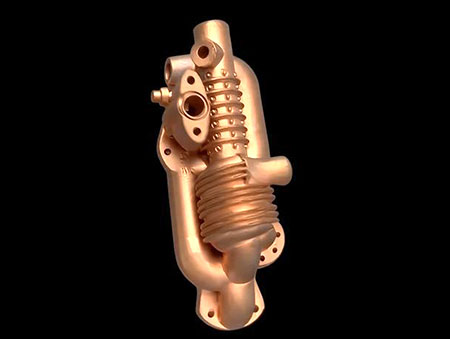
In aerospace and defense, two things matter most: weight and reliability. Avionics systems, radar units, and on-board power electronics need to deliver consistent performance through shock, vibration, and extreme temperature swings — and every gram counts.
3D printed copper lets you build optimized cooling geometries that are lighter, more compact, and far more reliable than assembled parts. Monolithic construction means no seams to fail under stress, and topology optimization lets you remove unnecessary material without sacrificing performance or strength. We typically recommend high-strength copper alloys for most aerospace and defense applications. The end result is a cooler that hits your thermal targets, meets weight limits, and holds up to harsh operating conditions.
Médical & Industrial Laser Systems

High-power lasers depend on precise, stable temperature control. Even small temperature fluctuations can shift output wavelength, reduce power consistency, and shorten the lifespan of expensive laser diodes and cavities. Traditional drilled or machined cooling channels can’t wrap tightly around irregular laser shapes, leading to uneven cooling and hot spots.
With 3D printing, we can build conformal cooling channels that follow the exact shape of your laser cavity or optical component. Uniform, consistent cooling means more stable output, longer component life, and more compact system designs. For industrial laser systems running 24/7, that directly translates to less downtime and lower maintenance costs.
Testimonials from Overseas B2B Clients
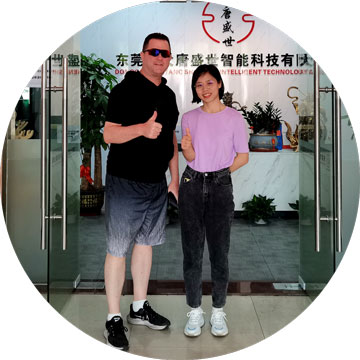
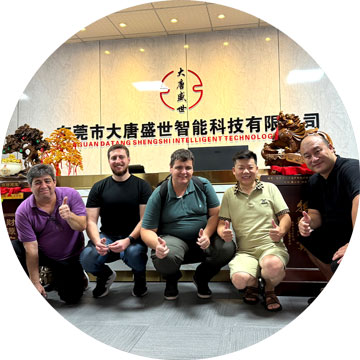
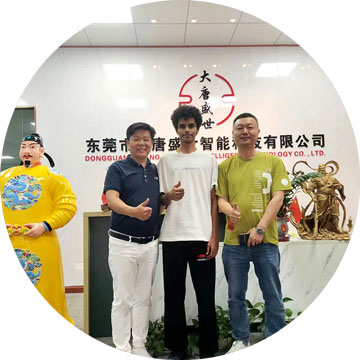
“J'avais très peur qu'il arrive quelque chose de grave. Mais après avoir reçu le produit, Je me suis rendu compte que mon inquiétude était totalement inutile. DT 3D Printing est une usine très fiable qui garantit la qualité de ses produits.”

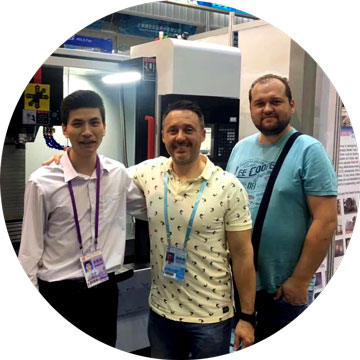
“La qualité du produit est excellente – notch, Le savoir-faire est exquis, Le rendu à l'impression est excellent, et la livraison est vraiment rapide. Dans l'ensemble, c'est un excellent rapport qualité-prix, et je suis extrêmement satisfait.”


“La qualité d'impression est vraiment excellente, et le prix est tout à fait abordable. La logistique est également rapide. En résumé, DT est une usine de confiance, et on continuera à coopérer avec eux à long terme.”

Let’s Bust One Big Myth
We hear this all the time: “Is 3D printing always better than traditional cooling methods?” The short answer: no.
If your design is simple, low-power, and easy to machine or extrude, traditional manufacturing will almost always be cheaper and faster. We won’t try to sell you a 3D printed solution if it doesn’t deliver clear, measurable value for your project.
Cela dit, if you’re running into any of these issues, it’s almost always worth exploring:
- You can’t hit your thermal targets with traditional manufacturing
- You’re tight on space and need more cooling in the same footprint
- Leaks or seam failures are a major reliability risk
- You need complex, custom geometry that can’t be machined or cast
En fin de compte, the best cooling solution is the one that hits your performance, reliability, and cost targets. We’ll always tell you straight if 3D printing makes sense for your build — or if you’re better off sticking with a simpler method.
Foire aux questions
What industries do you most commonly support?
We work most heavily with data center & AI computing, automotive power electronics, optical communications, aérospatiale & defense, and industrial laser teams. Cela dit, we regularly take on custom projects for niche industrial and medical applications too.
Can you build thermal parts for custom or niche applications?
Absolutely. Most of our work is custom-built to match our clients’ exact specs. If you have a unique thermal challenge that traditional manufacturing can’t solve, send us your requirements and we’ll tell you straight if we can help.
How do I know if 3D printing is cost-effective for my project?
As a general rule, 3D printing delivers the best ROI when your design is complex enough that traditional manufacturing requires multiple parts, multiple operations, or expensive tooling. For simple, flat parts, it’s usually not worth it. We’ll always give you an honest cost-benefit breakdown with your quote.
Do you support scaling from prototype to production?
Oui. We use the same production-grade SLM processes for prototypes and full production runs, so you won’t have to re-qualify a new process when you scale. We can support everything from single prototype builds to mid-volume production runs.
Ready To See If 3D Printed Copper Cooling Works For Your Application?
If you’re working through a thermal design challenge and not sure which manufacturing method makes the most sense, let’s talk.
Send us your CAD file, heat load specs, and operating conditions, and our engineering team will get back to you with:
- An honest assessment of whether 3D printing is a good fit
- A clear material recommendation
- Expected performance estimates
- Firm pricing and lead time
No generic sales pitches, just straight engineering feedback from people who build copper thermal parts every day.
Request your free design review today and let’s find the right cooling solution for your project.


À propos de nous
1. We are a professional metal 3D printing manufacturer.
2. On imprime en 3D des pièces métalliques pour l'automobile, médical, avion, aérospatiale, drone, et les industries nautiques, en utilisant des matériaux tels que l'acier inoxydable, titane, cuivre, l'aluminium et les différents types d'alliages.
3. On propose un service d'impression 3D tout-en-un.
Nos services comprennent:
SLM / BJ / SLA / MJF / FDM / SLS / DLP, CNC machining and post-processing
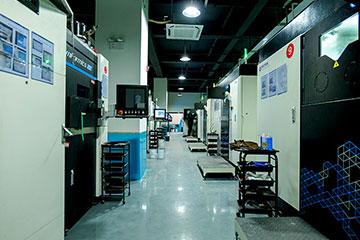
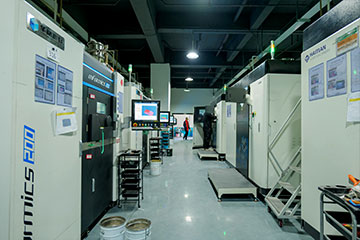
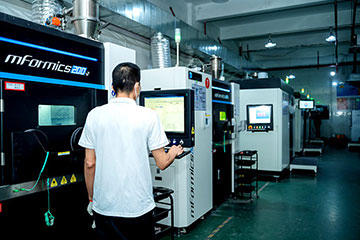
4. Nous possédons 33 Imprimantes 3D métalliques SLM, 14 CNC machining tools, 60 imprimantes 3D en plastique, 50 BJ 3D printers (owned by another company in which DT has invested), et les chiffres ne cessent d'augmenter.
5. We are a source factory for many global 3D printing service providers.
Pourquoi nous choisir?
- We have helped customers design and manufacture numerous pure copper and copper alloy thermal management components with SLM 3D printing using copper and copper alloys for clients all over the world.
- We provide in-house manufacturing with 33 high-end industrial SLM metal 3D printers, 14 Les machines CNC et 50 industrial BJ 3D printers (Owned by another factory in which we have an investment).
- Special Offer for New Clients
- Our strength lies in SLM metal printing. Nous possédons 33 premium SLM metal 3D printers, most costing around $150,000 chacun, and our fleet is still expanding.
- No MOQ (Quantité minimale de commande) required. We can customize even a single piece for you.
Feel free to contact us for inquiries.
Il n'y a pas de quantité minimale de commande (MOQ). (Quantité minimale de commande) limite ici. On peut personnaliser ne serait-ce qu’un seul document pour toi.
N'hésite pas à me contacter.