Passer au contenu
  • Youtube
  • Insouffisants
  • Gazouillement
  • Tiktok
  • French
    • English
    • Japanese
    • French
    • German
    • Italian
    • Spanish
    • Swedish
    • Irish
    • Dutch
    • Portuguese
    • Korean
    • Greek
    • Turkish
    • Vietnamese
    • Thai
    • Indonesian
    • Malay
    • Danish
    • Finnish
    • Hindi
    • Hebrew
    • Icelandic
    • Romanian
    • Russian
Service d'impression DT 3D

Service d'impression DT 3D

Fabricant d'OEM – SLM (Impression en métal 3D) Spécialistes

  • Maison
  • 3D Service d'impression
    • SLM (Fusion laser sélective)
    • Sla (Stéréolithographie)
    • SLS (Frittage sélectif au laser)
    • DLP (Traitement numérique de la lumière)
    • FDM (Modélisation des dépôts fondus)
    • MJF (Fusion multi-jets)
    • Bj (Jet de liant)
  • Service d'usinage CNC
    • CNC tournant
    • Moulin CNC
    • Finition de surface
  • Guide des matériaux
        • Matériaux d'impression 3D en plastique
          • Résine (De type ABS, Comme PC)
          • Nylon (PA6, PA12, TPU)
          • Cire rouge
          • PLA, TPU, Pennsylvanie, Fibre de carbone, PC
        • Matériaux d'impression 3D en métal
          • Alliage d'aluminium (6061 / AISi10Mg / 7075)
          • Acier inoxydable (316L / 304L / 17-4 / 347)
          • Alliage de titane (CT4 / TA1)
          • Acier de moule (S136/HB/CX/1.2709)
          • Alliage riche en nickel (GH4169 / GH3128 / INCONEL625)
          • Alliage de laiton (CuCrZr / Bronze à l'étain)
        • Matériaux métalliques pour CNC
          • Aluminium / Alliage / Titane / Nickel
          • Acier inoxydable / Acier à outils / Acier allié
          • Acier au carbone / Laiton / Cuivre / Bronze
        • Matières plastiques pour CNC
          • ABS / Acrylique / Delrin / Nylon / PP
          • PEHD / PE / PC / Î.-P.-É. / ULTIME
          • COUP D'OEIL / POM / TECAFORMAH
  • Support client
        • Solutions de l'industrie
          • Moule / Moule
          • Aerospace & UAV
          • Pièces automobiles
          • Télécommunications
          • Électronique grand public
          • Industrie médicale
          • Robotics & Automation
          • Artisanat d'art / Cadeaux
        • Studio de conception
          • Modification gratuite du dessin 3D
          • Dessin 3D gratuit (disponible en quantité limitée)
        • Processus de commande
          • Retour & Politique de remboursement
          • Politique d'expédition
          • Foire aux questions (FAQ)
        • Contact us
          • Vidéo de visite d'usine
          • Blog
  • À propos de DT

Cost Comparison and Analysis of Shoe Molds Produced by Traditional Methods and SLM Metal 3D Printing

Updated on 25/10/2025 By DT 3dprint

Cost Comparison Analysis: Traditional vs 3D Printed Shoe Molds

Detailed cost comparison between traditional manufacturing methods and additive manufacturing (3D printing) for shoe mold production, with specific numerical examples illustrating the differences between the two approaches.

Traditional Method
$280-1,400
Per Mold Development Cost
3D Printing Method
$210-560
Per Mold Development Cost
Cost Reduction
50-70%
With 3D Printing
Cost TypeTraditional Method3D Printing Method
Per Mold Development CostApproximately $280–1,400 (including wood pattern making, CNC machining, mold replication, texturing, and complete process fees)Approximately $210–560 (material and energy consumption only, no intermediate processes required)
Design Modification CostHigh (requires remaking wood/metal patterns, single modification cost can reach $70–280)Minimal (digital model adjustment only, negligible cost)
Production Cycle CostCycle time 15–20 days, high labor cost proportion (daily labor cost approximately $28–42/person)Cycle time 6–7 days, labor requirement reduced by 50% or more
Material Utilization RateRelatively low (waste rate for modeling board, metal materials approximately 30–40%)High (powder/resin utilization exceeds 95%)
Mass Production CostPer unit cost can be reduced to $112–210 for large volumes, but small batch customization remains expensiveSignificant advantage for small batches (per unit cost stable at $210–560, no minimum order quantity restrictions)
Environmental Processing CostRequires treatment of chemical etching waste, metal scraps, etc., environmental cost per mold approximately $28–70No chemical pollution, extremely low waste disposal cost (<$7)

Cost Comparison Example

Athletic Shoe Mold Development Case Study

Traditional Method: Initial mold development requires $1,120 (including texturing process). If design requires two modifications, total cost increases to $1,260–1,680, with a lead time of 20 days.

3D Printing: Initial mold cost $420, design modifications incur almost no additional cost, total cost remains $420, with a lead time of 7 days.

Conclusion

3D printing demonstrates significant cost advantages (a reduction of 50–70%) in small batch, high-complexity design scenarios, which is particularly suitable for rapid iteration in R&D phases. Traditional methods maintain cost advantages in large-scale standardized production but lack flexibility and environmental friendliness. As 3D printing equipment costs decline (par ex., metal printers decreasing from $490,000 to $420,000 per unit), its economic viability will further improve.

3D Printing vs Traditional Shoe Mold Manufacturing

A comprehensive comparison of modern and traditional manufacturing approaches in the footwear industry

Comparison DimensionTraditional Shoe Mold Manufacturing3D Printed Shoe Mold Manufacturing
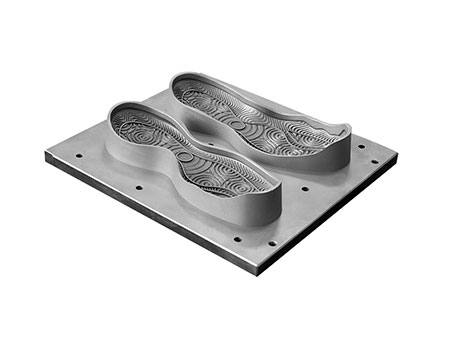
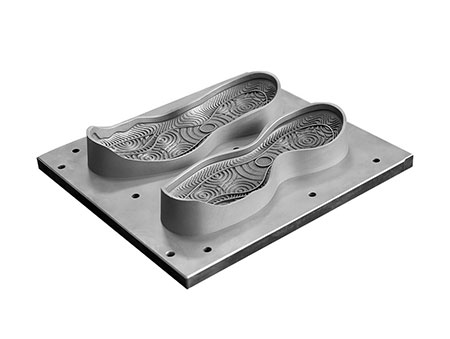
Pictures of Shoe Molds
Shoe mold made by DT SLM Metal 3D Printers
Production ProcessRequires over 10 process steps including CNC wood mold machining, silicone molding, plaster mold creation, metal casting, chemical etching (texturing), and coating—complex and multi-stageDirect printing from digital models, eliminating key steps like wood mold fabrication, casting, and chemical etching—highly streamlined process
Production CycleLonger, typically 15-20 days (includes wood mold processing, casting, etching, etc.)Significantly shorter, typically 5-7 days (direct metal mold printing)
Design FreedomLimited; complex internal structures (par ex., conformal cooling channels) and fine textures are difficult to achieve, reliant on machining capabilitiesExtremely high; enables integrated manufacturing of complex curves, honeycomb structures, micro-vent channels, and 0.05mm precision textures without traditional constraints
Accuracy & ConsistencyRelies on manual skill; poor consistency (typical tolerance ±1mm), prone to deviations due to manual operationsDigitally controlled, accuracy up to ±0,05 mm, excellent consistency and repeatability
Customization CapabilityDifficult to achieve; suitable for large-scale standardized production; high cost and long lead time for design changesEasily achievable; supports small-batch and personalized customization (par ex., customized lasts based on foot scan data)
Environmental ImpactChemical etching causes pollution, requiring additional environmental treatment facilitiesNo chemical etching; eco-friendly (digital texturing replaces acid etching), minimal material waste
Labor DependencyHighly reliant on skilled technicians; difficult process inheritance; consistency affected by human factorsDependent on equipment and software; low reliance on traditional craftsmanship; process parameters can be standardized
Initial InvestmentRequires multiple specialized machines (CNC, EDM, wire cutting, casting equipment, etc.), diverse equipment typesPrimarily relies on 3D printing and post-processing equipment; high equipment integration but higher unit cost (par ex., SLM metal 3D printers $0.43-0.5 million/unit)

Summary

3D printing technology demonstrates significant advantages in shoe mold manufacturing, particularly in reducing lead time (by over 60%), enhancing design freedom (enabling complex structures and fine textures), supporting customization, and improving sustainability compared to traditional methods. It reduces dependency on manual expertise through digital processes and avoids pollution from chemical treatments. However, traditional methods remain valuable for ultra-large-scale standardized production, while 3D printing involves higher initial equipment costs. The two technologies can be applied complementarily based on production needs (volume, complexity, cycle time).

Traditional Method

Best for large-scale standardized production where initial tooling costs can be amortized over high volume runs.

3D Printing

Ideal for prototyping, complex designs, custom footwear, and short production runs with rapid turnaround requirements.
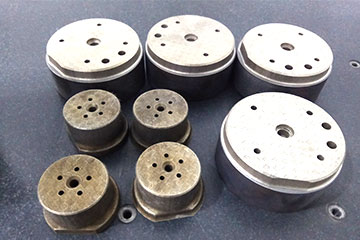
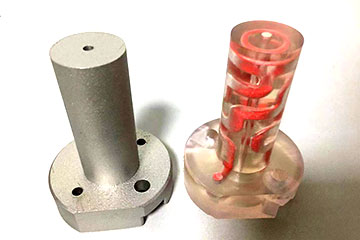
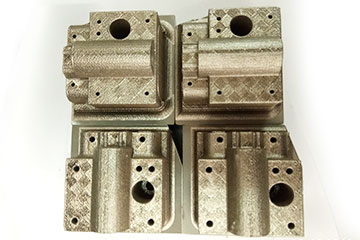
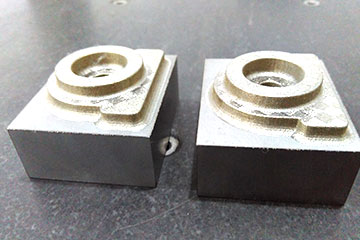
Moule de bloc de valve hydraulique en métal imprimé en 3D (moule d'élément de contrôle des fluides)
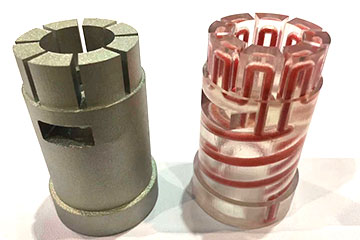
3Moule métallique imprimé en D pour douille de coulée de moulage par injection
Metal 3D-printed dental molds made by DT's SLM printers
Moules dentaires en métal imprimés en 3D fabriqués par les imprimantes SLM de DT
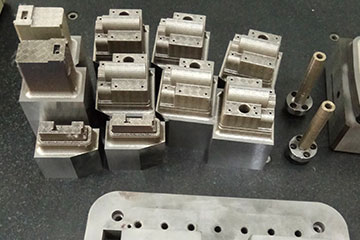
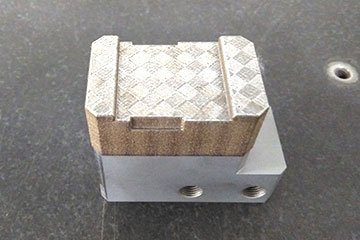
Metal 3D-printed precision mold components made by DT's SLM printers
Composants de moules de précision en métal imprimés en 3D et fabriqués par les imprimantes SLM de DT
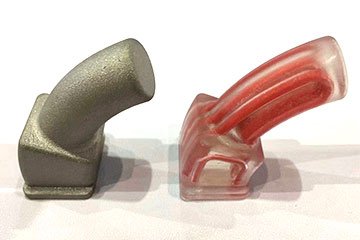
3Insert de moule à injection imprimé en D (avec canaux de refroidissement conformes)
Insert de moule à injection en métal imprimé en 3D (avec canaux de refroidissement conformes)
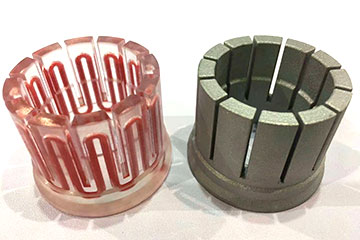
Metal 3D-printed injection mold core components made by DT's SLM printers
Composants de base de moules à injection en métal imprimés en 3D et fabriqués par les imprimantes SLM de DT
Inserts de moule en métal imprimés en 3D (composants de noyau de moule) made by DT's SLM printers
Inserts de moule en métal imprimés en 3D (composants de noyau de moule) réalisé par les imprimantes SLM de DT
Metal 3D-printed injection mold cavity inserts made by DT's SLM printers
Inserts de cavité de moulage par injection en métal imprimés en 3D et fabriqués par les imprimantes SLM de DT
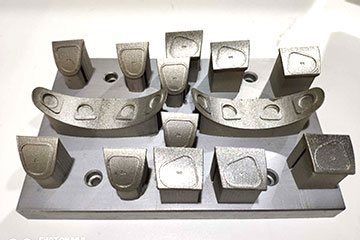
Moule d'injection en métal imprimé en 3D avec mécanisme de tirage du noyau coudé
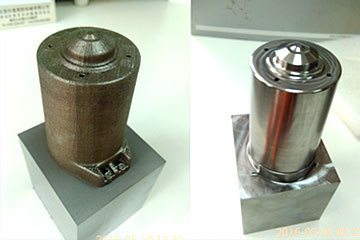
Ebauches et produits finis de moules à injection en métal imprimés en 3D
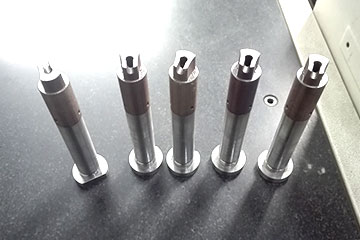
Goupille d'insertion de moule à injection en métal imprimée en 3D (cœur) composants
Solution industrielle et témoignages de réussite

Post navigation

Previous Post: SLM vs DMLS: Metal 3D Printing Technology Selection Guide
Next Post: Unveiling the Ex-factory Prices of 3D-printed Crafts and Gifts

Related Products

3D Printing Medical Industry Parts and Components Application List and DT Success Stories Blog
3D Printing Telecommunications Parts and Components Application List and DT Success Stories Blog
Success Stories and Metal 3D Printing Automotive Molds and Components Application List Blog
Metal 3D Printing Aerospace & UAV Parts and Components Application List and DT Success Stories Blog
3D Printing Consumer Electronics Parts and Components Application List and DT Success Stories Blog
The Comparison Between the 3D Printing Factory Ex-factory Price and the Retail Price of 3D-Printed Handicrafts and Gifts Unveiling the Ex-factory Prices of 3D-printed Crafts and Gifts Blog

Support client
FAQ
Modification gratuite du dessin 3D
Dessin 3D personnalisé gratuit (Disponibilité limitée)

Déclarations juridiques
Politique d'expédition
Politique de retour et de remboursement
politique de confidentialité
Conditions de service
Conditions d'utilisation
Clause de non-responsabilité

À propos de nous
Vidéo de visite d'usine
Blog
À propos de DT
Contact

Youtube Gazouillement Tiktok Facebook Instagram Quora LinkedIn Pinterest Reddit Moyen


Copyright © 2025 Impression DT 3D
Tous droits réservés.
Propulsé par le thème des blogs PressBook Grid