

Introduction: Why 3D Printed Silicone Molds Are Game-Changers?
Traditional silicone mold making relies on metal master patterns or precision machining, which comes with sky-high costs and long lead times—making it terrible for small-batch, high-variety production.
3D printing has completely flipped this script. Whether you’re 3D printing a master pattern to cast silicone molds around, or 3D printing silicone directly, this technology cuts mold costs by over 80% and slashes production time by more than 70%.
Slash Your Costs: From Thousands of Dollars to Just Hundreds
Making traditional silicone molds usually starts with machining a metal master pattern, which can cost $4,300-$11,400 and take 2-4 weeks. The most popular 3D printing approach is the “indirect method”: you print a resin master pattern using SLA or DLP technology, pour liquid silicone around it, cure it, then remove the master—and boom, you’ve got your silicone mold. This drops total mold costs from thousands to just a few hundred dollars.
Case Study: Medical Silicone Stent Molds
| Metric | Traditional Method | 3D Printing Method |
|---|---|---|
| Manufacturing Approach | Metal master pattern machining | SLA 3D-printed resin master pattern + silicone mold casting |
| Total Cost | $6,000 | $126 |
| Production Quantity | 50 stents | 50-80 silicone parts |
| Per-Unit Cost | $120/unit | < $2.50/unit |
| Lead Time | 35 days | Significantly reduced |
| Accuracy | — | ±0.1mm |
A medical device company needed 50 medical-grade silicone stents for post-nasal surgery support.
Traditional approach: $6,000 for metal master pattern machining, 35-day lead time.
3D printing approach: SLA 3D printed resin master pattern ($69, ±0.1mm accuracy) + silicone mold casting. Silicone materials cost ~$29 (using addition-cure two-part silicone like Smooth-On Ecoflex 00-30), plus $29 for labor and post-processing. Total cost for one silicone mold: just $126. Each mold reliably produces 50-80 silicone parts, bringing the per-unit mold cost to under $2.50.
Case Study: Small-Batch Industrial Seal Validation
| Cost Component | Traditional Silicone Mold Development | 3D-Printed Master + Silicone Casting | Cost Savings |
|---|---|---|---|
| Initial Project Cost | $3,570.00 | $73.00 | 98% reduction |
| Master Pattern Fabrication | N/A (Metal master) | $50.00 (DLP printed master) | 90–98% savings |
| Silicone Material | Included in mold cost | $23.00 (High-temperature 200°C/392°F liquid silicone) | — |
| Per-Unit Cost | -$19.00 | $3.10 | 83.7% reduction |
| Batch Quantity | 200 units (auto parts gasket) | 200 units (auto parts gasket) | — |
An automotive parts manufacturer needed 200 custom-shaped silicone gaskets for battery pack waterproofing.
Traditional silicone mold development: $3,570.
3D printed master + silicone casting: $50 for DLP printed master, $23 for high-temperature (200°C/392°F) liquid silicone. Total cost: $73. That’s a 98% cost reduction! Even with equipment amortization and labor, per-unit costs dropped from ~$19 to just $3.10.
Quick cost breakdown:
- Silicone mold materials: $21-$57 per set (depends on size and silicone grade)
- 3D printed master pattern: $43-$114 per set
Compared to traditional metal master patterns, you’ll save 90-98% on costs (based on multiple 2024 case studies from Wuhan 3D Intelligence).
Dramatically Shorter Lead Times: From Months to Same-Day
| Process Step | SLA 3D Printing Method | Traditional CNC/EDM Method | Time Savings |
|---|---|---|---|
| Master Model Creation | SLA 3D print (150×150×50mm / 6×6×2 in): -6–8 hours | CNC-bewerking: 15–30 days | -97% reduction |
| Silicone Pouring & Silicone Curing | 4–6 hours (room temperature) or 1–2 hours (with heat) | N/A (depends on mold) | — |
| Demolding & Trimming | -1 hour | N/A | — |
| Total Lead Time (Design to Usable Mold) | Under 16 uren | At least 20 days (400+ uren) | >97% reduction |
The biggest bottleneck in traditional silicone mold making is machining the metal master—CNC or EDM typically takes 15-30 days.
3D printing cuts this down to hours or a single day, turning mold production from a “monthly” process into something you can measure in days or even hours.
Real-world timings:
- SLA 3D print a medium-sized master (150×150×50mm / 6×6×2 inches): ~6-8 hours
- Silicone pouring and curing: 4-6 hours at room temperature for addition-cure silicone (1-2 hours with heat)
- Demolding and trimming: 1 hour
Total time from design to usable silicone mold: under 16 uren. The traditional route takes at least 20 days.
Case Study: Silicone Encapsulation for Wearable Flexible Sensors
A smart clothing startup needed 10 different silicone encapsulation molds to test flexible sensor designs.
Traditional metal molds: $2,570 per mold, 25-day lead time. Total: $25,700 en 25 days.
3D printed masters + silicone casting: All 10 masters printed in one batch (14 uren), silicone poured simultaneously. All 10 molds ready the next day. Total time: 26 uren, total cost: $600.
| Metric | Traditional Metal Molds | 3D Printed Masters + Silicone Casting | Improvement |
|---|---|---|---|
| Cost Per Mold | $2,570 | 60(total60(total600 / 10 molds) | 97.7% reduction |
| Total Cost for 10 Molds | $25,700 | $600 | $25,100 savings |
| Production Lead Time | 25 days | 26 uren (1 day) | 96.8% time reduction |
| Production Capacity | Single mold at a time | All 10 molds simultaneous | 10x efficiency |
| Batch Processing | No (individual molds) | Yes (one 14-hour print batch) | N/A |
| Print Time (All Molds) | N/A | 14 uren | N/A |
| Ready for Use | 25 days | Next day | 24 days saved |
The company completed 3 design iterations in one week—something that would have taken 3 months with traditional methods.
The Two Main 3D Printing Silicone Mold Technologies
Technology 1: Indirect Method – 3D Printed Master + Silicone Casting (Most Mature Today)
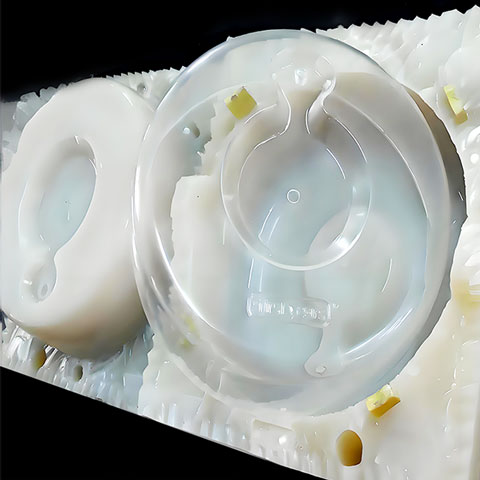
Master pattern materials: SLA/DLP photopolymer resin (±0.05-0.1mm accuracy) or SLS nylon (higher strength for complex demolding structures)
Silicone mold materials: Addition-cure (platinum-catalyzed) or condensation-cure liquid silicones. Popular grades include Dragon Skin 20, Ecoflex series, and Smooth-Sil 940.
Key specs:
- Silicone mold Shore hardness: 00 20 to A70 (adjustable; use Shore 00 scale for ultra-soft silicones, Shore A for standard)
- Linear shrinkage: 0.1-0.3% for addition-cure; 0.5-1.0% for condensation-cure (easily compensated for in design)
- Tear strength: 15-40 kN/m (varies by grade)
- Mold lifespan: 20-80 cycles (depends on part complexity and silicone type)
Best for: 20-500 parts. Perfect for product prototypes, crowdfunding campaigns, and small-batch custom orders.
Engineering Example: Silicone Finger Cots for Prosthetics
Using 3D printed masters to cast silicone molds:
Each mold produces 50 finger cots. Mold cost: $40. Material cost per finger cot: $0.50. Total for 50 units: $40 + ($0.50×50) = $65, averaging $1.30 each.
Traditional silicone injection molding requires a $8,570 mold, and you’d need to make 5,000 units just to get the per-unit cost down to $1.70—completely impractical for small batches.
Technology 2: Direct Method – 3D Print Silicone Parts Directly (Cutting-Edge)
In recent years, 3D printing and materials companies have cracked the code on true silicone 3D printing.
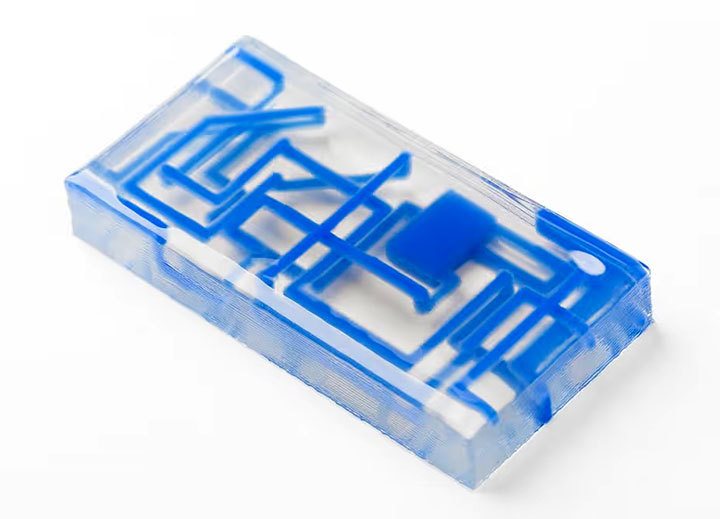
Real-World Direct Silicone 3D Printing Applications
- Stratasys P3™ Silicone 25A: Photocurable platform producing silicone with >600% elongation at break, >15 kN/m tear strength, and ISO 10993-5 biocompatibility certification.
- Lynxter S600D: Material extrusion system supporting Shore A 30-70 liquid silicones.
Advantages of direct printing: No master pattern needed, no casting required. You can directly print silicone parts with internal cavities, lattice structures, variable hardness, and other complex geometries that are impossible with traditional molding.
Direct 3D printing specs:
- Accuracy: ±0.1-0.2mm (photocurable types are more precise)
- Minimum wall thickness: 0.5-1.0mm
- Per-unit cost: Higher, about 3-5x the indirect method (silicone inks are expensive, $200-$500 per liter)
Best for: Extremely complex parts, medical implants, microfluidic chips (typically batches <50 units).
Global Silicone 3D Printing Market Growth
According to Grand View Research’s 2024 Global Silicone 3D Printing Market Report:
- Silicone 3D printing materials market: Valued at $197 million in 2025, projected to reach $363 million by 2034 (9.7% CAGR)
- Total market (equipment + services): $1.158 billion in 2024, projected to hit $35 billion by 2035 (10.6% CAGR)
Limitations and When to Use What
The Biggest Limitation of Indirect 3D Printed Silicone Molds: Lifespan
- Standard addition-cure silicone molds: 20-50 cycles before edge wear or sticking becomes an issue (softer silicones like Shore 00-30 wear faster)
- With optimized design (adding alignment pins, using high-tear-strength silicone like Dragon Skin 30): 80-100 cycles
- Rare reinforced formulations: Up to 150 cycles
Still, this is nothing compared to steel molds, which can last 100,000+ cycles.
Industry consensus on batch sizes:
- 20-500 parts: 3D printed silicone molds are the most economical choice by far
- 500-2000 parts: Evaluate—you might use 3-5 silicone molds in parallel
- >2000 parts: Switch to traditional silicone injection molding or metal tooling
For direct silicone 3D printing, per-unit costs are higher (3-5x casting), but there are no mold constraints. It’s perfect for <20 units of extremely complex parts (like bionic heart valves or variable-stiffness pneumatic actuators).
Real-World Success Stories
Custom Silicone Baby Nipples (50 Units)
A baby products brand needed 50 silicone nipples in three different hardnesses for clinical testing.
Traditional metal molds: $11,400, 40-day lead time.
SLA 3D printed masters + silicone casting: Three silicone molds for $193 total ($64 each, including masters and materials), 3-day lead time. After sanding and spraying the masters, the finished nipples had a surface roughness of Ra<1.6μm, passed FDA silicone certification, and cost $1.39 each (including materials and labor). The brand completed three hardness iterations in just two weeks.
Sumurize:
| Parameter | Traditional Metal Mold Method | SLA 3D Printing + Silicone Casting |
|---|---|---|
| Project Scope | 50 units for clinical testing | 50 units for clinical testing |
| Product Specification | Three different hardness levels | Three different hardness levels |
| Mold/Master Material | Metal molds | 3D printed masters + silicone molds |
| Number of Molds | 1 mold | 3 silicone molds |
| Total Mold Cost | $11,400 | 193 in total (64 each, including masters and materials) |
| Cost Per Unit (Including Materials & Labor) | — | $1.39 each |
| Lead Time | 40 days | 3 days |
| Surface Quality | — | Ra < 1.6μm (after sanding and spraying) |
| Certification | FDA silicone certification passed | FDA silicone certification passed |
| Iteration Capability | — | Completed 3 hardness iterations in 2 weeks |
| Cost Savings | Baseline | -98.3% reduction in mold costs |
Surgical Training Silicone Organs (200 Sets)
A medical model company needed 200 pancreatic tumor surgery practice models with realistic tactile feel.
Traditional steel mold + silicone injection: $17,100 mold cost, $2.57 per unit. Total: $17,614.
3D printed masters + silicone molds: One mold costs $89, and each lasts ~60 cycles. So 4 molds total for $354. Materials and labor for 200 parts: ~$486. Total cost: $840—just 4.8% of the traditional approach. Plus, we could pre-embed simulated blood vessels inside each model using core-pulling structures in the silicone mold—something impossible with traditional methods.
Microfluidic Chip Silicone Seals (20 Units)
A research lab needed 20 PDMS/silicone composite microfluidic chips.
Using direct silicone 3D printing (Lynxter printer, Shore A 50 silicone ink), we printed the silicone layers with 300μm wide microchannels directly—no molds needed.
Per-unit printing cost: ~$12, total $243, 2-day lead time. Traditional soft lithography and casting would have cost $3,570 for master patterns and taken 10 days.
Final Thoughts
3D printing has transformed silicone mold making from an expensive, slow process into something affordable and lightning-fast.
Whether you’re using 3D printed masters to cast silicone molds (best for 20-500 parts) or printing silicone directly (perfect for <20 ultra-complex parts), this technology is redefining what’s possible for small-batch silicone manufacturing.
Please Remember:
When you need to make tens to hundreds of silicone parts, 3D printed silicone molds aren’t just an “alternative”—they should be your first choice.