

Treci la conținut
  • Mărturii
  • Turul fabricii
  • Romanian
    • English
    • Japanese
    • French
    • German
    • Italian
    • Spanish
    • Swedish
    • Irish
    • Dutch
    • Portuguese
    • Korean
    • Greek
    • Turkish
    • Vietnamese
    • Thai
    • Indonesian
    • Malay
    • Danish
    • Finnish
    • Hindi
    • Hebrew
    • Icelandic
    • Romanian
    • Russian
DT 3D Printing Noul logo

Serviciu de imprimare 3D DT

Producător OEM – SLM (Imprimarea 3D a metalelor) Specialiști

  • Acasă
  • 3Serviciu de imprimare D
    • SLM (Topire selectivă cu laser)
    • SLA (Stereolitografie)
    • SLS (Sinterizare selectivă cu laser)
    • DLP (Digital Light Processing)
    • FDM (Modelare prin depunere fuzionată)
    • MJF (Multi Jet Fusion)
    • BJ (Binder Jetting)
  • Prelucrare CNC
    • Strunjire CNC
    • Frezare CNC
    • Post-procesare
  • Ghid de materiale
        • Materiale plastice pentru imprimarea 3D
          • Rășină (De tip ABS, PC-Like)
          • Nylon (PA6, PA12, TPU)
          • Ceară roșie
          • PLA, TPU, PA, Fibră de carbon, PC
        • Materiale pentru imprimarea 3D a metalelor
          • Aliaj de aluminiu (6061 / AlSi10Mg / 7075)
          • Oțel inoxidabil (316L / 304L / 17-4 / 347)
          • Aliaj de titan (TC4 / TA1)
          • Oțel matrițat (S136/HB/CX/1.2709)
          • Aliaj bogat în nichel (GH4169 / GH3128 / INCONEL625)
          • Aliaj de alamă (CuCrZr / Tin Bronze)
        • Materiale metalice pentru CNC
          • Aluminiu / Aliaj / Titan / Nichel
          • Oțel inoxidabil / Oțel pentru scule / Oțel aliat
          • Oțel carbon / Alamă / Cupru / Bronz
        • Materiale plastice pentru CNC
          • ABS / Acrilic / Delrin / Nylon / PP
          • Polietilenă de înaltă densitate / PE / PC / PEI / ULTEM
          • Vârf / POM / TECAFORMAH
  • Asistență clienți
        • Soluții pentru industrie
          • Moldova / Mucegai
          • Aerospace & UAV
          • Piese auto
          • Telecomunicații
          • Electronice de larg consum
          • Industria medicală
          • Robotics & Automation
          • Artizanat / Cadouri
        • Studio de design
          • Modificare gratuită a desenului 3D
          • Desen 3D gratuit (disponibilitate limitată)
        • Procesul de comandă
          • Înapoi & Politica de rambursare
          • Politica de livrare
          • Întrebări frecvente (Întrebări frecvente)
        • Blog
          • Video cu turul fabricii
  • Mărturii
  • Despre DT
  • Contactați-ne

Metal 3D Printed Exhaust Manifold Case Studies Roundup

Actualizat la 17/06/2026 De DT 3dprint

Introducere

Exhaust manifolds in cars have a tough job. They sit there, day after day, blasting with exhaust gas at over 800°C, while also dealing with constant heating and cooling cycles and heavy vibration. The old-school way to make one? Bend tubes by hand, weld everything together — it’s complicated and it takes forever.
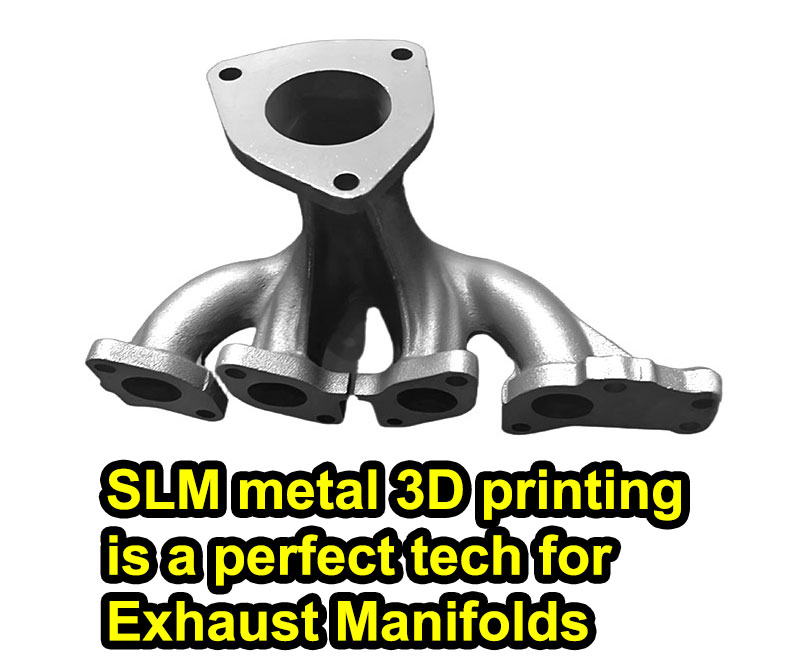
SLM metal 3D printing is a perfect tech for Manufacturing Exhaust Manifolds
SLM metal 3D printing is a perfect tech for Manufacturing High-end Exhaust Manifolds

But SLM metal 3D printing is changing that fast. It’s quickly becoming the go-to method for high-end exhaust manifolds — whether we’re talking race cars, military vehicles, or aftermarket performance parts.

Case 1: 3D Printed Titanium Exhaust Collector for Racing

USC Racing — that’s the University of Southern California’s Formula SAE team — teamed up with UK-basedWayland Additive to build atitanium exhaust collector (the main pipe that merges all the cylinder runners) for their 2025 race car.

The old way: You take nine separate titanium tubes, each just1 mm thick. You shape them, stretch five of them by hand with special tools, and then weld the whole mess together. It’s slow. And worse, the tolerances drift, so the airflow ends up uneven.

The 3D printing way: They used Wayland’s NeuBeam electron beam melting tech on a Calibur3 machine, and 3D printed the collector as one single piece.

What they got: The collector’s total length dropped by50%. That freed up a ton of room in the engine bay and cut weight significantly.

Does it hold up? Yep. That car tookthird place in the Autocross event at Formula SAE 2025. If it survives a race team’s abuse, it’s solid.

Case 2: BMW G80 M3 3D-Printed Steel Exhaust Manifold – A Benchmark in the Aftermarket

Once you’re pushingover 1,000 hp, you don’t grab parts off the shelf. You need custom stuff — and for exhaust manifolds, 3D printing is the rational choice now.

BMW tuning legend Jon Volk cooked up a full set of 3D-printed steel exhaust manifolds and turbo piping for Jordan Horowitz’s G80 M3.

What did it cost? The printing for the steel turbo kit (just the hardware, not the turbo itself) ran about$2,200 USD.

Put that in perspective: Ten years ago, you’d pay the same $2,200 for a decent handmade header — but that old version wouldn’t flow as well, wouldn’t be as light, and would have more weld joints to fail. The printed one beats it in every way.

Case 3: Metal 3D-Printed Exhaust Manifold Passes Stability Test
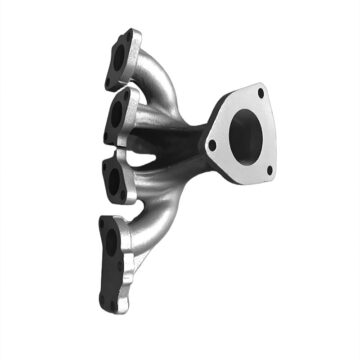
SLM Metal 3D printing exhaust manifolds for car modification shops, racing teams, and the automotive aftermarket

DMZ usedMeltio‘s DED (Directed Energy Deposition) tech to make exhaust manifolds for high-performance rides, and they put it through a real torture test.

The test: They bolted it onto a car and drove it.Sus 10,000 km on real roads. No cracks, no warping — nothing.

Assembly time also shrank: Because the printed manifold has way fewer welds, the whole exhaust routing went from8 hours to just 1 hour of assembly time.

And here’s the kicker: This thing meetsStellantis durability standards. If it passes their bar, it’s legit.

Case 4: 3D-Printed Turbo Inlet Module – Cost and Time Both Cut by 70%

Racing supplierERM built aturbo inlet module — that’s the hot-side part that bolts right onto the manifold. They printed it as a bi-metal structure using aMeltio M600.

How hot can it go? Sus800°C — no sweat.

The numbers: Compared to traditional casting + machining, they slashedcost by 70% șitime by 70%. Not 10%, not 20% — 70%.

Case 5: Jaguar J60 Engine Exhaust Manifold – 21 Hours vs. 6-8 Weeks

SPEE3D used theirCold Spray Additive Manufacturing (CSAM) process to print an exhaust manifold for theJaguar J60 engine — the one that powers the CVR(T) armoured reconnaissance vehicle. This is about as extreme as it gets.

Traditional lead time: Casting or machining that part would run you6 to 8 weeks.

With 3D printing: From design to deployment inless than 21 ore. Let’s break that down:

Cold spray printing: 126 minutes (just over two hours)

Heat treatment: 17 ore

Final machining: 2 ore

Material: They used13 kg dealuminium bronze.

When you’re in the field, waiting two months for a manifold isn’t an option. 21 hours is.

Case 6: Electroplated 3D-Printed Exhaust Manifold – Rapid Prototype Validation at Under €20 Material Cost

If you’re in R&D and just need a prototype to test fitment, casting or machining a metal one takes weeks and burns cash.

BigRep (Germany) șiPolymertal (Israel) showed off a clever hack: 3D print it in plastic, then electroplate it.

The printer: BigRep STUDIO, with a build volume of500 × 1000 × 500 mm — big enough for a full-size manifold.

Filament: Just PLA and PRO HT.

Print time: 15 ore for the whole thing.

Post-procesare: They plated it with a20-micron nickel layer. That gives it heat resistance, chemical resistance, and mechanical strength — close enough to a cast metal part for testing purposes.

Material cost? Under €20. A traditional metal prototype would cost you many times that.

Conclusion

Let’s recap:

A race team 3D prints a titanium collector in 45 ore and cuts its length by 50%.

A 3D printed military manifold goes from 6-8 weeks down to 21 ore total.

A 3D printed aftermarket steel turbo manifold for a 1,000-hp BMW costs $2,200 — same as a good handmade header a decade ago, but miles better.

All while these 3D printed car parts survive 800°C heat and 10,000 km of real driving without cracking.

3D printing is turning the exhaust manifold from a hand-crafted art piece into a digital, optimizable, fast-iterating part. Lighter, more integrated, quicker to make, and cheaper at scale.

Whether it’s for the track, the street, or the battlefield, this 3D printing tech is proven. It’s not the future — it’s already here.

We are an industrial-grade SLM metal 3D printing manufacturer, who is very good at 3D-printing exhaust manifolds.
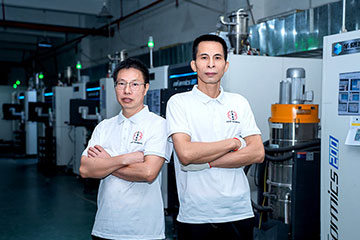
DT is a leading SLM 3D printing factory with dozens of SLM 3D printers and CNC machines, which makes our advantages.

And we have:
(1) 33 high-end SLM metal 3D printers
(2) 14 CNC machine tools
(3) 60 plastic 3D printers
(4) 6 specialized branch production facilities for 3D printing and CNC finishing


Welcome to contact us for details.


We have NO MOQ (Minimum Order Quantity). Rapid prototyping and custom production are available.

Legal Disclaimer:


1. DT (also called “DT 3D Print”) is an independent aftermarket manufacturer. All products are custom 3D printed, non-OEM parts.

2. We are not affiliated with, endorsed by, or officially connected to Porsche, Audi, BMW, Toyota, GM, or any other vehicle manufacturer.

3. All brand names, model names, and vehicle platform references are used exclusively for fitment and compatibility description purposes only.

Blog

Table of Contents

  • Introducere
  • Case 1: 3D Printed Titanium Exhaust Collector for Racing
  • Case 2: BMW G80 M3 3D-Printed Steel Exhaust Manifold – A Benchmark in the Aftermarket
  • Case 3: Metal 3D-Printed Exhaust Manifold Passes Stability Test
  • Case 4: 3D-Printed Turbo Inlet Module – Cost and Time Both Cut by 70%
  • Case 5: Jaguar J60 Engine Exhaust Manifold – 21 Hours vs. 6-8 Weeks
  • Case 6: Electroplated 3D-Printed Exhaust Manifold – Rapid Prototype Validation at Under €20 Material Cost
  • Conclusion
  • Legal Disclaimer:
DT Metal 3D Printing Factory TeamDT SLM Metal 3D Printers in the Factory Workshop

Asistență clienți
Întrebări frecvente
Modificare gratuită a desenului 3D
Desen 3D personalizat gratuit (Disponibilitate limitată)

Declarații legale
Politica de livrare
Politica de returnare și rambursare
Declarație de confidențialitate
Termeni și condiții
Imprimare
Declarație de exonerare de răspundere
Politica privind cookie-urile

Despre noi
Video cu turul fabricii
Blog
Cooperare
Despre DT
Contact

YouTube Twitter TikTok Facebook Instagram Când LinkedIn Pinterest Reddit Medium


Drepturi de autor © 2026 Serviciu de imprimare 3D DT
Toate drepturile rezervate.


Gestionați consimțământul privind cookie-urile
Pentru a oferi cele mai bune experiențe, folosim tehnologii precum cookie-urile pentru a stoca și/sau accesa informații despre dispozitiv. Acordul pentru aceste tehnologii ne va permite să prelucrăm date precum comportamentul de navigare sau ID-urile unice pe acest site. Neacordarea consimțământului sau retragerea consimțământului, poate afecta negativ anumite caracteristici și funcții.
Funcțional Întotdeauna activ
Stocarea sau accesul tehnic este strict necesar în scopul legitim de a permite utilizarea unui serviciu specific solicitat în mod explicit de abonat sau utilizator, sau cu scopul exclusiv de a efectua transmiterea unei comunicări printr-o rețea de comunicații electronice.
Preferințe
Stocarea sau accesul tehnic este necesar în scopul legitim de a stoca preferințe care nu sunt solicitate de abonat sau utilizator.
Statistici
Stocarea sau accesul tehnic utilizat exclusiv în scopuri statistice. Stocarea sau accesul tehnic utilizat exclusiv în scopuri statistice anonime. Fără mandat, respectarea voluntară din partea furnizorului dumneavoastră de servicii de internet, sau înregistrări suplimentare de la o terță parte, informațiile stocate sau recuperate exclusiv în acest scop nu pot fi utilizate, de obicei, pentru a vă identifica.
Marketing
Stocarea sau accesul tehnic este necesar pentru a crea profiluri de utilizator în scopul trimiterii de publicitate, sau pentru a urmări utilizatorul pe un site web sau pe mai multe site-uri web în scopuri de marketing similare.
  • Gestionați opțiunile
  • Gestionați serviciile
  • Gestionați {număr_furnizori} furnizori
  • Citiți mai multe despre aceste obiective
Vizualizați preferințele
  • {Titlu}
  • {Titlu}
  • {Titlu}
Gestionați consimțământul privind cookie-urile
Pentru a oferi cele mai bune experiențe, folosim tehnologii precum cookie-urile pentru a stoca și/sau accesa informații despre dispozitiv. Acordul pentru aceste tehnologii ne va permite să prelucrăm date precum comportamentul de navigare sau ID-urile unice pe acest site. Neacordarea consimțământului sau retragerea consimțământului, poate afecta negativ anumite caracteristici și funcții.
Funcțional Întotdeauna activ
Stocarea sau accesul tehnic este strict necesar în scopul legitim de a permite utilizarea unui serviciu specific solicitat în mod explicit de abonat sau utilizator, sau cu scopul exclusiv de a efectua transmiterea unei comunicări printr-o rețea de comunicații electronice.
Preferințe
Stocarea sau accesul tehnic este necesar în scopul legitim de a stoca preferințe care nu sunt solicitate de abonat sau utilizator.
Statistici
Stocarea sau accesul tehnic utilizat exclusiv în scopuri statistice. Stocarea sau accesul tehnic utilizat exclusiv în scopuri statistice anonime. Fără mandat, respectarea voluntară din partea furnizorului dumneavoastră de servicii de internet, sau înregistrări suplimentare de la o terță parte, informațiile stocate sau recuperate exclusiv în acest scop nu pot fi utilizate, de obicei, pentru a vă identifica.
Marketing
Stocarea sau accesul tehnic este necesar pentru a crea profiluri de utilizator în scopul trimiterii de publicitate, sau pentru a urmări utilizatorul pe un site web sau pe mai multe site-uri web în scopuri de marketing similare.
  • Gestionați opțiunile
  • Gestionați serviciile
  • Gestionați {număr_furnizori} furnizori
  • Citiți mai multe despre aceste obiective
Vizualizați preferințele
  • {Titlu}
  • {Titlu}
  • {Titlu}