

Ir al contenido
  • Testimonios
  • Visita a la fábrica
  • Spanish
    • English
    • Japanese
    • French
    • German
    • Italian
    • Spanish
    • Swedish
    • Irish
    • Dutch
    • Portuguese
    • Korean
    • Greek
    • Turkish
    • Vietnamese
    • Thai
    • Indonesian
    • Malay
    • Danish
    • Finnish
    • Hindi
    • Hebrew
    • Icelandic
    • Romanian
    • Russian
Nuevo logotipo de DT 3D Printing

Servicio de impresión 3D de DT

Fabricante OEM – SLM (Impresión 3D en metal) Especialistas

  • Inicio
  • 3Servicio de impresión D
    • SLM (Fusión selectiva por láser)
    • SLA (Estereolitografía)
    • SLS (Sinterización selectiva por láser)
    • DLP (Procesamiento digital de la luz)
    • FDM (Modelado por deposición fundida)
    • MJF (Multi Jet Fusion)
    • BJ (Inyección de resina)
  • Mecanizado CNC
    • Torneado CNC
    • Fresado CNC
    • Postprocesamiento
  • Guía de materiales
        • Materiales plásticos para impresión 3D
          • Resina (ABS-Like, Estilo PC)
          • Nylon (PA6, PA12, TPU)
          • Red Wax
          • PLA, TPU, PA, Fibra de carbono, PC
        • Materiales de impresión 3D en metal
          • Aleación de aluminio (6061 / AlSi10Mg / 7075)
          • Acero inoxidable (316L / 304L / 17-4 / 347)
          • Aleación de titanio (TC4 / TA1)
          • Mold Steel (S136/HB/CX/1.2709)
          • Aleación rica en níquel (GH4169 / GH3128 / INCONEL625)
          • Aleación de latón (CuCrZr / Tin Bronze)
        • Materiales metálicos para CNC
          • Aluminio / Alloy / Titanium / Níquel
          • Acero inoxidable / Acero para herramientas / Acero aleado
          • Acero al carbono / Latón / Cobre / Bronce
        • Materiales plásticos para CNC
          • ABS / Acrílico / Delrin / Nylon / PP
          • HDPE / PE / PC / PEI / ULTEM
          • PEEK / POM / TECAFORMAH
  • Atención al cliente
        • Soluciones para el sector
          • Mold / Molde
          • Aerospace & UAV
          • Recambios de automóvil
          • Telecomunicaciones
          • Electrónica de consumo
          • Sector médico
          • Robotics & Automation
          • Artesanía / Regalos
        • Estudio de diseño
          • Modificación gratuita de dibujos en 3D
          • Dibujo 3D gratuito (disponibilidad limitada)
        • Proceso de pedido
          • Volver & Política de reembolso
          • Política de envíos
          • Preguntas frecuentes (Preguntas frecuentes)
        • Blog
          • Vídeo de visita a la fábrica
  • Testimonios
  • Acerca de DT
  • Contáctanos

Metal 3D Printed Exhaust Manifold Case Studies Roundup

Actualizado el 17/06/2026 Por DT 3dprint

Introducción

Exhaust manifolds in cars have a tough job. They sit there, day after day, blasting with exhaust gas at over 800°C, while also dealing with constant heating and cooling cycles and heavy vibration. The old-school way to make one? Bend tubes by hand, weld everything together — it’s complicated and it takes forever.
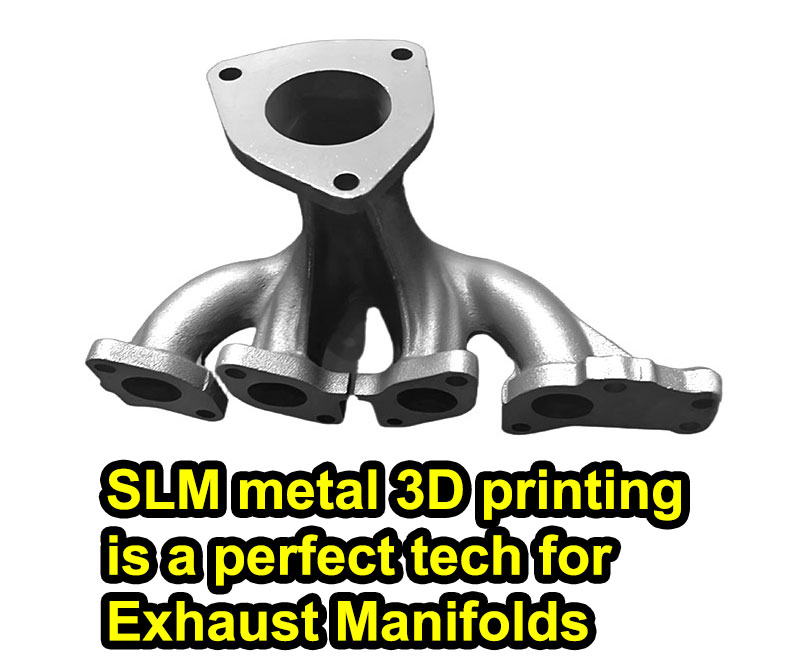
SLM metal 3D printing is a perfect tech for Manufacturing Exhaust Manifolds
SLM metal 3D printing is a perfect tech for Manufacturing High-end Exhaust Manifolds

But SLM metal 3D printing is changing that fast. It’s quickly becoming the go-to method for high-end exhaust manifolds — whether we’re talking race cars, military vehicles, or aftermarket performance parts.

Case 1: 3D Printed Titanium Exhaust Collector for Racing

USC Racing — that’s the University of Southern California’s Formula SAE team — teamed up with UK-basedWayland Additive to build atitanium exhaust collector (the main pipe that merges all the cylinder runners) for their 2025 race car.

The old way: You take nine separate titanium tubes, each just1 mm thick. You shape them, stretch five of them by hand with special tools, and then weld the whole mess together. It’s slow. And worse, the tolerances drift, so the airflow ends up uneven.

The 3D printing way: They used Wayland’s NeuBeam electron beam melting tech on a Calibur3 machine, and 3D printed the collector as one single piece.

What they got: The collector’s total length dropped by50%. That freed up a ton of room in the engine bay and cut weight significantly.

Does it hold up? Yep. That car tookthird place in the Autocross event at Formula SAE 2025. If it survives a race team’s abuse, it’s solid.

Case 2: BMW G80 M3 3D-Printed Steel Exhaust Manifold – A Benchmark in the Aftermarket

Once you’re pushingover 1,000 hp, you don’t grab parts off the shelf. You need custom stuff — and for exhaust manifolds, 3D printing is the rational choice now.

BMW tuning legend Jon Volk cooked up a full set of 3D-printed steel exhaust manifolds and turbo piping for Jordan Horowitz’s G80 M3.

What did it cost? The printing for the steel turbo kit (just the hardware, not the turbo itself) ran about$2,200 USD.

Put that in perspective: Ten years ago, you’d pay the same $2,200 for a decent handmade header — but that old version wouldn’t flow as well, wouldn’t be as light, and would have more weld joints to fail. The printed one beats it in every way.

Case 3: Metal 3D-Printed Exhaust Manifold Passes Stability Test
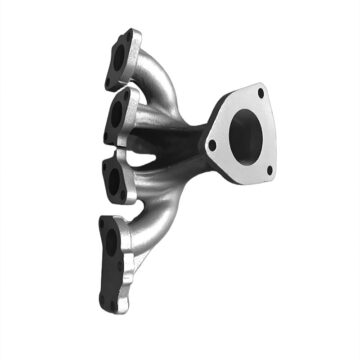
SLM Metal 3D printing exhaust manifolds for car modification shops, equipos de carreras, y el mercado de recambios para automóviles

DMZ usedMeltio‘s DED (Directed Energy Deposition) tech to make exhaust manifolds for high-performance rides, and they put it through a real torture test.

The test: They bolted it onto a car and drove it.Over 10,000 km on real roads. No cracks, no warping — nothing.

Assembly time also shrank: Because the printed manifold has way fewer welds, the whole exhaust routing went from8 hours to just 1 hour of assembly time.

And here’s the kicker: This thing meetsStellantis durability standards. If it passes their bar, it’s legit.

Case 4: 3D-Printed Turbo Inlet Module – Cost and Time Both Cut by 70%

Racing supplierERM built aturbo inlet module — that’s the hot-side part that bolts right onto the manifold. They printed it as a bi-metal structure using aMeltio M600.

How hot can it go? Over800°C — no sweat.

The numbers: Compared to traditional casting + mecanizado, they slashedcost by 70% ytime by 70%. Not 10%, not 20% — 70%.

Case 5: Jaguar J60 Engine Exhaust Manifold – 21 Hours vs. 6-8 Weeks

SPEE3D used theirCold Spray Additive Manufacturing (CSAM) process to print an exhaust manifold for theJaguar J60 engine — the one that powers the CVR(T) armoured reconnaissance vehicle. This is about as extreme as it gets.

Traditional lead time: Casting or machining that part would run you6 a 8 semanas.

With 3D printing: From design to deployment inless than 21 horario. Let’s break that down:

Cold spray printing: 126 minutes (just over two hours)

Heat treatment: 17 horario

Final machining: 2 horario

Material: They used13 kg dealuminium bronze.

When you’re in the field, waiting two months for a manifold isn’t an option. 21 hours is.

Case 6: Electroplated 3D-Printed Exhaust Manifold – Rapid Prototype Validation at Under €20 Material Cost

If you’re in R&D and just need a prototype to test fitment, casting or machining a metal one takes weeks and burns cash.

BigRep (Germany) yPolymertal (Israel) showed off a clever hack: 3D print it in plastic, then electroplate it.

The printer: BigRep STUDIO, with a build volume of500 × 1000 × 500 mm — big enough for a full-size manifold.

Filament: Just PLA and PRO HT.

Print time: 15 horario for the whole thing.

Postprocesamiento: They plated it with a20-micron nickel layer. That gives it heat resistance, chemical resistance, and mechanical strength — close enough to a cast metal part for testing purposes.

Material cost? Under €20. A traditional metal prototype would cost you many times that.

Conclusion

Let’s recap:

A race team 3D prints a titanium collector in 45 horario and cuts its length by 50%.

A 3D printed military manifold goes from 6-8 semanas down to 21 horario total.

A 3D printed aftermarket steel turbo manifold for a 1,000-hp BMW costs $2,200 — same as a good handmade header a decade ago, but miles better.

All while these 3D printed car parts survive 800°C heat and 10,000 km of real driving without cracking.

3D printing is turning the exhaust manifold from a hand-crafted art piece into a digital, optimizable, fast-iterating part. Lighter, more integrated, quicker to make, and cheaper at scale.

Whether it’s for the track, the street, or the battlefield, this 3D printing tech is proven. It’s not the future — it’s already here.

We are an industrial-grade SLM metal 3D printing manufacturer, who is very good at 3D-printing exhaust manifolds.
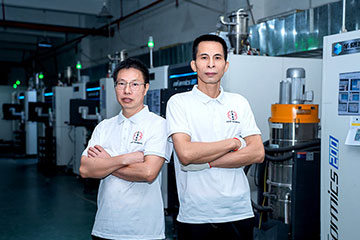
DT is a leading SLM 3D printing factory with dozens of SLM 3D printers and CNC machines, which makes our advantages.

Y tenemos:
(1) 33 impresoras 3D de metal SLM de alta gama
(2) 14 CNC machine tools
(3) 60 impresoras 3D de plástico
(4) 6 specialized branch production facilities for 3D printing and CNC finishing


No dudes en ponerte en contacto con nosotros para más detalles.


Tenemos Sin cantidad mínima de pedido (Cantidad mínima de pedido). Ofrecemos prototipado rápido y producción a medida.

Aviso legal:


1. DT (también conocido como “DT 3D Print”) es un fabricante independiente del mercado de recambios. Todos los productos están impresos en 3D a medida, piezas no originales.

2. No estamos afiliados a, recomendado por, o vinculado oficialmente a Porsche, Escucha, BMW, Toyota, GM, o cualquier otro fabricante de vehículos.

3. Todas las marcas, nombres de modelos, Las referencias a plataformas de vehículos se utilizan exclusivamente con fines de descripción de la compatibilidad y el ajuste..

Blog

Table of Contents

  • Introducción
  • Case 1: 3D Printed Titanium Exhaust Collector for Racing
  • Case 2: BMW G80 M3 3D-Printed Steel Exhaust Manifold – A Benchmark in the Aftermarket
  • Case 3: Metal 3D-Printed Exhaust Manifold Passes Stability Test
  • Case 4: 3D-Printed Turbo Inlet Module – Cost and Time Both Cut by 70%
  • Case 5: Jaguar J60 Engine Exhaust Manifold – 21 Hours vs. 6-8 Weeks
  • Case 6: Electroplated 3D-Printed Exhaust Manifold – Rapid Prototype Validation at Under €20 Material Cost
  • Conclusion
  • Aviso legal:
DT Metal 3D Printing Factory TeamDT SLM Metal 3D Printers in the Factory Workshop

Atención al cliente
Preguntas frecuentes
Modificación gratuita de dibujos en 3D
Dibujo 3D personalizado gratis (Disponibilidad limitada)

Avisos legales
Política de envíos
Política de devoluciones y reembolsos
Declaración de privacidad
Condiciones del servicio
Aviso legal
Descargo de responsabilidad
Política de cookies

Quiénes somos
Vídeo de visita a la fábrica
Blog
Cooperación
Acerca de DT
Contacto

YouTube Twitter TikTok Facebook Instagram Quora LinkedIn Pinterest Reddit Medium


Copyright © 2026 Servicio de impresión 3D de DT
Todos los derechos reservados.


Gestionar el consentimiento de cookies
Para ofrecer la mejor experiencia, Usamos tecnologías como las cookies para almacenar y/o acceder a la información del dispositivo. Dar tu consentimiento para estas tecnologías nos permitirá procesar datos como el comportamiento de navegación o los identificadores únicos en este sitio web. No dar el consentimiento o retirarlo, puede afectar negativamente a ciertas características y funciones.
Funcional Siempre activo
El almacenamiento o acceso técnico es estrictamente necesario para el fin legítimo de permitir el uso de un servicio específico solicitado explícitamente por el suscriptor o usuario, o con el único fin de llevar a cabo la transmisión de una comunicación a través de una red de comunicaciones electrónicas.
Preferencias
El almacenamiento o acceso técnico es necesario para el fin legítimo de almacenar preferencias que no han sido solicitadas por el suscriptor o el usuario.
Estadísticas
El almacenamiento técnico o el acceso que se utiliza exclusivamente con fines estadísticos. El almacenamiento técnico o el acceso que se utiliza exclusivamente con fines estadísticos anónimos. Sin una citación judicial, cumplimiento voluntario por parte de tu proveedor de servicios de Internet, o registros adicionales de terceros, La información almacenada o recuperada únicamente con este fin no suele poder utilizarse para identificarte.
Marketing
El almacenamiento técnico o el acceso son necesarios para crear perfiles de usuario con el fin de enviar publicidad, o para rastrear al usuario en un sitio web o en varios sitios web con fines de marketing similares.
  • Gestionar opciones
  • Gestionar servicios
  • Gestionar {número_de_proveedores} proveedores
  • Más información sobre estos objetivos
Ver preferencias
  • {Título}
  • {Título}
  • {Título}
Gestionar el consentimiento de cookies
Para ofrecer la mejor experiencia, Usamos tecnologías como las cookies para almacenar y/o acceder a la información del dispositivo. Dar tu consentimiento para estas tecnologías nos permitirá procesar datos como el comportamiento de navegación o los identificadores únicos en este sitio web. No dar el consentimiento o retirarlo, puede afectar negativamente a ciertas características y funciones.
Funcional Siempre activo
El almacenamiento o acceso técnico es estrictamente necesario para el fin legítimo de permitir el uso de un servicio específico solicitado explícitamente por el suscriptor o usuario, o con el único fin de llevar a cabo la transmisión de una comunicación a través de una red de comunicaciones electrónicas.
Preferencias
El almacenamiento o acceso técnico es necesario para el fin legítimo de almacenar preferencias que no han sido solicitadas por el suscriptor o el usuario.
Estadísticas
El almacenamiento técnico o el acceso que se utiliza exclusivamente con fines estadísticos. El almacenamiento técnico o el acceso que se utiliza exclusivamente con fines estadísticos anónimos. Sin una citación judicial, cumplimiento voluntario por parte de tu proveedor de servicios de Internet, o registros adicionales de terceros, La información almacenada o recuperada únicamente con este fin no suele poder utilizarse para identificarte.
Marketing
El almacenamiento técnico o el acceso son necesarios para crear perfiles de usuario con el fin de enviar publicidad, o para rastrear al usuario en un sitio web o en varios sitios web con fines de marketing similares.
  • Gestionar opciones
  • Gestionar servicios
  • Gestionar {número_de_proveedores} proveedores
  • Más información sobre estos objetivos
Ver preferencias
  • {Título}
  • {Título}
  • {Título}