

Gå till innehåll
  • Kundutlåtanden
  • Fabriksrundtur
  • Swedish
    • English
    • Japanese
    • French
    • German
    • Italian
    • Spanish
    • Swedish
    • Irish
    • Dutch
    • Portuguese
    • Korean
    • Greek
    • Turkish
    • Vietnamese
    • Thai
    • Indonesian
    • Malay
    • Danish
    • Finnish
    • Hindi
    • Hebrew
    • Icelandic
    • Romanian
    • Russian
DT 3D Printing Nytt logotyp

DT 3D-utskriftstjänst

OEM-tillverkare – SLM (3D-utskrift i metall) Specialister

  • Hem
  • 3D Tryckeritjänst
    • SLM (Selektiv lasersmältning)
    • SLA (Stereolitografi)
    • SLS (Selektiv lasersintring)
    • DLP (Digital Light Processing)
    • FDM (Fused Deposition Modeling)
    • MJF (Multi Jet Fusion)
    • BJ (Binder Jetting)
  • CNC-bearbetning
    • CNC-svarvning
    • CNC-fräsning
    • Efterbearbetning
  • Materialguide
        • 3D-utskriftsmaterial i plast
          • Harts (ABS-liknande, PC-liknande)
          • Nylon (PA6, PA12, TPU)
          • Red Wax
          • PLA, TPU, PA, Kolfiber, PC
        • Material för 3D-utskrift i metall
          • Aluminiumlegering (6061 / AlSi10Mg / 7075)
          • Rostfritt stål (316L / 304L / 17-4 / 347)
          • Titanlegering (TC4 / TA1)
          • Mold Steel (S136/HB/CX/1.2709)
          • Nickelrik legering (GH4169 / GH3128 / INCONEL625)
          • Mässingslegering (CuCrZr / Tin Bronze)
        • Metallmaterial för CNC
          • Aluminium / Alloy / Titanium / Nickel
          • Rostfritt stål / Verktygsstål / Legerat stål
          • Kolstål / Brass / Koppar / Brons
        • Plastmaterial för CNC
          • ABS / Akryl / Delrin / Nylon / PP
          • HDPE / PE / PC / PEI / ULTEM
          • PEEK / POM / TECAFORMAH
  • Kundsupport
        • Branschlösningar
          • Mold / Mögel
          • Aerospace & UAV
          • Bildelar
          • Telekommunikation
          • Konsumentelektronik
          • Medicinsk industri
          • Robotics & Automation
          • Konsthantverk / Gåvor
        • Design Studio
          • Gratis modifiering av 3D-ritningar
          • Gratis 3D-ritning (begränsat antal tillgängliga)
        • Beställningsprocess
          • Återgå & Återbetalningspolicy
          • Leveranspolicy
          • Vanliga frågor (Vanliga frågor)
        • Blogg
          • Video om fabriksbesök
  • Kundutlåtanden
  • Om DT
  • Kontakta oss

Metal 3D Printed Exhaust Manifold Case Studies Roundup

Uppdaterad den 17/06/2026 Av DT 3D-utskrift

Introduction

Exhaust manifolds in cars have a tough job. They sit there, day after day, blasting with exhaust gas at over 800°C, while also dealing with constant heating and cooling cycles and heavy vibration. The old-school way to make one? Bend tubes by hand, weld everything together — it’s complicated and it takes forever.
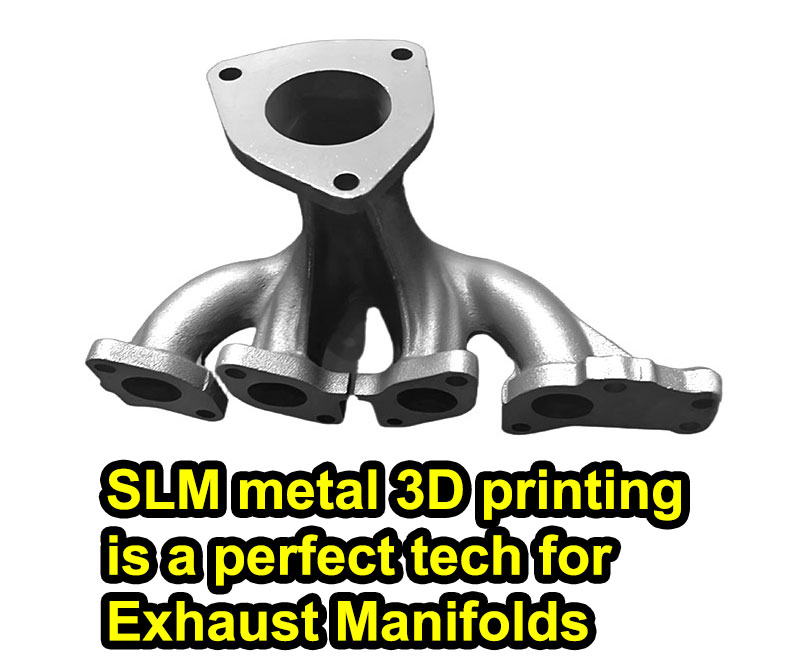
SLM metal 3D printing is a perfect tech for Manufacturing Exhaust Manifolds
SLM metal 3D printing is a perfect tech for Manufacturing High-end Exhaust Manifolds

But SLM metal 3D printing is changing that fast. It’s quickly becoming the go-to method for high-end exhaust manifolds — whether we’re talking race cars, military vehicles, or aftermarket performance parts.

Case 1: 3D Printed Titanium Exhaust Collector for Racing

USC Racing — that’s the University of Southern California’s Formula SAE team — teamed up with UK-basedWayland Additive to build atitanium exhaust collector (the main pipe that merges all the cylinder runners) for their 2025 race car.

The old way: You take nine separate titanium tubes, each just1 mm thick. You shape them, stretch five of them by hand with special tools, and then weld the whole mess together. It’s slow. And worse, the tolerances drift, so the airflow ends up uneven.

The 3D printing way: They used Wayland’s NeuBeam electron beam melting tech on a Calibur3 machine, and 3D printed the collector as one single piece.

What they got: The collector’s total length dropped by50%. That freed up a ton of room in the engine bay and cut weight significantly.

Does it hold up? Yep. That car tookthird place in the Autocross event at Formula SAE 2025. If it survives a race team’s abuse, it’s solid.

Case 2: BMW G80 M3 3D-Printed Steel Exhaust Manifold – A Benchmark in the Aftermarket

Once you’re pushingover 1,000 hp, you don’t grab parts off the shelf. You need custom stuff — and for exhaust manifolds, 3D printing is the rational choice now.

BMW tuning legend Jon Volk cooked up a full set of 3D-printed steel exhaust manifolds and turbo piping for Jordan Horowitz’s G80 M3.

What did it cost? The printing for the steel turbo kit (just the hardware, not the turbo itself) ran about$2,200 USD.

Put that in perspective: Ten years ago, you’d pay the same $2,200 for a decent handmade header — but that old version wouldn’t flow as well, wouldn’t be as light, and would have more weld joints to fail. The printed one beats it in every way.

Case 3: Metal 3D-Printed Exhaust Manifold Passes Stability Test
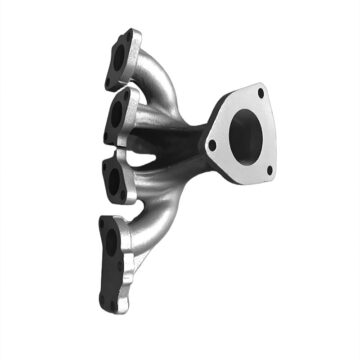
SLM Metal 3D printing exhaust manifolds for car modification shops, racing teams, and the automotive aftermarket

DMZ usedMeltio‘s DED (Directed Energy Deposition) tech to make exhaust manifolds for high-performance rides, and they put it through a real torture test.

The test: They bolted it onto a car and drove it.Över 10,000 km on real roads. No cracks, no warping — nothing.

Assembly time also shrank: Because the printed manifold has way fewer welds, the whole exhaust routing went from8 hours to just 1 hour of assembly time.

And here’s the kicker: This thing meetsStellantis durability standards. If it passes their bar, it’s legit.

Case 4: 3D-Printed Turbo Inlet Module – Cost and Time Both Cut by 70%

Racing supplierERM built aturbo inlet module — that’s the hot-side part that bolts right onto the manifold. They printed it as a bi-metal structure using aMeltio M600.

How hot can it go? Över800°C — no sweat.

The numbers: Compared to traditional casting + machining, they slashedcost by 70% ochtime by 70%. Not 10%, not 20% — 70%.

Case 5: Jaguar J60 Engine Exhaust Manifold – 21 Hours vs. 6-8 Weeks

SPEE3D used theirCold Spray Additive Manufacturing (CSAM) process to print an exhaust manifold for theJaguar J60 engine — the one that powers the CVR(T) armoured reconnaissance vehicle. This is about as extreme as it gets.

Traditional lead time: Casting or machining that part would run you6 till 8 weeks.

With 3D printing: From design to deployment inless than 21 timmar. Let’s break that down:

Cold spray printing: 126 minutes (just over two hours)

Heat treatment: 17 timmar

Final machining: 2 timmar

Material: They used13 kg avaluminium bronze.

When you’re in the field, waiting two months for a manifold isn’t an option. 21 hours is.

Case 6: Electroplated 3D-Printed Exhaust Manifold – Rapid Prototype Validation at Under €20 Material Cost

If you’re in R&D and just need a prototype to test fitment, casting or machining a metal one takes weeks and burns cash.

BigRep (Germany) ochPolymertal (Israel) showed off a clever hack: 3D print it in plastic, then electroplate it.

The printer: BigRep STUDIO, with a build volume of500 × 1000 × 500 mm — big enough for a full-size manifold.

Filament: Just PLA and PRO HT.

Print time: 15 timmar for the whole thing.

Efterbearbetning: They plated it with a20-mikron nickel layer. That gives it heat resistance, chemical resistance, and mechanical strength — close enough to a cast metal part for testing purposes.

Material cost? Under €20. A traditional metal prototype would cost you many times that.

Conclusion

Let’s recap:

A race team 3D prints a titanium collector in 45 timmar and cuts its length by 50%.

A 3D printed military manifold goes from 6-8 weeks down to 21 timmar total.

A 3D printed aftermarket steel turbo manifold for a 1,000-hp BMW costs $2,200 — same as a good handmade header a decade ago, but miles better.

All while these 3D printed car parts survive 800°C heat and 10,000 km of real driving without cracking.

3D printing is turning the exhaust manifold from a hand-crafted art piece into a digital, optimizable, fast-iterating part. Lighter, more integrated, quicker to make, and cheaper at scale.

Whether it’s for the track, the street, or the battlefield, this 3D printing tech is proven. It’s not the future — it’s already here.

We are an industrial-grade SLM metal 3D printing manufacturer, who is very good at 3D-printing exhaust manifolds.
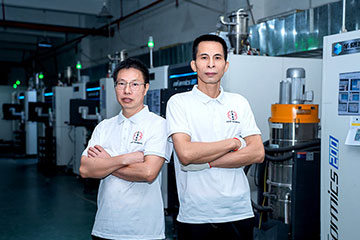
DT is a leading SLM 3D printing factory with dozens of SLM 3D printers and CNC machines, which makes our advantages.

And we have:
(1) 33 high-end SLM metal 3D printers
(2) 14 CNC machine tools
(3) 60 3D-skrivare för plast
(4) 6 specialized branch production facilities for 3D printing and CNC finishing


Welcome to contact us for details.


We have NO MOQ (Minimum Order Quantity). Rapid prototyping and custom production are available.

Legal Disclaimer:


1. DT (also called “DT 3D Print”) is an independent aftermarket manufacturer. All products are custom 3D printed, non-OEM parts.

2. We are not affiliated with, endorsed by, or officially connected to Porsche, Audi, BMW, Toyota, GM, or any other vehicle manufacturer.

3. All brand names, model names, and vehicle platform references are used exclusively for fitment and compatibility description purposes only.

Blogg

Table of Contents

  • Introduction
  • Case 1: 3D Printed Titanium Exhaust Collector for Racing
  • Case 2: BMW G80 M3 3D-Printed Steel Exhaust Manifold – A Benchmark in the Aftermarket
  • Case 3: Metal 3D-Printed Exhaust Manifold Passes Stability Test
  • Case 4: 3D-Printed Turbo Inlet Module – Cost and Time Both Cut by 70%
  • Case 5: Jaguar J60 Engine Exhaust Manifold – 21 Hours vs. 6-8 Weeks
  • Case 6: Electroplated 3D-Printed Exhaust Manifold – Rapid Prototype Validation at Under €20 Material Cost
  • Conclusion
  • Legal Disclaimer:
DT Metal 3D Printing Factory TeamDT SLM Metal 3D Printers in the Factory Workshop

Kundsupport
Vanliga frågor
Gratis modifiering av 3D-ritningar
Gratis anpassad 3D-ritning (Begränsad tillgänglighet)

Juridiska meddelanden
Leveranspolicy
Retur- och återbetalningspolicy
Sekretesspolicy
Användarvillkor
Impressum
Ansvarsfriskrivning
Cookiepolicy

Om oss
Video om fabriksbesök
Blogg
Samarbete
Om DT
Kontakt

YouTube Twitter TikTok Facebook Instagram Quora LinkedIn Pinterest Reddit Medium


Copyright © 2026 DT 3D-utskriftstjänst
Alla rättigheter förbehållna.


Hantera samtycke till cookies
För att ge den bästa upplevelsen, Vi använder tekniker som cookies för att lagra och/eller få tillgång till enhetsinformation. Genom att samtycka till dessa tekniker tillåter du oss att behandla data såsom surfbeteende eller unika ID:n på denna webbplats. Att inte samtycka eller återkalla samtycke, kan påverka vissa funktioner negativt.
Funktionellt Alltid aktiv
Den tekniska lagringen eller åtkomsten är absolut nödvändig för det legitima syftet att möjliggöra användningen av en specifik tjänst som abonnenten eller användaren uttryckligen har begärt, eller enbart i syfte att genomföra överföringen av en kommunikation över ett elektroniskt kommunikationsnät.
Inställningar
Den tekniska lagringen eller åtkomsten är nödvändig för det legitima syftet att lagra inställningar som inte begärts av abonnenten eller användaren.
Statistik
Teknisk lagring eller åtkomst som används uteslutande för statistiska ändamål. Teknisk lagring eller åtkomst som används uteslutande för anonyma statistiska ändamål. Utan en stämning, frivillig efterlevnad från din internetleverantörs sida, eller ytterligare poster från en tredje part, information som lagras eller hämtas enbart för detta ändamål kan vanligtvis inte användas för att identifiera dig.
Marknadsföring
Teknisk lagring eller åtkomst krävs för att skapa användarprofiler för att skicka reklam, eller för att spåra användaren på en webbplats eller över flera webbplatser för liknande marknadsföringsändamål.
  • Hantera alternativ
  • Hantera tjänster
  • Hantera {vendor_count} leverantörer
  • Läs mer om dessa syften
Visa inställningar
  • {Titel}
  • {Titel}
  • {Titel}
Hantera samtycke till cookies
För att ge den bästa upplevelsen, Vi använder tekniker som cookies för att lagra och/eller få tillgång till enhetsinformation. Genom att samtycka till dessa tekniker tillåter du oss att behandla data såsom surfbeteende eller unika ID:n på denna webbplats. Att inte samtycka eller återkalla samtycke, kan påverka vissa funktioner negativt.
Funktionellt Alltid aktiv
Den tekniska lagringen eller åtkomsten är absolut nödvändig för det legitima syftet att möjliggöra användningen av en specifik tjänst som abonnenten eller användaren uttryckligen har begärt, eller enbart i syfte att genomföra överföringen av en kommunikation över ett elektroniskt kommunikationsnät.
Inställningar
Den tekniska lagringen eller åtkomsten är nödvändig för det legitima syftet att lagra inställningar som inte begärts av abonnenten eller användaren.
Statistik
Teknisk lagring eller åtkomst som används uteslutande för statistiska ändamål. Teknisk lagring eller åtkomst som används uteslutande för anonyma statistiska ändamål. Utan en stämning, frivillig efterlevnad från din internetleverantörs sida, eller ytterligare poster från en tredje part, information som lagras eller hämtas enbart för detta ändamål kan vanligtvis inte användas för att identifiera dig.
Marknadsföring
Teknisk lagring eller åtkomst krävs för att skapa användarprofiler för att skicka reklam, eller för att spåra användaren på en webbplats eller över flera webbplatser för liknande marknadsföringsändamål.
  • Hantera alternativ
  • Hantera tjänster
  • Hantera {vendor_count} leverantörer
  • Läs mer om dessa syften
Visa inställningar
  • {Titel}
  • {Titel}
  • {Titel}