


Skip to content
  • Testimonials
  • Factory Tour
  • English
    • English
    • Japanese
    • French
    • German
    • Italian
    • Spanish
    • Swedish
    • Irish
    • Dutch
    • Portuguese
    • Korean
    • Greek
    • Turkish
    • Vietnamese
    • Thai
    • Indonesian
    • Malay
    • Danish
    • Finnish
    • Hindi
    • Hebrew
    • Icelandic
    • Romanian
    • Russian
DT 3D Printing New Logo

DT 3d printing service

OEM manufacturer – SLM (Metal 3D Printing) Specialists

  • Home
  • Metal 3D Printing Service
  • CNC Machining
    • CNC Turning
    • CNC Milling
    • CNC Post-processing
  • Material Guide
        • Plastic 3D Printing Materials
          • Resin (ABS-Like, PC-Like)
          • Nylon (PA6, PA12, TPU)
          • Red Wax
          • PLA, TPU, PA, Carbon Fiber, PC
        • Metal 3D Printing Materials
          • Aluminum Alloy (6061 / AlSi10Mg / 7075)
          • Stainless Steel (316L / 304L / 17-4 / 347)
          • Titanium Alloy (TC4 / TA1)
          • Mold Steel (S136/HB/CX/1.2709)
          • Nickel-rich Alloy (GH4169 / GH3128 / INCONEL625)
          • Brass Alloy (CuCrZr / Tin Bronze)
        • Metal Materials for CNC
          • Aluminum / Alloy / Titanium / Nickel
          • Stainless Steel / Tool Steel / Alloy Steel
          • Carbon Steel / Brass / Copper / Bronze
        • Plastic Materials for CNC
          • ABS / Acrylic / Delrin / Nylon / PP
          • HDPE / PE / PC / PEI / ULTEM
          • PEEK / POM / TECAFORMAH
  • Other Service
        • Industry Solutions
          • Mold / Mould
          • Aerospace
          • Car Manifolds
          • Car Parts
          • Motorcycle Parts
          • Titanium Bike
          • Robotics
          • Art Crafts / Gifts
        • Plastic & Resin 3D Printing
          • SLA (Stereolithography)
          • SLS (Selective Laser Sintering)
          • DLP (Digital Light Processing)
          • FDM (Fused Deposition Modeling)
          • MJF (Multi Jet Fusion)
          • BJ (Binder Jetting)
        • Post-Processing Services
          • CNC Finish Machining
          • Surface Finishing
          • Anodizing
          • Electroplating
          • Heat treatment
          • HIP (Hot Isostatic Pressing)
        • Blog
          • Metal 3D Printing + CNC Machining
          • 3D Printing Business Ideas
          • SLM 3D Printing Guide
          • Custom 3D Printed Sculptures
          • 3D Print Motorcycle Parts
          • Metal 3D Printed Impellers
          • Used 3D Printers Guide
  • Testimonials
  • About DT
    • Factory Tour Video
    • VR Factory Tour
  • Contact us

BJ vs. SLM: Key Differences & Full Technical 3D Printing Comparison

Updated on 19/10/2026 By DT 3dprint
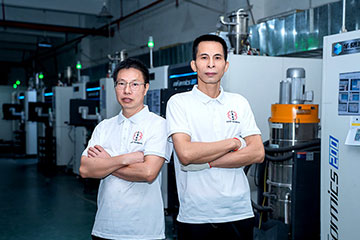
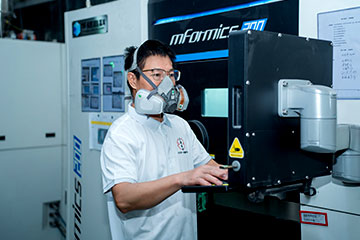
DT's Workers in Front of Our SLM Metal 3D Printers
DT’s colleagues in Front of Our SLM Metal 3D Printers
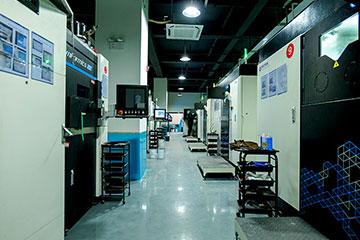
The Industrial SLM Metal 3D Printers in DT Factory
The Industrial SLM Metal 3D Printers in the Factory
SLM metal 3D printing factory team
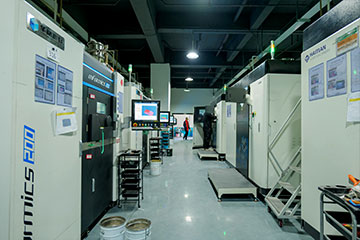
High-end industrial SLM metal 3D printers in DT's factory workshop
High-end industrial SLM metal 3D printers in DT’s factory workshop
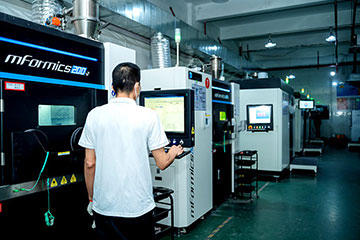
Our colleague is operating a SLM 3D printer.
Our colleague is operating a Farsoon SLM 3D printer.
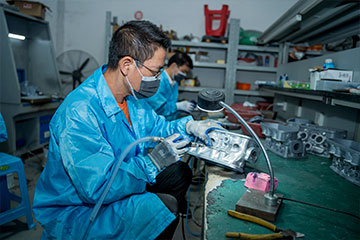
This colleague is post-processing manually
Haitian industrial SLM 3D Printers

BJ vs. SLM: Full Technical Breakdown

If you’re comparing binder jetting (BJ) and selective laser melting (SLM) for your next 3D printing project, this side-by-side technical breakdown covers all the core specs, tradeoffs, and real-world use cases you need to know.

BJ Vs. SLM Metal 3D PrintingTechnical Comparison Guide

No marketing fluff — just straight, shop-floor-ready facts.

CategoryBinder Jetting (BJ)Selective Laser Melting (SLM)
How it worksA roller spreads a thin layer of powder (sand, metal, ceramic, composite) across the build plate. A printhead jets liquid binder to glue particles together into a “green part.” After printing, you depowder, cure, debind, and high-temperature sinter (or infiltrate) the part to reach final strength. No melting happens during the print itself.A roller spreads metal powder, then a high-power fiber laser melts and fuses selected regions of each layer. The melt pool solidifies instantly, creating full metallurgical bonding layer by layer. Parts come out near-full density straight off the printer.
Heat source & energy inputNo dedicated heat source during printing — bonding is chemical. Sintering is a separate offline step after printing.Fiber laser is the core heat source. Local temperatures easily exceed the material’s melting point during the build.
Common materialsFoundry sand, stainless steel, superalloys, titanium, tungsten, silicon carbide ceramics, copper-diamond composites. Very wide material compatibility.Mostly metals: stainless steel, titanium, superalloys, aluminum, cobalt chrome. Ceramics are extremely difficult to process.
Part density95–99% for sintered metal/ceramic parts; can go higher with infiltration. Sand parts are designed with controlled porosity.≥99.5% near-full density. Mechanical properties are very close to wrought material.
Accuracy & surface finish±0.1–0.2mm for sintered metal parts; ±0.2–0.5mm for sand molds. Surface roughness Ra 6–25μm.±0.05–0.1mm for small-to-medium parts. Surface roughness Ra 3–10μm — noticeably better as-printed.
Support requirementsThe powder bed acts as self-support. Almost no extra support material needed, even for deep internal channels, lattices, and large overhangs.Supports are required for overhangs, thin walls, and distortion-prone features to prevent collapse and thermal warping. Support removal adds labor and cost.
Speed & volume fit5–10x faster print speed than SLM. Large build plates let you nest many parts per run. Built for medium-to-high volume production.Point-by-point laser scanning is slow. Best suited for one-offs, custom work, and low-volume production.
Cost profileNo expensive laser or galvo system — machine cost is 30–50% lower than comparable SLM systems. Per-part cost drops 40–70% at volume.Lasers and optics drive high upfront machine cost. Per-part cost stays high even at moderate volumes.
Thermal stress & distortion riskNo melting = no thermal stress during printing, very low green part distortion. Sinter shrinkage is the main dimensional factor to account for.Rapid heating and cooling creates significant thermal stress. High risk of warping and microcracks without proper build orientation and post-build stress relief.
Key post-processing stepsDepowdering, debinding, high-temperature sintering. Optional infiltration, CNC finishing, or HIP.Support removal, depowdering, stress relief annealing. Optional finishing, polishing, or coating.
Typical use casesFoundry sand molds/cores, auto production tooling, AI chip microchannel heat sinks, refractory metal parts, aerospace ceramic components.Aerospace high-precision structural parts, orthopedic/dental implants, conformal cooling channels in molds, complex precision functional parts.
Biggest strengthsFast, low-cost at volume, no thermal stress, support-free, works with hard-to-process materials, scalable to large build sizes.High density, forged-level mechanical properties, tight tolerances, excellent surface finish, mature certification data for regulated industries.
Key limitationsGreen parts are fragile; sinter shrinkage requires careful dimensional compensation; as-sintered mechanicals fall slightly short of wrought material.Slow, expensive, limited build size, thermal distortion risk, support removal adds time and cost.

How BJ and SLM Fit Together (And Where They Overlap)

They’re not head-to-head rivals for every job — they’re two branches of the powder bed AM family that complement each other really well.

First off, they share the same core foundation. Both build parts layer by layer from a digital model using a powder bed system. They’re the two dominant technologies for production-grade metal and advanced ceramic additive manufacturing.

On the application side, they show up in a lot of the same industries — aerospace, automotive, medical — but target very different jobs. SLM owns the high-performance, low-volume precision work. BJ dominates faster, higher-volume, more geometrically complex parts where extreme performance isn’t the top priority.

A lot of post-processing equipment works for both. Heat treatment furnaces, CNC machines, polishing lines — most secondary operations are interchangeable between the two processes.

And finally, hybrid approaches are starting to catch on. Some shops will print a near-net shape fast with BJ, then use SLM to locally clad and densify high-wear surfaces. Or they’ll run BJ parts through HIP (hot isostatic pressing) to push density and mechanical properties up close to SLM levels.

3D printing instant quote

Blog

Customer Support
FAQ
Free 3D Drawing Modification
Free Custom 3D Drawing (Limited Availability)

Legal Statements
Shipping Policy
Return and Refund Policy
Privacy Statement
Terms of Service
Imprint
Disclaimer
Cookie Policy

About us
Factory Tour Video
Blog
Cooperation
About DT
Contact

YouTube Twitter TikTok Facebook Instagram Quora LinkedIn Pinterest Reddit Medium


Copyright © 2026 DT 3d printing service
All Rights Reserved.


Manage Cookie Consent
To provide the best experiences, we use technologies like cookies to store and/or access device information. Consenting to these technologies will allow us to process data such as browsing behavior or unique IDs on this site. Not consenting or withdrawing consent, may adversely affect certain features and functions.
Functional Always active
The technical storage or access is strictly necessary for the legitimate purpose of enabling the use of a specific service explicitly requested by the subscriber or user, or for the sole purpose of carrying out the transmission of a communication over an electronic communications network.
Preferences
The technical storage or access is necessary for the legitimate purpose of storing preferences that are not requested by the subscriber or user.
Statistics
The technical storage or access that is used exclusively for statistical purposes. The technical storage or access that is used exclusively for anonymous statistical purposes. Without a subpoena, voluntary compliance on the part of your Internet Service Provider, or additional records from a third party, information stored or retrieved for this purpose alone cannot usually be used to identify you.
Marketing
The technical storage or access is required to create user profiles to send advertising, or to track the user on a website or across several websites for similar marketing purposes.
  • Manage options
  • Manage services
  • Manage {vendor_count} vendors
  • Read more about these purposes
View preferences
  • {title}
  • {title}
  • {title}