


Honest advice for anyone buying a second hand 3D printer for industrial production

If you’re researching used 3D printers to expand production without the seven-figure price tag of new industrial equipment, you already know the market is full of overstated claims and hidden pitfalls.
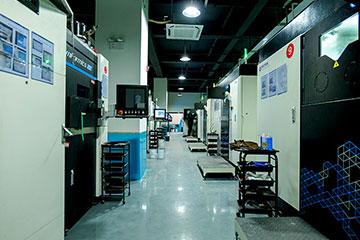
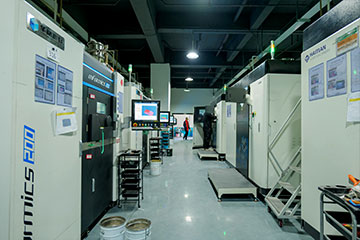
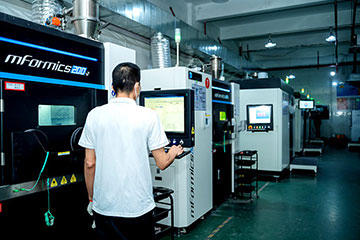
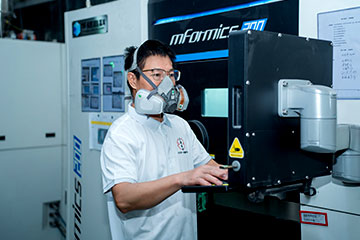
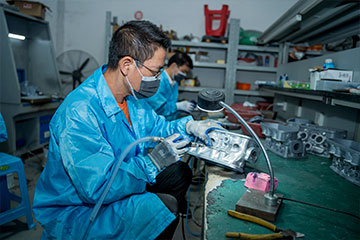
Let’s cut right to the point: we’re not an equipment dealer. We’re a metal 3D printing contract manufacturer with over 10 years of daily production experience, running dozens of machines across FDM, SLA resin, and SLM metal technology — including units that cost over RMB 1.4 million each when new. We’ve purchased new machines, we’ve bought used machines, and we’ve made every expensive mistake you can make in this space.
This isn’t a sales page. We’re sharing everything we’ve learned from a decade on the production floor: what actually matters when evaluating a 3D printer used for industrial work, the six most costly mistakes to avoid, and exactly how we can help you navigate the process — with zero sales pressure.
Why Production Floor Experience Beats Every Sales Brochure
We know what spec sheets never tell you
Over a decade of running production 24/7 has taught us what no datasheet will ever list: long-term accuracy drift in plastic printers after thousands of print hours, the real degradation rate of resin printer light sources, the usable lifespan limits of SLM laser systems, and how powder delivery systems wear down over time.
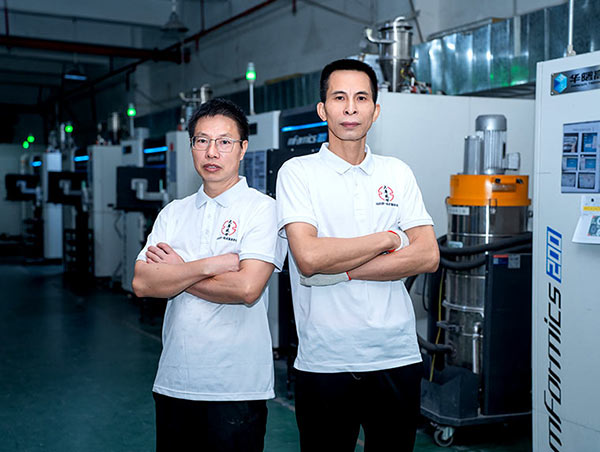
These aren’t minor details. They’re the difference between a used machine that pays for itself in 12 months and one that becomes a costly paperweight. You only learn these things by running 3D Printers day in and day out for production orders — not by reading marketing copy.
We judge equipment by real production ROI, not sticker price
Many of our in-house industrial metal 3D printers required seven-figure investments. For us, equipment isn’t a balance sheet line item — it’s a production tool. We calculate everything: return on investment cycles, hourly operating costs, and the exact cost of unplanned downtime when a machine goes down mid-batch.
Buying a used 3D printer is never about “going cheap”. It’s about buying reliable production capacity that you can actually afford to run long-term. On that, we stand in exactly the same position as you.
Performance is proven by orders, not pitches
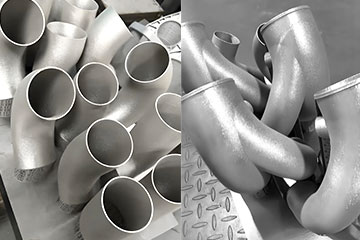
Our machines run year-round to fulfill custom 3D printing orders for customers across the globe, from prototype samples to full production runs of industrial components. We don’t judge a machine’s reliability by its brand name or a seller’s claims — we judge it by thousands of operating hours and thousands of finished parts that meet customer specifications.
We keep a clear, unvarnished record: which brands have the highest failure rates, which models hold their value best, and which production years you should approach with extreme caution.
6 Costly Mistakes to Avoid When Shopping for a Used 3D Printer
1. Judging by cosmetic condition instead of core component runtime
Let’s bust the biggest myth in the used market: “90% new, barely used”.
For industrial 3D printers, appearance means almost nothing. What determines remaining value is the actual operating hours of core components: lasers, galvanometers, powder feeders, and nozzles are all wear items, and laser runtime is the single most important number on the spec sheet.
We’ve seen spotless, like-new machines with lasers already at 80% of their usable lifespan, ready to fail within a year. We’ve also seen well-worn, workhorse machines on strict weekly maintenance schedules that still have years of reliable production left. Without verified runtime logs and a core component inspection, even the lowest price is a gamble.
2. Falling for the “bare unit” low price trap
Industrial 3D printers — especially SLM metal systems — never go into production with just the main unit. You’ll need inert gas protection systems, explosion-proof dust collection, high-precision chillers, and exhaust purification equipment. These required peripherals can add 30% or more to your total system cost.
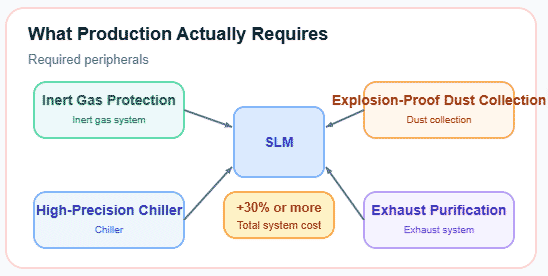
Many used sellers only advertise the main unit price, selling peripherals separately or omitting them entirely. We’ve seen buyers jump on what looks like a great deal, only to realize they can’t install or run the machine — and lose 2–3 months of production time sourcing the missing parts, ending up spending more than they would have on a complete system.
3. Only counting upfront cost, ignoring long-term O&M expenses
Consumables, spare parts, and maintenance costs vary wildly across brands. For some imported systems, proprietary nozzles, filter elements, and optical lenses cost multiple times more than generic alternatives — and you can only source them from the manufacturer, with lead times of weeks or even months.
Too many buyers focus only on the purchase price and completely overlook ongoing operating costs. Being able to buy the machine means nothing if you can’t afford to run it. This is the single most common mistake we see when people are buying a used 3D printer for the first time.
4. Buying a machine with no manufacturer or technical support
Many imported used 3D printers are long out of warranty. Some brands have even exited the market entirely, leaving no technical support, no spare parts supply, and no way to troubleshoot complex issues.
Problems like optical path misalignment, software failures, or process parameter drift can’t be fixed by general repair technicians. For metal 3D printing in particular, you need proven process parameter packages to produce parts that meet density and mechanical property requirements. Without that expertise, a six-figure machine can quickly turn into useless scrap.
5. Believing “can print” means “can produce”
Nearly every spec sheet lists a dozen compatible materials. But very few machines have mature, production-validated parameters for high-performance materials like titanium alloys, superalloys, and tool steels.
Most used machines don’t come with the original factory process packages. You might be able to print a basic sample part, but you won’t hit the required density, surface finish, and mechanical performance for customer orders. There’s a huge gap between “can print a demo” and “can run paid production jobs” — and it’s a gap that costs thousands to close.
6. Missing hidden accident and overhaul history
This is the most dangerous risk in the used market. Some machines have suffered major incidents: dust explosions inside the build chamber, structural deformation, or catastrophic laser failure. After a cosmetic refurbishment, they’re resold as “lightly used” near-new units.
These machines have compromised internal precision and major safety hazards, but they’re nearly impossible to spot from the outside. We’ve encountered these ourselves — and they’re never worth the risk, no matter how low the price.
How We Can Help With Your Used 3D Printer Journey
첫 번째, a clear promise: we are a professional 3D printing contract manufacturer, not an equipment reseller. We do not make our money selling machines.
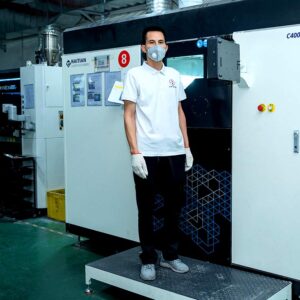
We offer free, no-obligation consulting on all things related to second hand 3D printers to anyone in the industry — even if you never buy anything from us, ever.
The reason is simple: the industrial 3D printing community is small. Trusted partners matter more than one-off sales. 저희는 3D 프린팅 서비스를 제공하여 생계를 유지하고 있습니다.. 비용이 많이 드는 실수를 피할 수 있도록 도와드리겠습니다, 아니면 앞으로 3D 프린팅 프로젝트를 진행할 때 가장 먼저 떠오르는 이름이 되어 주세요, 그건 우리에게 이득이네요.
무료 장비 선택 및 위험 평가
시제품 제작을 위한 중고 레진 3D 프린터를 찾고 계시든, 대량 생산을 위한 산업용 SLM 금속 시스템을 찾고 계시든, 귀하의 지원서에 대해 알려주세요, 작업에 활용되는 자료, 귀사의 생산량 목표, 그리고 예산. 솔직하게 말씀드리겠습니다, 귀하의 필요에 맞는 브랜드와 모델을 선정하는 데 도움이 되는 실용적인 조언, 어떤 연식의 기계가 가장 큰 위험을 수반합니까?, 그리고 실제로 지불해야 할 예상 금액은 다음과 같습니다.
과장된 홍보 문구는 배제해 주세요. 매일 이 기계를 운영하는 사람들의 솔직한 피드백입니다.
조달 지원 및 조달 검증
당사 보유 장비 중 고품질의 중고 기계가 있는 경우, 또는 다른 공장이나 신뢰할 수 있는 업계 동료들이 판매하는 신뢰할 만한 제품을 알고 계신다면, 해당 리드를 투명하게 공유하겠습니다.
또한 런타임 로그 확인을 도와드릴 수 있습니다., 남은 핵심 구성 요소의 수명 평가, 그리고 커밋하기 전에 무엇을 점검해야 하는지 단계별로 안내해 드리겠습니다. 판매자가 언급하지 않을 수 있는 위험 신호를 저희가 지적해 드리겠습니다. 설령 그로 인해 기계를 구매하지 않게 되더라도 말입니다..
장비 리스 및 금융 옵션에 대한 안내
초기 자본이 제약 요인인 경우, 또한 장비 금융 리스나 할부 방식의 조달과 같은 유연한 옵션에 대해서도 논의할 수 있습니다.. 귀사의 용량 계획 및 현금 흐름 주기에 맞춘 실질적인 조언을 제공해 드리겠습니다., 일반적인 판매 홍보 문구가 아닙니다.
구매 후 전 과정에 걸친 제작 지원 제공
기계를 구입하는 것은 시작에 불과합니다. 신뢰할 수 있는 생산 라인에 도입하는 것이 진정한 목표입니다. 장비를 넘겨주고는 사라져 버리는 장비 중개업자들과는 달리, 저희는 지속적인 지원을 제공합니다:
- 동일한 신뢰성을 위한 권장 사항, 당사 공장에서 직접 사용하는 비용 효율적인 자재 공급업체
- 금속 및 수지 소재에 대해 생산 현장에서 검증된 공정 파라미터에 대한 접근
- 일상 업무 운영 지침, 유지보수 절차, 및 일반적인 문제 해결 방법
- 자격을 갖춘 업체와의 연계, 매일 이러한 시스템을 다루는 숙련된 서비스 기술자
마치며
중고 3D 프린터는 결코 “차선책”이 아닙니다.. 적절하게 선택될 때, 이를 통해 신규 장비 도입 비용의 극히 일부만으로 신속하게 생산 능력을 확보하고 시장 기회를 포착할 수 있습니다.. 부적절한 선택 시, 수리비가 끝없이 쏟아지는 골칫거리가 됩니다, 가동 중단 시간, 및 분실된 주문.
이후 10 이 업계에서의 경력, 우리는 너무 많은 동료들이 잘못된 기계에 시간과 돈을 낭비하는 것을 봐왔습니다. 중고 3D 프린터 구매를 고려하고 계신다면, 또는 장비 선택에 대해 궁금한 점이 있으신가요?, 프로세스 구현, 또는 용량 계획, 도움이 필요하시면 언제든지 문의해 주세요.
모델을 보내주세요, 제작 연도, 매도 희망가, 및 제작 요건. 솔직한 피드백을 드리겠습니다., 무상 평가 — 완전 무료.
판매 홍보 문구 금지. 여러분의 입장에 서 본 적이 있는 한 공장에서 드리는 솔직한 조언입니다.
당사의 3D 프린팅 서비스를 이용하는 해외 B2B 고객들의 후기

“무슨 안 좋은 일이 생길까 봐 정말 걱정되었습니다. 하지만 제품을 수령한 후, 제 걱정은 전혀 불필요한 것이었음을 알게 되었습니다. DT 3D Printing은 품질이 보장된 매우 신뢰할 수 있는 공장입니다.”

“제품 품질은 최고입니다 – notch, 장인 정신이 돋보입니다, 인쇄 효과가 훌륭합니다, 배송 속도가 정말 빠릅니다. 전체적으로, 가격 대비 훌륭한 가치를 제공합니다, 그리고 저는 매우 만족합니다.”
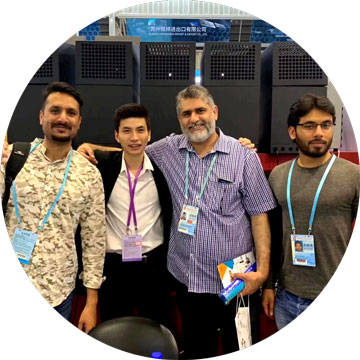
“인쇄 품질이 정말 훌륭합니다, 그리고 가격은 꽤 합리적입니다. 물류 처리 속도도 빠릅니다. 종합하자면, DT는 신뢰할 수 있는 공장입니다, 그리고 앞으로도 그들과 지속적으로 협력해 나갈 것입니다.”

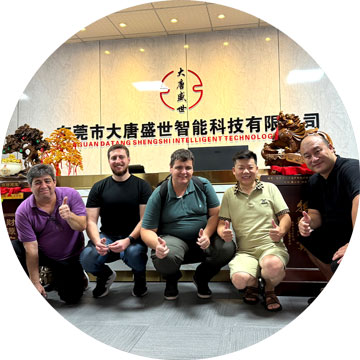



회사 소개
1. We are a professional metal 3D printing manufacturer.
2. 당사는 자동차용 금속 부품을 3D 프린팅합니다., 의료, 항공기, 항공우주, 드론, 및 선박 산업, 스테인리스강과 같은 재료를 사용하여, 티타늄, 구리, 알루미늄과 합금의 종류.
3. 원스톱 3D 프린팅 서비스를 제공합니다.
당사의 서비스에는 다음이 포함됩니다:
SLM / BJ / SLA / MJF / FDM / SLS / DLP, CNC machining and post-processing
4. 저희는 33 SLM 금속 3D 프린터, 14 CNC machining tools, 60 플라스틱 3D 프린터, 50 BJ 3D printers (owned by another company in which DT has invested), 그리고 그 숫자는 계속 늘어나고 있습니다.
5. We are a source factory for many global 3D printing service providers.