Zum Inhalt springen
  • YouTube
  • Ins
  • Twitter
  • TikTok
  • German
    • English
    • Japanese
    • French
    • German
    • Italian
    • Spanish
    • Swedish
    • Irish
    • Dutch
    • Portuguese
    • Korean
    • Greek
    • Turkish
    • Vietnamese
    • Thai
    • Indonesian
    • Malay
    • Danish
    • Finnish
    • Hindi
    • Hebrew
    • Icelandic
    • Romanian
    • Russian
DT 3D-Druck neues Logo

DT 3D-Druckservice

OEM-Hersteller – SLM (Metall-3D-Druck) Spezialisten

  • Heim
  • 3D Druckservice
    • SLM (Selektives Laserschmelzen)
    • SLA (Stereolithographie)
    • SLS (Selektives Lasersintern)
    • DLP (Digitale Lichtverarbeitung)
    • FDM (Modellierung der Schmelzablagerung)
    • mjf (Multi-Jet-Fusion)
    • BJ (Binder Jetting)
  • CNC-Bearbeitung
    • CNC-Drehen
    • CNC-Fräsen
    • Nachbearbeitung
  • Materialführer
        • 3D-Druckmaterialien aus Kunststoff
          • Harz (ABS-ähnlich, PC-ähnlich)
          • Nylon (PA6, PA12, TPU)
          • Rotes Wachs
          • PLA, TPU, PA, Kohlefaser, PC
        • 3D-Druckmaterialien aus Metall
          • Aluminiumlegierung (6061 / AlSi10Mg / 7075)
          • Edelstahl (316L / 304L / 17-4 / 347)
          • Titanlegierung (TC4 / TA1)
          • Formstahl (S136/HB/CX/1.2709)
          • Nickelreiche Legierung (GH4169 / GH3128 / INCONEL625)
          • Messinglegierung (CuCrZr / Zinnbronze)
        • Metallmaterialien für CNC
          • Aluminium / Legierung / Titan / Nickel
          • Edelstahl / Werkzeugstahl / Legierter Stahl
          • Kohlenstoffstahl / Messing / Kupfer / Bronze
        • Kunststoffmaterialien für CNC
          • ABS / Acryl / Delrin / Nylon / PP
          • HDPE / PE / PC / PEI / ULTIMATIV
          • SPÄHEN / POM / TECAFORMAH
  • Kundensupport
        • Branchenlösungen
          • Schimmel / Schimmel
          • Aerospace & UAV
          • Automobilteile
          • Telekommunikation
          • Unterhaltungselektronik
          • Medizinische Industrie
          • Robotics & Automation
          • Kunsthandwerk / Geschenke
        • Designstudio
          • Kostenlose 3D-Zeichnungsänderung
          • Kostenlose 3D-Zeichnung (begrenzt verfügbar)
        • Bestellvorgang
          • Zurückkehren & Rückerstattungsrichtlinie
          • Versandbedingungen
          • Häufig gestellte Fragen (FAQ)
        • Blog
          • Video zur Werksbesichtigung
  • Erfahrungsberichte
  • Über DT
  • Kontaktieren Sie uns

Cost Comparison and Analysis of Shoe Molds Produced by Traditional Methods and SLM Metal 3D Printing

Updated on 30/12/2025 By DT 3D-Druck

Cost Comparison Analysis: Traditional vs 3D Printed Shoe Molds

Detailed cost comparison between traditional manufacturing methods and additive manufacturing (3D printing) for shoe mold production, with specific numerical examples illustrating the differences between the two approaches.

Traditional Method
$280-1,400
Per Mold Development Cost
3D Printing Method
$210-560
Per Mold Development Cost
Cost Reduction
50-70%
With 3D Printing
Cost TypeTraditional Method3D Printing Method
Per Mold Development CostApproximately $280–1,400 (including wood pattern making, CNC machining, mold replication, texturing, and complete process fees)Approximately $210–560 (material and energy consumption only, no intermediate processes required)
Design Modification CostHigh (requires remaking wood/metal patterns, single modification cost can reach $70–280)Minimal (digital model adjustment only, negligible cost)
Production Cycle CostCycle time 15–20 days, high labor cost proportion (daily labor cost approximately $28–42/person)Cycle time 6–7 days, labor requirement reduced by 50% or more
Material Utilization RateRelatively low (waste rate for modeling board, metal materials approximately 30–40%)High (powder/resin utilization exceeds 95%)
Mass Production CostPer unit cost can be reduced to $112–210 for large volumes, but small batch customization remains expensiveSignificant advantage for small batches (per unit cost stable at $210–560, no minimum order quantity restrictions)
Environmental Processing CostRequires treatment of chemical etching waste, metal scraps, etc., environmental cost per mold approximately $28–70No chemical pollution, extremely low waste disposal cost (<$7)

Cost Comparison Example

Athletic Shoe Mold Development Case Study

Traditional Method: Initial mold development requires $1,120 (including texturing process). If design requires two modifications, total cost increases to $1,260–1,680, with a lead time of 20 days.

3D Printing: Initial mold cost $420, design modifications incur almost no additional cost, total cost remains $420, with a lead time of 7 days.

Conclusion

3D printing demonstrates significant cost advantages (a reduction of 50–70%) in small batch, high-complexity design scenarios, which is particularly suitable for rapid iteration in R&D phases. Traditional methods maintain cost advantages in large-scale standardized production but lack flexibility and environmental friendliness. As 3D printing equipment costs decline (e.g., metal printers decreasing from $490,000 to $420,000 per unit), its economic viability will further improve.

3D Printing vs Traditional Shoe Mold Manufacturing

A comprehensive comparison of modern and traditional manufacturing approaches in the footwear industry

Comparison DimensionTraditional Shoe Mold Manufacturing3D Printed Shoe Mold Manufacturing
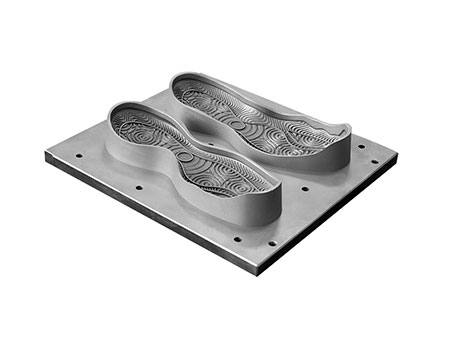
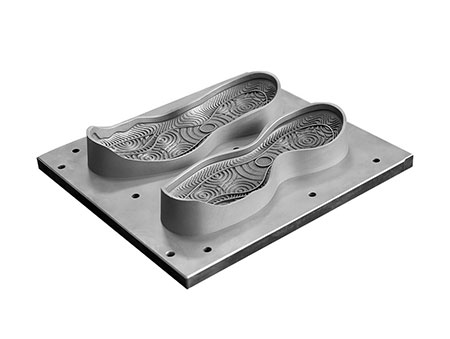
Pictures of Shoe Molds
Shoe mold made by DT SLM Metal 3D Printers
Production ProcessRequires over 10 process steps including CNC wood mold machining, silicone molding, plaster mold creation, metal casting, chemical etching (texturing), and coating—complex and multi-stageDirect printing from digital models, eliminating key steps like wood mold fabrication, casting, and chemical etching—highly streamlined process
Production CycleLonger, typically 15-20 days (includes wood mold processing, casting, etching, etc.)Significantly shorter, typically 5-7 days (direct metal mold printing)
Design FreedomLimited; complex internal structures (e.g., conformal cooling channels) and fine textures are difficult to achieve, reliant on machining capabilitiesExtremely high; enables integrated manufacturing of complex curves, honeycomb structures, micro-vent channels, and 0.05mm precision textures without traditional constraints
Accuracy & ConsistencyRelies on manual skill; poor consistency (typical tolerance ±1mm), prone to deviations due to manual operationsDigitally controlled, accuracy up to ±0,05 mm, excellent consistency and repeatability
Customization CapabilityDifficult to achieve; suitable for large-scale standardized production; high cost and long lead time for design changesEasily achievable; supports small-batch and personalized customization (e.g., customized lasts based on foot scan data)
Environmental ImpactChemical etching causes pollution, requiring additional environmental treatment facilitiesNo chemical etching; eco-friendly (digital texturing replaces acid etching), minimal material waste
Labor DependencyHighly reliant on skilled technicians; difficult process inheritance; consistency affected by human factorsDependent on equipment and software; low reliance on traditional craftsmanship; process parameters can be standardized
Initial InvestmentRequires multiple specialized machines (CNC, EDM, wire cutting, casting equipment, etc.), diverse equipment typesPrimarily relies on 3D printing and post-processing equipment; high equipment integration but higher unit cost (e.g., SLM metal 3D printers $0.43-0.5 million/unit)

Summary

3D printing technology demonstrates significant advantages in shoe mold manufacturing, particularly in reducing lead time (by over 60%), enhancing design freedom (enabling complex structures and fine textures), supporting customization, and improving sustainability compared to traditional methods. It reduces dependency on manual expertise through digital processes and avoids pollution from chemical treatments. However, traditional methods remain valuable for ultra-large-scale standardized production, while 3D printing involves higher initial equipment costs. The two technologies can be applied complementarily based on production needs (volume, complexity, cycle time).

Traditional Method

Best for large-scale standardized production where initial tooling costs can be amortized over high volume runs.

3D Printing

Ideal for prototyping, complex designs, custom footwear, and short production runs with rapid turnaround requirements.
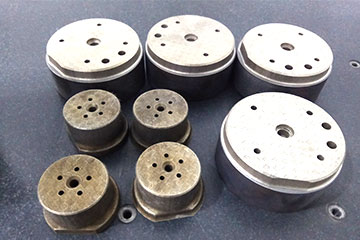
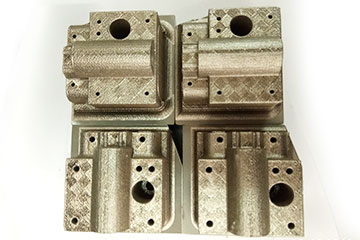
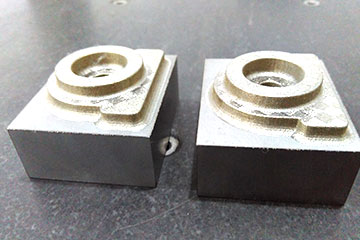
3D-gedruckte hydraulische Ventilblockform aus Metall (Gussform für Flüssigkeitssteuerelemente)
3D-gedruckte Metallform zum Spritzgießen von Angussbuchsen
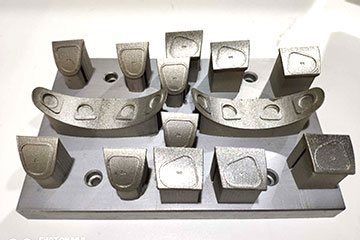
Metal 3D-printed dental molds made by DT's SLM printers
3D-gedruckte Dentalformen aus Metall, hergestellt mit SLM-Druckern von DT
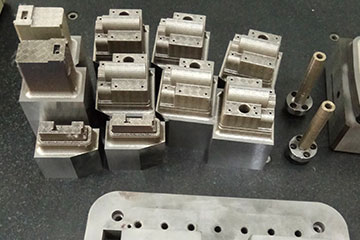
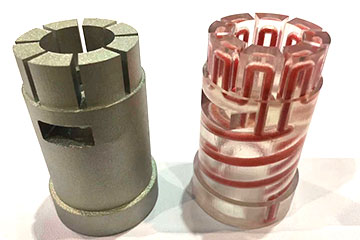
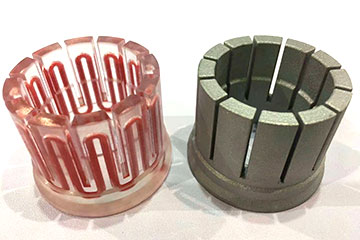
Metal 3D-printed precision mold components made by DT's SLM printers
3D-gedruckte Präzisionsformteile aus Metall, hergestellt mit SLM-Druckern von DT
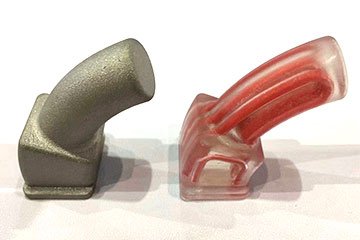
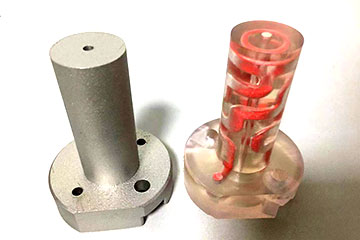
3D-gedruckter Spritzgusseinsatz (mit konformen Kühlkanälen)
3D-gedruckter Spritzgusseinsatz aus Metall (mit konformen Kühlkanälen)
Metal 3D-printed injection mold core components made by DT's SLM printers
3D-gedruckte Metall-Spritzgusskernkomponenten, hergestellt mit SLM-Druckern von DT
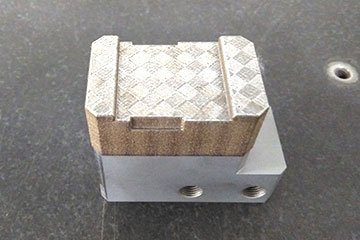
3D-gedruckte Formeinsätze aus Metall (Formkernkomponenten) made by DT's SLM printers
3D-gedruckte Formeinsätze aus Metall (Formkernkomponenten) Hergestellt mit SLM-Druckern von DT
Metal 3D-printed injection mold cavity inserts made by DT's SLM printers
3D-gedruckte Spritzguss-Hohlraumeinsätze aus Metall, hergestellt mit SLM-Druckern von DT
3D-gedruckte Spritzgussform aus Metall mit Ellenbogen-Kernziehmechanismus
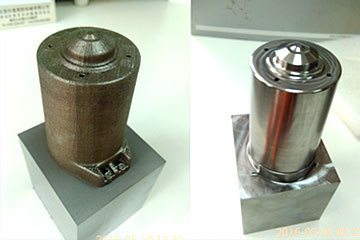
3D-gedruckte Metall-Spritzgusskernrohlinge und Fertigprodukte
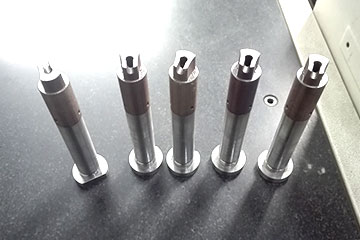
3D-gedruckter Spritzguss-Einsatzstift aus Metall (Kern) Komponenten
Blog

Post navigation

Previous Post: SLM vs DMLS: Metal 3D Printing Technology Selection Guide
Next Post: Unveiling the Ex-factory Prices of 3D-printed Crafts and Gifts

Related Products

start a 3D printing service company with minimal investment Metal 3D Printing Blue Ocean: Low-Investment Opportunities, Partner With Us Blog
SLM vs DMLS: Metal 3D Printing Technology Selection Guide Blog
3D Print Motorcycle Accessories & Parts: Helmet, Fairing, Ebike Battery Case & Electric Motor Parts Blog
12 Things You Should Never 3D Print (2026) Blog
Free Custom 3D Drawing Service (Begrenzte Verfügbarkeit) and Free 3D Drawing Modification service Blog
Different Metal Materials' 3D Printing Price Range (USD/cm³) for reference Different Metal Materials’ 3D Printing Prices (USD/cm³) for Reference [January 2026] Blog

Kundensupport
FAQ
Kostenlose 3D-Zeichnungsänderung
Kostenlose benutzerdefinierte 3D-Zeichnung (Begrenzte Verfügbarkeit)

Rechtliche Aussagen
Versandbedingungen
Rückgabe- und Rückerstattungsrichtlinien
Datenschutzrichtlinie
Nutzungsbedingungen
Nutzungsbedingungen
Haftungsausschluss
Cookie-Richtlinie

Über uns
Video zur Werksbesichtigung
Blog
Zusammenarbeit
Über DT
Kontakt

YouTube Twitter TikTok Facebook Instagram Quora LinkedIn Pinterest Reddit Medium


Urheberrecht © 2025 DT 3D-Druck
Alle Rechte vorbehalten.
Unterstützt von PressBook Grid Blogs Theme


Cookie-Einwilligung verwalten
Um die besten Erlebnisse zu bieten, Wir verwenden Technologien wie Cookies, um Geräteinformationen zu speichern und/oder darauf zuzugreifen. Wenn Sie diesen Technologien zustimmen, können wir Daten wie das Surfverhalten oder eindeutige IDs auf dieser Website verarbeiten. Nichteinwilligung oder Widerruf der Einwilligung, kann bestimmte Merkmale und Funktionen beeinträchtigen.
Funktional Immer aktiv
Die technische Speicherung oder der Zugriff ist für den legitimen Zweck unbedingt erforderlich, die Nutzung eines bestimmten, vom Abonnenten oder Nutzer ausdrücklich gewünschten Dienstes zu ermöglichen, oder zum alleinigen Zweck der Durchführung der Übermittlung einer Kommunikation über ein elektronisches Kommunikationsnetz.
Präferenzen
Die technische Speicherung oder der Zugriff ist für den legitimen Zweck der Speicherung von Präferenzen erforderlich, die nicht vom Abonnenten oder Benutzer angefordert werden.
Statistiken
Die technische Speicherung bzw. der Zugriff dient ausschließlich statistischen Zwecken. Die technische Speicherung bzw. der Zugriff dient ausschließlich anonymen Statistikzwecken. Ohne Vorladung, freiwillige Einhaltung seitens Ihres Internetdienstanbieters, oder zusätzliche Aufzeichnungen von Dritten, Informationen, die zu diesem Zweck gespeichert oder abgerufen werden, können in der Regel nicht dazu verwendet werden, Sie zu identifizieren.
Marketing
Die technische Speicherung bzw. der Zugriff ist zur Erstellung von Nutzerprofilen für den Versand von Werbung erforderlich, oder um den Benutzer auf einer Website oder über mehrere Websites hinweg für ähnliche Marketingzwecke zu verfolgen.
  • Optionen verwalten
  • Dienste verwalten
  • Verwalten {Vendor_count} Anbieter
  • Lesen Sie mehr über diese Zwecke
Einstellungen anzeigen
  • {Titel}
  • {Titel}
  • {Titel}