Ga naar de inhoud
  • Getuigenissen uit het buitenland
  • YouTube
  • Dutch
    • English
    • Japanese
    • French
    • German
    • Italian
    • Spanish
    • Swedish
    • Irish
    • Dutch
    • Portuguese
    • Korean
    • Greek
    • Turkish
    • Vietnamese
    • Thai
    • Indonesian
    • Malay
    • Danish
    • Finnish
    • Hindi
    • Hebrew
    • Icelandic
    • Romanian
    • Russian
DT 3D-printen nieuw logo

DT 3D-printservice

OEM-fabrikant – SLM (Metaal 3D-printen) Specialisten

  • Thuis
  • 3D Afdrukservice
    • SLM (Selectief lasersmelten)
    • SLA (Stereolithografie)
    • SLS (Selectief lasersinteren)
    • DLP (Digitale lichtverwerking)
    • FDM (Modellering van gesmolten afzetting)
    • mjf (Multi Jet-fusie)
    • BJ (Binder jetting)
  • CNC-bewerking
    • CNC-draaien
    • CNC-frezen
    • Nabewerking
  • Materiaalgids
        • Kunststof 3D-printmaterialen
          • Hars (ABS-achtig, PC-achtig)
          • Nylon (PA6, PA12, TPU)
          • Rode was
          • PLA, TPU, PA, Koolstofvezel, PC
        • Metalen 3D-printmaterialen
          • Aluminiumlegering (6061 / AlSi10Mg / 7075)
          • Roestvrij staal (316L / 304L / 17-4 / 347)
          • Titaniumlegering (TC4 / TA1)
          • Vormstaal (S136/HB/CX/1.2709)
          • Nikkelrijke legering (GH4169 / GH3128 / INCONEL625)
          • Messing legering (CuCrZr / Tin Brons)
        • Metalen materialen voor CNC
          • Aluminium / Legering / Titanium / Nikkel
          • Roestvrij staal / Gereedschapstaal / Gelegeerd staal
          • Koolstofstaal / Messing / Koper / Bronzen
        • Kunststof materialen voor CNC
          • ABS / Acryl / Delrin / Nylon / PP
          • HDPE / PE / PC / PEI / ULTIEM
          • KIJKJE / POM / TECAFORMAH
  • Klantenondersteuning
        • Industrie oplossingen
          • Gietvorm / Gietvorm
          • Aerospace & UAV
          • Auto-onderdelen
          • Telecommunicatie
          • Consumentenelektronica
          • Medische industrie
          • Robotics & Automation
          • Kunst ambachten / Geschenken
        • Ontwerpstudio
          • Gratis wijziging van 3D-tekeningen
          • Gratis 3D-tekening (beperkt beschikbaar)
        • Bestelproces
          • Opbrengst & Terugbetalingsbeleid
          • Verzendbeleid
          • Veelgestelde vragen (Veelgestelde vragen)
        • Bloggen
          • Video over fabrieksrondleiding
  • Getuigenissen
  • Over DT
  • Neem contact met ons op

Kostenvergelijking en analyse van schoenvormen geproduceerd met traditionele methoden en SLM Metal 3D-printen

Bijgewerkt op 30/12/2025 Door DT 3dprint

Cost Comparison Analysis: Traditional vs 3D Printed Shoe Molds

Detailed cost comparison between traditional manufacturing methods and additive manufacturing (3D-afdrukken) for shoe mold production, with specific numerical examples illustrating the differences between the two approaches.

Traditional Method
$280-1,400
Per Mold Development Cost
3D Printing Method
$210-560
Per Mold Development Cost
Cost Reduction
50-70%
With 3D Printing
Cost TypeTraditional Method3D Printing Method
Per Mold Development CostApproximately $280–1,400 (including wood pattern making, CNC-bewerking, mold replication, texturing, and complete process fees)Approximately $210–560 (material and energy consumption only, no intermediate processes required)
Design Modification CostHoog (requires remaking wood/metal patterns, single modification cost can reach $70–280)Minimal (digital model adjustment only, negligible cost)
Production Cycle CostCycle time 15–20 days, high labor cost proportion (daily labor cost approximately $28–42/person)Cycle time 6–7 days, labor requirement reduced by 50% or more
Material Utilization RateRelatively low (waste rate for modeling board, metal materials approximately 30–40%)Hoog (powder/resin utilization exceeds 95%)
Mass Production CostPer unit cost can be reduced to $112–210 for large volumes, but small batch customization remains expensiveSignificant advantage for small batches (per unit cost stable at $210–560, no minimum order quantity restrictions)
Environmental Processing CostRequires treatment of chemical etching waste, metal scraps, enz., environmental cost per mold approximately $28–70No chemical pollution, extremely low waste disposal cost (<$7)

Cost Comparison Example

Athletic Shoe Mold Development Case Study

Traditional Method: Initial mold development requires $1,120 (including texturing process). If design requires two modifications, total cost increases to $1,260–1,680, with a lead time of 20 dagen.

3D Printing: Initial mold cost $420, design modifications incur almost no additional cost, total cost remains $420, with a lead time of 7 dagen.

Conclusion

3D printing demonstrates significant cost advantages (a reduction of 50–70%) in small batch, high-complexity design scenarios, which is particularly suitable for rapid iteration in R&D phases. Traditional methods maintain cost advantages in large-scale standardized production but lack flexibility and environmental friendliness. As 3D printing equipment costs decline (bijv., metal printers decreasing from $490,000 naar $420,000 per unit), its economic viability will further improve.

3D Printing vs Traditional Shoe Mold Manufacturing

A comprehensive comparison of modern and traditional manufacturing approaches in the footwear industry

Comparison DimensionTraditional Shoe Mold Manufacturing3D Printed Shoe Mold Manufacturing
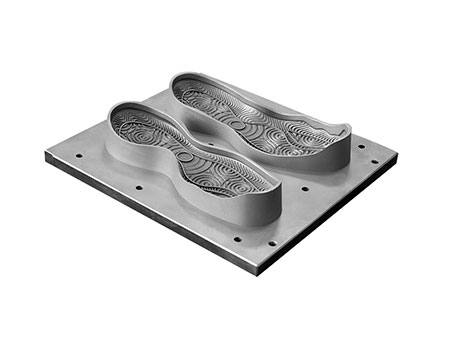
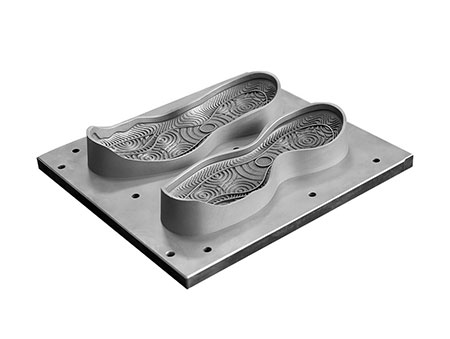
Pictures of Shoe Molds
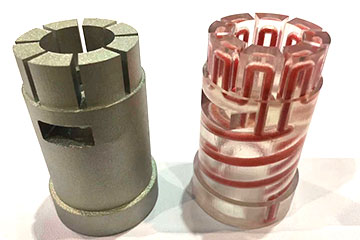
Shoe mold made by DT SLM Metal 3D Printers
Production ProcessRequires over 10 process steps including CNC wood mold machining, silicone molding, plaster mold creation, metal casting, chemical etching (texturing), and coating—complex and multi-stageDirect printing from digital models, eliminating key steps like wood mold fabrication, gieten, and chemical etching—highly streamlined process
Production CycleLonger, typically 15-20 dagen (includes wood mold processing, gieten, etching, enz.)Significantly shorter, typically 5-7 dagen (direct metal mold printing)
Design FreedomLimited; complex internal structures (bijv., conformal cooling channels) and fine textures are difficult to achieve, reliant on machining capabilitiesExtremely high; enables integrated manufacturing of complex curves, honeycomb structures, micro-vent channels, En 0.05mm precision textures without traditional constraints
Accuracy & ConsistencyRelies on manual skill; poor consistency (typical tolerance ±1mm), prone to deviations due to manual operationsDigitally controlled, accuracy up to ±0,05 mm, excellent consistency and repeatability
Customization CapabilityDifficult to achieve; suitable for large-scale standardized production; high cost and long lead time for design changesEasily achievable; supports small-batch and personalized customization (bijv., customized lasts based on foot scan data)
Environmental ImpactChemical etching causes pollution, requiring additional environmental treatment facilitiesNo chemical etching; eco-friendly (digital texturing replaces acid etching), minimal material waste
Labor DependencyHighly reliant on skilled technicians; difficult process inheritance; consistency affected by human factorsDependent on equipment and software; low reliance on traditional craftsmanship; process parameters can be standardized
Initial InvestmentRequires multiple specialized machines (CNC, EDM, wire cutting, casting equipment, enz.), diverse equipment typesPrimarily relies on 3D printing and post-processing equipment; high equipment integration but higher unit cost (bijv., SLM metaal 3D-printers $0.43-0.5 million/unit)

Summary

3D printing technology demonstrates significant advantages in shoe mold manufacturing, particularly in reducing lead time (by over 60%), enhancing design freedom (enabling complex structures and fine textures), supporting customization, and improving sustainability compared to traditional methods. It reduces dependency on manual expertise through digital processes and avoids pollution from chemical treatments. However, traditional methods remain valuable for ultra-large-scale standardized production, while 3D printing involves higher initial equipment costs. The two technologies can be applied complementarily based on production needs (volume, complexity, cycle time).

Traditional Method

Best for large-scale standardized production where initial tooling costs can be amortized over high volume runs.

3D Printing

Ideal for prototyping, complex designs, custom footwear, and short production runs with rapid turnaround requirements.
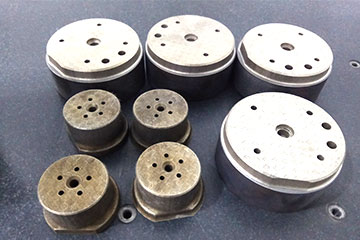
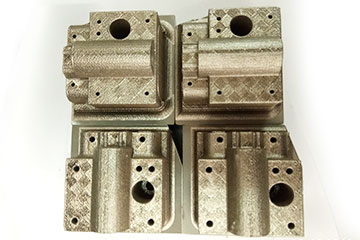
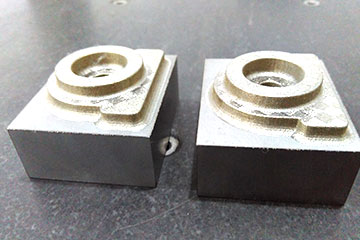
Metalen 3D-geprinte mal voor hydraulische kleppenblokken (schimmel voor vloeistofregelelement)
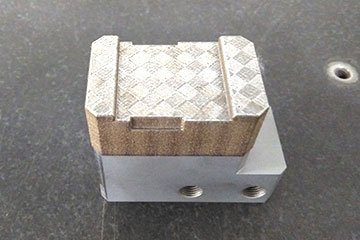
3D-geprinte metalen mal voor spuitgiet-aanspuitbussen
Metal 3D-printed dental molds made by DT's SLM printers
Metalen 3D-geprinte tandheelkundige mallen gemaakt door de SLM-printers van DT
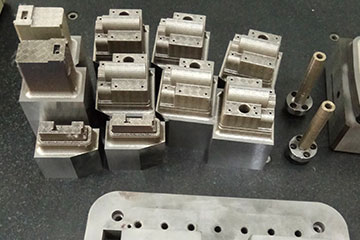
Metal 3D-printed precision mold components made by DT's SLM printers
Metalen 3D-geprinte precisievormcomponenten gemaakt door de SLM-printers van DT
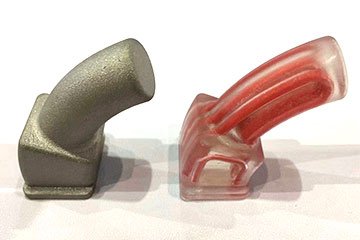
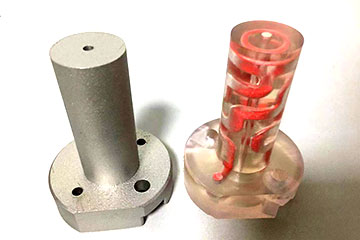
3D-geprint spuitgietinzetstuk (met conforme koelkanalen)
Metalen 3D-geprinte spuitgietinzet (met conforme koelkanalen)
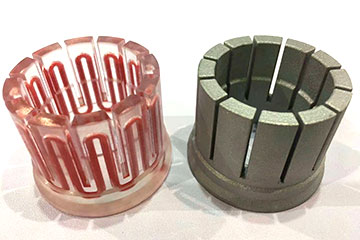
Metal 3D-printed injection mold core components made by DT's SLM printers
Metalen 3D-geprinte kerncomponenten voor spuitgietmatrijzen gemaakt door DT's SLM-printers
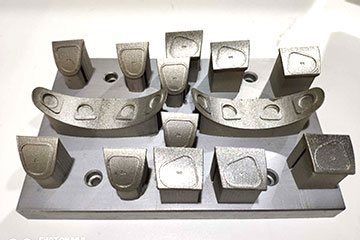
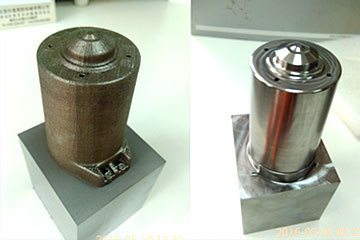
Metalen 3D-geprinte vorminzetstukken (kerncomponenten van de mal) made by DT's SLM printers
Metalen 3D-geprinte vorminzetstukken (kerncomponenten van de mal) gemaakt door de SLM-printers van DT
Metal 3D-printed injection mold cavity inserts made by DT's SLM printers
Metalen 3D-geprinte inzetstukken voor spuitgietholten gemaakt door DT's SLM-printers
Metalen 3D-geprinte spuitgietmatrijs met elleboogkerntrekmechanisme
Metalen 3D-geprinte spuitgietkernplano's en eindproducten
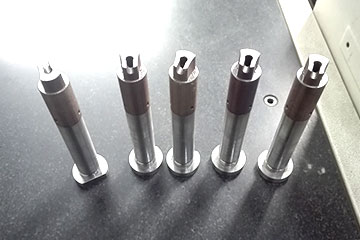
Metalen 3D-geprinte spuitgietinsteekpin (kern) componenten
Bloggen

Berichtnavigatie

Vorig bericht: SLM vs DMLS: Metal 3D Printing Technology Selection Guide
Volgende bericht: Onthulling van de prijzen af ​​fabriek van 3D-geprinte ambachten en geschenken

Gerelateerde producten

12 Things You Should Never 3D Print (2026) Bloggen
Custom 3D Printed Motorcycle Parts: Frame, Kuip, Seat & Dirt Bike Ti-6Al-4V Parts Bloggen
start a 3D printing service company with minimal investment Metaal 3D-printen Blue Ocean: Lage investeringsmogelijkheden, Werk met ons samen Bloggen
Verschillende metalen materialen' 3D Printing Price Range (USD/cm³) for reference Verschillende metalen materialen’ 3D Drukprijzen (USD/cm³) ter referentie [Februari 2026] Bloggen
SLM vs DMLS: Metal 3D Printing Technology Selection Guide Bloggen
Free Custom 3D Drawing Service (Beperkte beschikbaarheid) and Free 3D Drawing Modification service Bloggen

Klantenondersteuning
Veelgestelde vragen
Gratis wijziging van 3D-tekeningen
Gratis aangepaste 3D-tekening (Beperkte beschikbaarheid)

Juridische verklaringen
Verzendbeleid
Retour- en terugbetalingsbeleid
Privacybeleid
Servicevoorwaarden
Gebruiksvoorwaarden
Vrijwaring
Cookiebeleid

Over ons
Video over fabrieksrondleiding
Bloggen
Samenwerking
Over DT
Contact

YouTube Twitteren TikTok Facebook Instagram Quora LinkedIn Pinterest Reddit Medium


Auteursrecht © 2025 DT 3D-printen
Alle rechten voorbehouden.
Mogelijk gemaakt door het PressBook Grid Blogs-thema


Beheer cookie-toestemming
Om de beste ervaringen te bieden, we gebruiken technologieën zoals cookies om apparaatinformatie op te slaan en/of te openen. Door toestemming te geven voor deze technologieën kunnen we gegevens zoals surfgedrag of unieke ID's op deze site verwerken. Geen toestemming geven of toestemming intrekken, kan bepaalde kenmerken en functies negatief beïnvloeden.
Functioneel Altijd actief
De technische opslag of toegang is strikt noodzakelijk voor het legitieme doel om het gebruik van een specifieke dienst mogelijk te maken die uitdrukkelijk door de abonnee of gebruiker is aangevraagd, of met als enig doel de overdracht van communicatie via een elektronisch-communicatienetwerk uit te voeren.
Voorkeuren
De technische opslag of toegang is noodzakelijk voor het legitieme doel van het opslaan van voorkeuren die niet door de abonnee of gebruiker worden gevraagd.
Statistieken
De technische opslag of toegang die uitsluitend voor statistische doeleinden wordt gebruikt. De technische opslag of toegang die uitsluitend wordt gebruikt voor anonieme statistische doeleinden. Zonder dagvaarding, vrijwillige naleving door uw internetprovider, of aanvullende gegevens van een derde partij, informatie die alleen voor dit doel wordt opgeslagen of opgehaald, kan doorgaans niet worden gebruikt om u te identificeren.
Marketing
De technische opslag of toegang is vereist om gebruikersprofielen aan te maken om advertenties te verzenden, of om de gebruiker op een website of op meerdere websites te volgen voor soortgelijke marketingdoeleinden.
  • Beheer opties
  • Beheer diensten
  • Beheren {leveranciersaantal} verkopers
  • Lees meer over deze doeleinden
Bekijk voorkeuren
  • {titel}
  • {titel}
  • {titel}