Langkau ke kandungan
  • Testimoni dari Luar Negara
  • YouTube
  • Malay
    • English
    • Japanese
    • French
    • German
    • Italian
    • Spanish
    • Swedish
    • Irish
    • Dutch
    • Portuguese
    • Korean
    • Greek
    • Turkish
    • Vietnamese
    • Thai
    • Indonesian
    • Malay
    • Danish
    • Finnish
    • Hindi
    • Hebrew
    • Icelandic
    • Romanian
    • Russian
Logo Baharu Cetakan DT 3D

Perkhidmatan percetakan DT 3d

pengilang OEM – SLM (Percetakan 3D Logam) Pakar

  • Rumah
  • 3D Perkhidmatan Percetakan
    • SLM (Peleburan Laser Terpilih)
    • SLA (Stereolitografi)
    • SLS (Pensinteran Laser Terpilih)
    • DLP (Pemprosesan Cahaya Digital)
    • FDM (Pemodelan Pemendapan Bercantum)
    • mjf (Gabungan Pelbagai Jet)
    • BJ (Jetting Pengikat)
  • Pemesinan CNC
    • Pusing CNC
    • Pengilangan CNC
    • Pasca pemprosesan
  • Panduan Bahan
        • Bahan Cetakan 3D Plastik
          • damar (Seperti ABS, Suka PC)
          • nilon (PA6, PA12, TPU)
          • Lilin Merah
          • PLA, TPU, PA, Serat Karbon, PC
        • Bahan Percetakan 3D Logam
          • Aloi Aluminium (6061 / AlSi10Mg / 7075)
          • Keluli Tahan Karat (316L / 304L / 17-4 / 347)
          • Aloi Titanium (TC4 / TA1)
          • Keluli acuan (S136/HB/CX/1.2709)
          • Aloi yang kaya dengan nikel (GH4169 / GH3128 / INCONEL625)
          • Aloi Loyang (CuCrZr / Gangsa Timah)
        • Bahan Logam untuk CNC
          • aluminium / Aloi / titanium / nikel
          • Keluli Tahan Karat / Keluli Alat / Keluli Aloi
          • Keluli Karbon / Tembaga / Tembaga / Gangsa
        • Bahan Plastik untuk CNC
          • ABS / Akrilik / Delrin / nilon / PP
          • HDPE / PE / PC / PEI / MUKTAMAD
          • MENGINTIP / POM / TECAFORMAH
  • Sokongan Pelanggan
        • Penyelesaian Industri
          • acuan / acuan
          • Aerospace & UAV
          • Bahagian Automotif
          • Telekomunikasi
          • Elektronik Pengguna
          • Industri Perubatan
          • Robotics & Automation
          • Kraf Seni / Hadiah
        • Studio Reka Bentuk
          • Pengubahsuaian Lukisan 3D Percuma
          • Lukisan 3D Percuma (terhad tersedia)
        • Proses Pesanan
          • Kembali & Polisi Bayaran Balik
          • Polisi Penghantaran
          • Soalan Lazim (Soalan Lazim)
        • Blog
          • Video Lawatan Kilang
  • Testimoni
  • Mengenai DT
  • Hubungi kami

Cost Comparison and Analysis of Shoe Molds Produced by Traditional Methods and SLM Metal 3D Printing

Dikemas kini pada 30/12/2025 Oleh DT 3dprint

Cost Comparison Analysis: Traditional vs 3D Printed Shoe Molds

Detailed cost comparison between traditional manufacturing methods and additive manufacturing (3D percetakan) for shoe mold production, with specific numerical examples illustrating the differences between the two approaches.

Traditional Method
$280-1,400
Per Mold Development Cost
3D Printing Method
$210-560
Per Mold Development Cost
Cost Reduction
50-70%
With 3D Printing
Cost TypeTraditional Method3D Printing Method
Per Mold Development CostApproximately $280–1,400 (including wood pattern making, CNC machining, mold replication, texturing, and complete process fees)Approximately $210–560 (material and energy consumption only, no intermediate processes required)
Design Modification Costtinggi (requires remaking wood/metal patterns, single modification cost can reach $70–280)Minimal (digital model adjustment only, negligible cost)
Production Cycle CostCycle time 15–20 days, high labor cost proportion (daily labor cost approximately $28–42/person)Cycle time 6–7 days, labor requirement reduced by 50% or more
Material Utilization RateRelatively low (waste rate for modeling board, metal materials approximately 30–40%)tinggi (powder/resin utilization exceeds 95%)
Mass Production CostPer unit cost can be reduced to $112–210 for large volumes, but small batch customization remains expensiveSignificant advantage for small batches (per unit cost stable at $210–560, no minimum order quantity restrictions)
Environmental Processing CostRequires treatment of chemical etching waste, metal scraps, dll., environmental cost per mold approximately $28–70No chemical pollution, extremely low waste disposal cost (<$7)

Cost Comparison Example

Athletic Shoe Mold Development Case Study

Traditional Method: Initial mold development requires $1,120 (including texturing process). If design requires two modifications, total cost increases to $1,260–1,680, with a lead time of 20 hari.

3D Printing: Initial mold cost $420, design modifications incur almost no additional cost, total cost remains $420, with a lead time of 7 hari.

Conclusion

3D printing demonstrates significant cost advantages (a reduction of 50–70%) in small batch, high-complexity design scenarios, which is particularly suitable for rapid iteration in R&D phases. Traditional methods maintain cost advantages in large-scale standardized production but lack flexibility and environmental friendliness. As 3D printing equipment costs decline (cth., metal printers decreasing from $490,000 kepada $420,000 per unit), its economic viability will further improve.

3D Printing vs Traditional Shoe Mold Manufacturing

A comprehensive comparison of modern and traditional manufacturing approaches in the footwear industry

Dimensi PerbandinganTraditional Shoe Mold Manufacturing3D Printed Shoe Mold Manufacturing
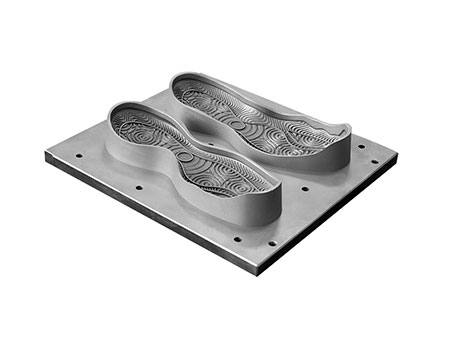
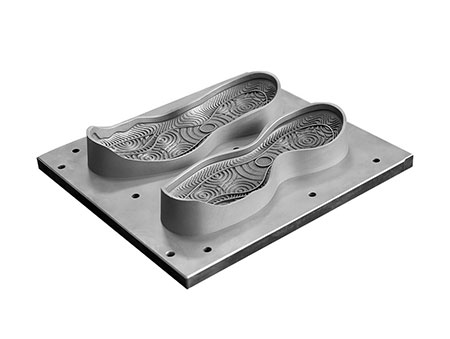
Pictures of Shoe Molds
Shoe mold made by DT SLM Metal 3D Printers
Production ProcessRequires over 10 process steps including CNC wood mold machining, silicone molding, plaster mold creation, metal casting, chemical etching (texturing), and coating—complex and multi-stageDirect printing from digital models, eliminating key steps like wood mold fabrication, pemutus, and chemical etching—highly streamlined process
Production CycleLonger, typically 15-20 hari (includes wood mold processing, pemutus, etching, dll.)Significantly shorter, typically 5-7 hari (direct metal mold printing)
Design FreedomLimited; complex internal structures (cth., conformal cooling channels) and fine textures are difficult to achieve, reliant on machining capabilitiesExtremely high; enables integrated manufacturing of complex curves, honeycomb structures, micro-vent channels, dan 0.05mm precision textures without traditional constraints
Accuracy & ConsistencyRelies on manual skill; poor consistency (typical tolerance ±1mm), prone to deviations due to manual operationsDigitally controlled, accuracy up to ±0.05mm, excellent consistency and repeatability
Customization CapabilityDifficult to achieve; suitable for large-scale standardized production; high cost and long lead time for design changesEasily achievable; supports small-batch and personalized customization (cth., customized lasts based on foot scan data)
Environmental ImpactChemical etching causes pollution, requiring additional environmental treatment facilitiesNo chemical etching; eco-friendly (digital texturing replaces acid etching), minimal material waste
Labor DependencyHighly reliant on skilled technicians; difficult process inheritance; consistency affected by human factorsDependent on equipment and software; low reliance on traditional craftsmanship; process parameters can be standardized
Initial InvestmentRequires multiple specialized machines (CNC, EDM, wire cutting, casting equipment, dll.), diverse equipment typesPrimarily relies on 3D printing and post-processing equipment; high equipment integration but higher unit cost (cth., SLM metal 3D printers $0.43-0.5 million/unit)

Summary

3D printing technology demonstrates significant advantages in shoe mold manufacturing, particularly in reducing lead time (by over 60%), enhancing design freedom (enabling complex structures and fine textures), supporting customization, and improving sustainability compared to traditional methods. It reduces dependency on manual expertise through digital processes and avoids pollution from chemical treatments. However, traditional methods remain valuable for ultra-large-scale standardized production, while 3D printing involves higher initial equipment costs. The two technologies can be applied complementarily based on production needs (volume, complexity, cycle time).

Traditional Method

Best for large-scale standardized production where initial tooling costs can be amortized over high volume runs.

3D Printing

Ideal for prototyping, complex designs, custom footwear, and short production runs with rapid turnaround requirements.
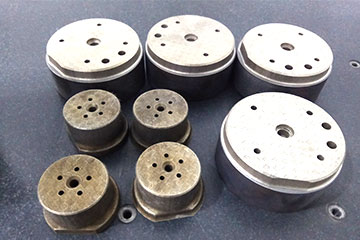
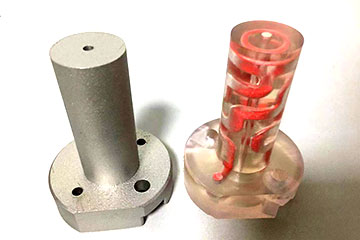
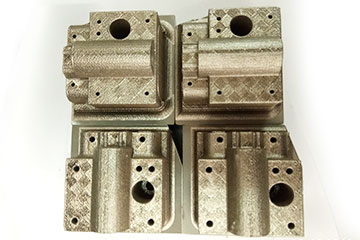
Acuan blok injap hidraulik cetakan 3D logam (acuan elemen kawalan bendalir)
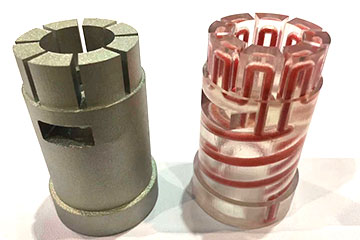
3Acuan logam bercetak D untuk sesendal pengacuan suntikan
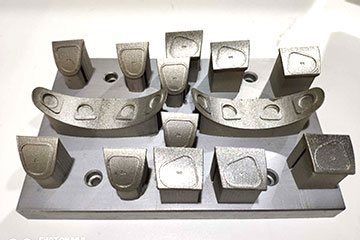
Metal 3D-printed dental molds made by DT's SLM printers
Acuan pergigian cetakan 3D logam yang dibuat oleh pencetak SLM DT
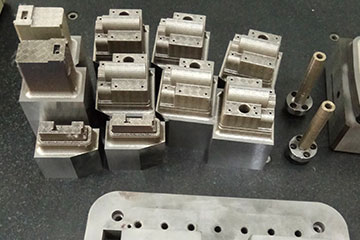
Metal 3D-printed precision mold components made by DT's SLM printers
Komponen acuan ketepatan cetakan 3D logam yang dibuat oleh pencetak SLM DT
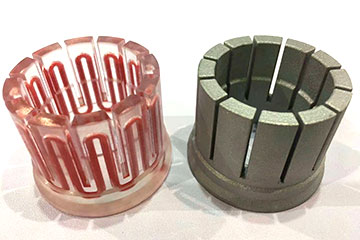
3Sisipan acuan suntikan bercetak D (dengan saluran penyejukan konformal)
Sisipan acuan suntikan cetakan 3D logam (dengan saluran penyejukan konformal)
Metal 3D-printed injection mold core components made by DT's SLM printers
Komponen teras acuan suntikan cetakan 3D logam yang dibuat oleh pencetak SLM DT
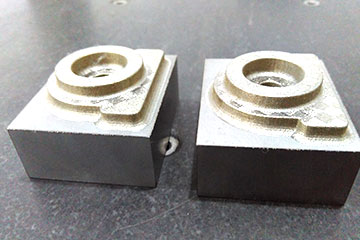
Sisipan acuan cetakan 3D logam (komponen teras acuan) made by DT's SLM printers
Sisipan acuan cetakan 3D logam (komponen teras acuan) dibuat oleh pencetak SLM DT
Metal 3D-printed injection mold cavity inserts made by DT's SLM printers
Sisipan rongga acuan suntikan cetakan 3D logam yang dibuat oleh pencetak SLM DT
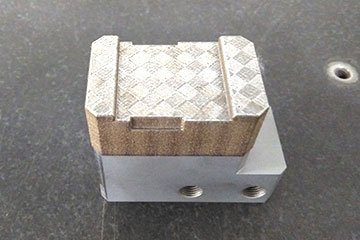
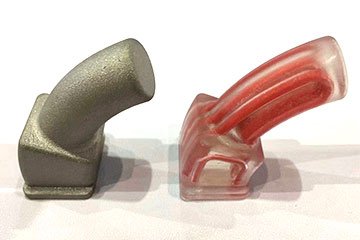
Acuan suntikan cetakan 3D logam dengan mekanisme tarik teras siku
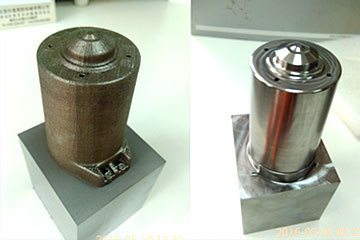
Kosong teras acuan suntikan cetakan 3D logam dan produk siap
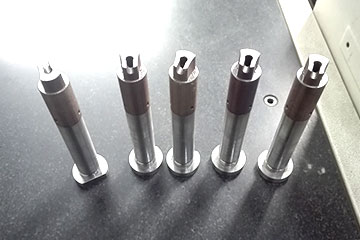
Pin masukkan acuan suntikan cetakan 3D logam (teras) komponen
Blog

Navigasi pos

Catatan Sebelumnya: SLM vs DMLS: Panduan Pemilihan Teknologi Pencetakan 3D Logam
Catatan Seterusnya: Membongkar Harga Bekas Kilang Kraf dan Hadiah cetakan 3D

Produk Berkaitan

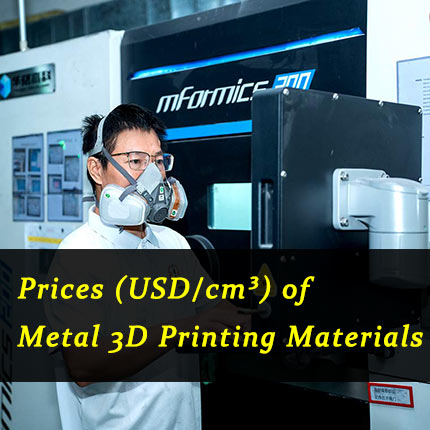
Different Metal Materials' 3D Printing Price Range (USD/cm³) for reference Different Metal Materials’ 3D Printing Prices (USD/cm³) for Reference [February 2026] Blog
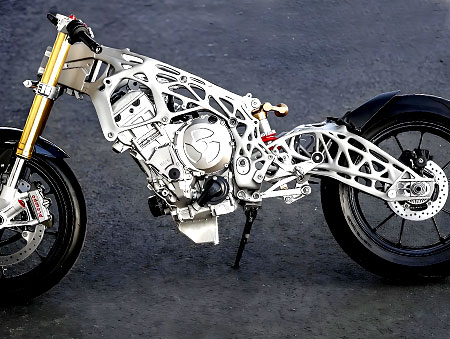
Custom 3D Printed Motorcycle Parts: Frame, Fairing, Seat & Dirt Bike Ti-6Al-4V Parts Blog
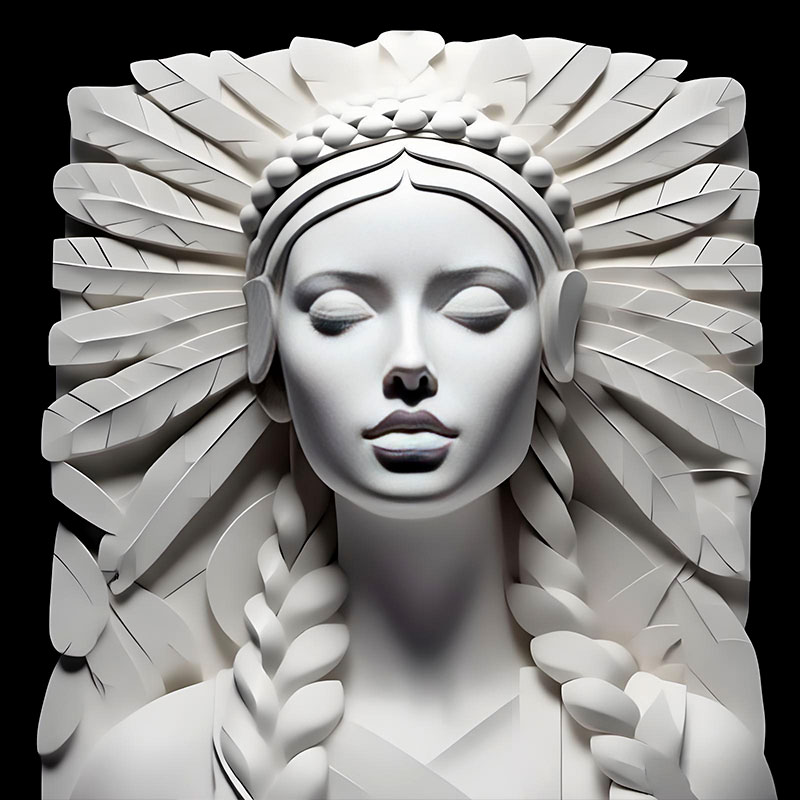
Custom 3D Printed Sculptures including Famous Art, Kinetic and Zoetrope Sculptures Blog
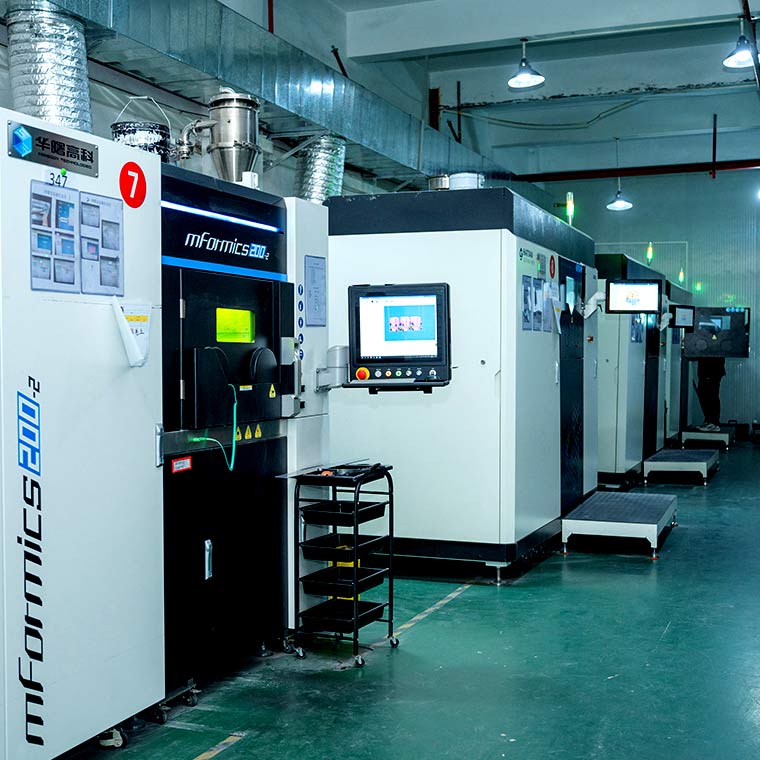
SLM vs DMLS: Panduan Pemilihan Teknologi Pencetakan 3D Logam Blog
start a 3D printing service company with minimal investment Metal 3D Printing Blue Ocean: Low-Investment Opportunities, Partner With Us Blog
12 Things You Should Never 3D Print (2026) Blog

Sokongan Pelanggan
Soalan Lazim
Pengubahsuaian Lukisan 3D Percuma
Lukisan 3D Tersuai Percuma (Ketersediaan Terhad)

Pernyataan Undang-undang
Polisi Penghantaran
Polisi Pemulangan dan Bayaran Balik
Dasar Privasi
Syarat Perkhidmatan
Syarat Penggunaan
Penafian
Dasar Kuki

Tentang kami
Video Lawatan Kilang
Blog
Kerjasama
Mengenai DT
Kenalan

YouTube Twitter TikTok Facebook Instagram Quora LinkedIn Pinterest Reddit Sederhana


Hak Cipta © 2025 Percetakan DT 3D
Hak Cipta Terpelihara.
Dikuasakan oleh Tema Blog Grid PressBook


Urus Persetujuan Kuki
Untuk memberikan pengalaman terbaik, kami menggunakan teknologi seperti kuki untuk menyimpan dan/atau mengakses maklumat peranti. Mempersetujui teknologi ini akan membolehkan kami memproses data seperti gelagat menyemak imbas atau ID unik di tapak ini. Tidak bersetuju atau menarik balik persetujuan, boleh menjejaskan ciri dan fungsi tertentu.
Berfungsi Sentiasa aktif
Penyimpanan teknikal atau akses amat diperlukan untuk tujuan yang sah untuk membolehkan penggunaan perkhidmatan tertentu yang diminta secara eksplisit oleh pelanggan atau pengguna., atau untuk tujuan semata-mata untuk menjalankan penghantaran komunikasi melalui rangkaian komunikasi elektronik.
Keutamaan
Storan teknikal atau akses adalah perlu untuk tujuan yang sah untuk menyimpan keutamaan yang tidak diminta oleh pelanggan atau pengguna.
Perangkaan
Storan teknikal atau akses yang digunakan secara eksklusif untuk tujuan statistik. Storan teknikal atau akses yang digunakan secara eksklusif untuk tujuan statistik tanpa nama. Tanpa sepina, pematuhan sukarela di pihak Pembekal Perkhidmatan Internet anda, atau rekod tambahan daripada pihak ketiga, maklumat yang disimpan atau diambil untuk tujuan ini sahaja biasanya tidak boleh digunakan untuk mengenal pasti anda.
Pemasaran
Storan teknikal atau akses diperlukan untuk membuat profil pengguna untuk menghantar pengiklanan, atau untuk menjejaki pengguna di tapak web atau merentasi beberapa tapak web untuk tujuan pemasaran yang serupa.
  • Uruskan pilihan
  • Urus perkhidmatan
  • Uruskan {vendor_count} vendor
  • Baca lebih lanjut mengenai tujuan ini
Lihat pilihan
  • {tajuk}
  • {tajuk}
  • {tajuk}