






Let’s cut right to the question we get more than any other when clients walk in with fine-feature cooling designs: pure copper or copper alloy?
If you’re building microchannels, ultra-thin walls, or conformal flow paths, this isn’t a “flip a coin” kind of call. Pick the wrong material, and you’ll either leave a ton of thermal performance on the table, end up with a part that can’t hold up to real-world conditions, or pay a premium for specs you’ll never actually use.
On this page, we’ll break down the real-world differences between pure copper and copper alloys for 3D printed thermal components — how they stack up for fine features, where each one actually shines, and how to pick the right one the first time around. This is part of our full lineup of 3D printed copper & copper alloy thermal management solutions, so you can see how material choice fits into the bigger picture.
첫 번째, The Basic Material Tradeoff (No Fluff)
Let’s get the fundamentals out of the way first. No fancy jargon, just what actually matters for your cooling part.
Pure copper (99.9%+ purity)
- Max thermal conductivity: 390–410 W/m·K after heat treatment — basically on par with standard wrought C11000 copper
- The gold standard for raw heat transfer
- Softer, lower tensile strength
- Best when thermal performance is your number one priority
Copper alloys (we most commonly use CuCrZr, with CuNiSi available for specific needs)
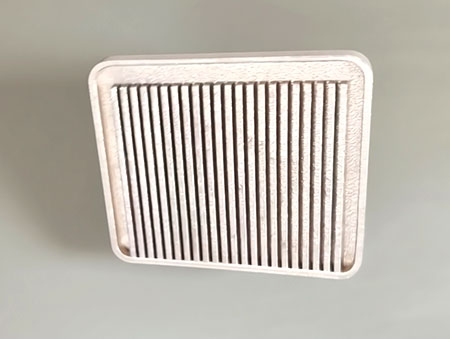
- Thermal conductivity: 320–350 W/m·K after heat treatment — lower than pure copper, but still roughly double aluminum
- Significantly higher tensile strength, 경도, and fatigue resistance
- Holds up better to pressure, vibration, and mechanical wear
- Best when you need a balance of thermal performance and durability
Here’s the deal: pure copper wins on raw conductivity, but alloys win on toughness. For simple parts, that’s usually enough to decide. For fine-feature designs like microchannels and thin walls, it gets a little more nuanced.
Microchannels: Printability vs Real-World Performance

Microchannels are where high-performance cooling lives — the smaller and denser the channels, the more heat transfer surface you pack into a given footprint.
First things first: both materials can print very fine microchannels at production scale. We reliably hit 0.3mm diameter channels in both pure copper and CuCrZr with consistent quality. Printability isn’t the bottleneck here.
The real difference shows up in how those channels perform in your actual system.
Pure copper microchannels
- The channel walls conduct heat faster, so heat moves from the base plate into the coolant more efficiently
- Great for low to medium pressure liquid cooling systems where maximum heat transfer is the goal
- The softer material means extra care is needed during post-processing and handling to avoid damaging delicate channel features
- Ideal for server cold plates and static thermal components where vibration and pressure are minimal
Copper alloy microchannels
- The higher material strength means channel walls can handle much higher operating pressures without bulging or failing
- Better resistance to coolant erosion over long-term, high-flow operation
- You can often run slightly thinner walls in high-pressure designs compared to pure copper, which partially makes up for the lower base conductivity
- The go-to choice for high-pressure liquid loops, automotive power electronics, and industrial systems with fluctuating pressures
If you’re specifically working on server cooling designs, we break down full performance numbers in our guide to 3D printed copper liquid cold plates.
Thin Walls: What You Can Actually Build And Use
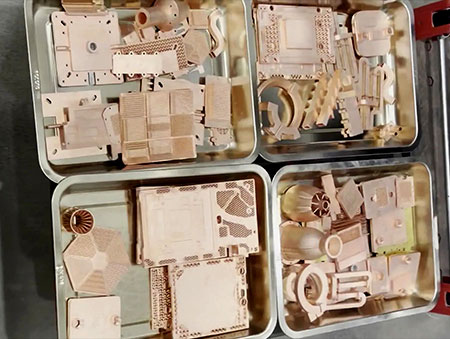
Thin walls are critical for maximizing heat transfer — the thinner the wall between your heat source and coolant, the lower the thermal resistance.
Again, both materials can print down to roughly 0.2mm wall thickness for production parts. Printability isn’t the limiting factor here. Real-world usability is.
Pure copper thin walls
- You can print them, and they work great — as long as they’re not under mechanical stress
- Pure copper is soft. Thin walls can bend or dent easily during handling, assembly, or if the part sees any impact
- Perfect for enclosed internal features and static applications like optical module thermal structures, where the part stays protected inside a housing
- Not ideal for external thin fins or parts that will be installed and removed regularly
Copper alloy thin walls
- 0.2mm walls in CuCrZr are surprisingly rigid. They hold their shape through handling, assembly, and vibration
- They stand up to repeated thermal cycling much better without fatigue
- The better choice for any thin-wall feature that’s exposed, load-bearing, or operating in a high-vibration environment like EV inverters or aerospace equipment
For context, most of our optical module thermal structures use pure copper thin walls, while our IGBT heat sinks for automotive applications almost always run a copper alloy.
Conformal & Complex Flow Paths: Design Freedom, But With Caveats
One of the biggest advantages of 3D printing is being able to build curved, tapered, conformal flow paths that follow your heat source exactly — no more being stuck with straight, parallel channels.
Good news first: both pure copper and copper alloys give you basically the same design freedom here. If you can model a conformal flow path, we can print it in either material.
The catch is how well that complex geometry holds up over time.
Pure copper complex flow paths

- Excellent thermal performance, since the high-conductivity material follows the heat source perfectly
- Best for low-pressure, steady-state systems with consistent flow
- Sharp corners, sudden diameter changes, or thin cross-sections can become weak points under pressure spikes or thermal cycling
- Great for AI-optimized cold plate designs in controlled data center environments
Copper alloy complex flow paths
- You get all the design freedom, with way more durability
- Sharp turns, variable cross-sections, and intricate manifold designs hold up to high pressure and thermal cycling far better
- The material strength lets you push design boundaries more aggressively without risking part failure
- The default choice for any mission-critical or heavy-industry application with complex internal geometry
We’ve seen plenty of teams default to pure copper just because “it’s more conductive,” only to find out later that their high-pressure system would have performed better with an alloy that allowed thinner, denser channels.
해외 B2B 고객들의 추천사

“무슨 안 좋은 일이 생길까 봐 정말 걱정되었습니다. 하지만 제품을 수령한 후, 제 걱정은 전혀 불필요한 것이었음을 알게 되었습니다. DT 3D Printing은 품질이 보장된 매우 신뢰할 수 있는 공장입니다.”


“제품 품질은 최고입니다 – notch, 장인 정신이 돋보입니다, 인쇄 효과가 훌륭합니다, 배송 속도가 정말 빠릅니다. 전체적으로, 가격 대비 훌륭한 가치를 제공합니다, 그리고 저는 매우 만족합니다.”


“인쇄 품질이 정말 훌륭합니다, 그리고 가격은 꽤 합리적입니다. 물류 처리 속도도 빠릅니다. 종합하자면, DT는 신뢰할 수 있는 공장입니다, 그리고 앞으로도 그들과 지속적으로 협력해 나갈 것입니다.”



Quick Side-By-Side Cheat Sheet
Let’s boil it all down to easy comparison:
| 카테고리 | 순동 | 구리 합금 (CuCrZr) |
|---|---|---|
| Thermal Conductivity | 390–410 W/m·K | 320–350 W/m·K |
| Minimum Microchannel | ~0.3mm | ~0.3mm |
| Minimum Wall Thickness | ~0.2mm | ~0.2mm |
| Pressure Rating | Low to medium | 높음 |
| Vibration Resistance | Fair | Excellent |
| Wear & Erosion Resistance | Fair | Very good |
| Core Strength | Max thermal performance | Durability and reliability |
So Which One Should You Pick?
The bottom line: there’s no universal “better” option. It all depends on what your part needs to do.
Go with pure copper if:
- Maximum thermal conductivity is your top priority
- Your system runs at low to medium pressure
- The part will operate in a static, low-vibration environment
- You’re building small, enclosed thermal structures like optical module coolers
Go with a copper alloy if:
- Your cooling system runs at high pressure
- The part will see vibration, shock, or frequent thermal cycling
- You need threaded ports, mounting features, or load-bearing surfaces
- Long-term durability and reliability are non-negotiable (자동차, 항공우주, 산업)
Still on the fence? 저희 design guide for 3D printed copper heat exchangers walks you through all the key DFM rules for both materials.
The Big Misconception We Hear All The Time
Let’s bust one myth right now: pure copper does not automatically give you better cooling performance.
Raw material conductivity is only one piece of the puzzle. If your application requires high pressure, a copper alloy lets you use thinner walls and denser, more aggressive channel designs that can deliver equal or even better overall heat transfer than a thicker-walled pure copper part.
Always look at full system performance, not just one material spec on a datasheet.
자주 묻는 질문
Is copper alloy that much less conductive than pure copper?
Not as much as you might think. Pure copper sits around 400 W/m·K, and a well-tuned CuCrZr alloy lands around 320–350 W/m·K. That’s roughly a 15–20% drop in base conductivity — which is often fully offset by the ability to use thinner walls and more aggressive geometry.
Can both materials print the same size microchannels?
For production-grade parts, yes. We reliably hit 0.3mm diameter channels in both materials. For extremely fine features below that, we’ll run a DFM review to confirm feasibility for your specific part geometry.
Which material is more expensive?
For most part geometries, total cost is very comparable. Pure copper powder is cheaper, but the printing process requires more tightly tuned parameters and has slightly lower yield. Copper alloy powder costs more, but prints more predictably. For most projects, material choice alone doesn’t swing the price dramatically.
Can you print a single part with both materials?
Not as one monolithic piece. We can print separate parts in different materials and join them, but that adds cost and creates a seam — which defeats one of the biggest benefits of 3D printing. For almost all cases, we recommend picking one material that fits your primary requirements.
Not Sure Which Material Is Right For Your Design?
Don’t guess and waste time iterating. Send us your CAD file, heat load specs, and operating conditions, and our engineering team will get back to you with:
- A full DFM (Design for Manufacturing) review
- A clear recommendation for pure copper vs copper alloy
- Expected performance estimates
- Firm pricing and lead time
We’ll tell you straight if you’re overpaying for pure copper you don’t need, or if an alloy would leave you short on thermal performance. 과장된 홍보 문구는 배제해 주세요, just engineering feedback.
Request your free design review today and get your material question answered for good.
Keep exploring
- Design Guide for 3D Printed Copper Heat Exchangers
- 3D Printed Copper Liquid Cold Plates for Server Cooling
- 3D Printed Copper Heat Sinks for IGBT & Power Electronics
- Pure Copper 3D Printing Technology for Advanced Thermal Management


회사 소개
1. We are a professional metal 3D printing manufacturer.
2. 당사는 자동차용 금속 부품을 3D 프린팅합니다., 의료, 항공기, 항공우주, 드론, 및 선박 산업, 스테인리스강과 같은 재료를 사용하여, 티타늄, 구리, 알루미늄과 합금의 종류.
3. 원스톱 3D 프린팅 서비스를 제공합니다.
당사의 서비스에는 다음이 포함됩니다:
SLM / BJ / SLA / MJF / FDM / SLS / DLP, CNC machining and post-processing
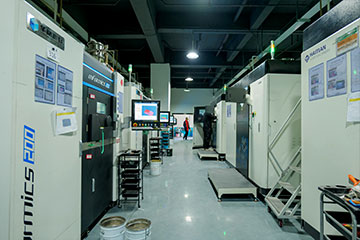
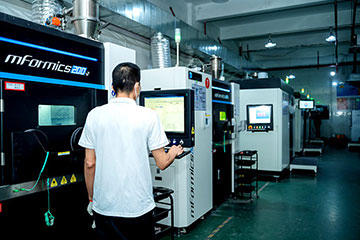
4. 저희는 33 SLM 금속 3D 프린터, 14 CNC machining tools, 60 플라스틱 3D 프린터, 50 BJ 3D printers (owned by another company in which DT has invested), 그리고 그 숫자는 계속 늘어나고 있습니다.
5. We are a source factory for many global 3D printing service providers.
왜 저희를 선택해야 할까요??
- We have manufactured numerous pure cooper and cooper alloy thermal management components via 3D printing using copper and copper alloys for clients all over the world.
- 당사는 다음과 같은 서비스를 제공합니다. 자체 생산 with 33 high-end industrial SLM metal 3D printers, 14 CNC machines and 50 industrial BJ 3D printers (Owned by another factory in which we have an investment).
- 신규 고객을 위한 특별 혜택
- SLM 금속 프린팅이 바로 저희의 강점입니다. 저희는 33 프리미엄 SLM 금속 3D 프린터, 대부분의 가격은 약 $150,000 각, 그리고 저희 차량 대수는 여전히 늘어나고 있습니다.
- 최소 주문 수량(MOQ) 없음 (최소 주문 수량) 필수. 단 한 건의 콘텐츠라도 고객님께 맞춰 맞춤 제작해 드립니다..
문의 사항이 있으시면 언제든지 연락해 주십시오..
최소 주문 수량(MOQ)은 없습니다. (최소 주문 수량) 여기까지. 단 한 건의 콘텐츠라도 고객님께 맞춰 맞춤 제작해 드립니다..
상담에 오신 것을 환영합니다.