

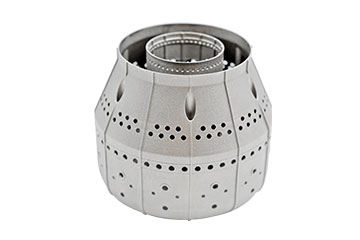
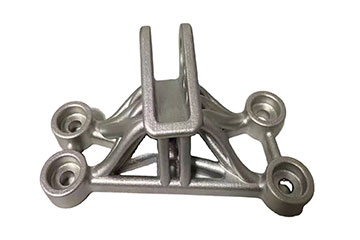
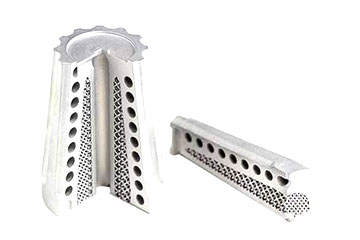
SLM Metal 3D Printing Technology Specifications
SLM (Selektiv lasersmeltning) Material Properties and Applications
| Metal 3D Printing Technology | Material Type | Abbreviation | Material Status | Fælles efterbehandling | Toleranceområde | Processing Advantages | Processing Disadvantages | Application Fields | Maximum Build Size |
|---|---|---|---|---|---|---|---|---|---|
| SLM | Aluminiumslegering | 6061/Alsi10mg/7075 | Metal powder | Sandblasting, Anodized Matte Black, Polering, Electroplating, Passivation, Spray Painting/Powder Coating | ±0.1%—±0.3% | Lightweight material, fast heat dissipation, good electrical and thermal conductivity | Support removal is troublesome after printing, rough surface, secondary processing required for high precision requirements | Prototyper, bilindustrien, medicinsk, digital electronics, legetøj, mekanisk udstyr, rumfart, osv. | 400*400*390mm |
| Rustfrit stål | 316L/304L/17-4/347 | Metal powder | Sandblasting, Polering, Electroplating, Passivation, Spray Painting/Powder Coating | Rust-proof, excellent corrosion resistance, ideal for mirror finish effects | |||||
| Titanium legering | TC4/TA1 | Metal powder | Sandblasting, Polering, Spray Painting/Powder Coating | High strength with low density, good mechanical properties, toughness and corrosion resistance | 420*225*260mm | ||||
| Die Steel | CX(S136) | Metal powder | Sandblasting, Heat Treatment | High toughness and good thermal resistance | Ru overflade, requires secondary processing | Plastic, die-casting, shoe mold and other mold industries | 400*400*390mm | ||
| 1.2709(MS1/H13) | Metal powder | High toughness and good thermal resistance | |||||||
| Nikkel – based Superalloys | GH4169/625/3128 | Metal powder | Hot isostatic pressing (HIP) , solution treatment and aging, machining | Superior high-temperature strength (>800°C) Excellent oxidation/corrosion resistance Tailorable γ′ precipitation hardening High design freedom for complex geometries | High crack sensitivity, Strict parameter control required, Costly post-processing, High powder cost/reactivity | Rumfart, energy, high-temperature corrosion-resistant industrial systems | 300*300*360mm |
| Metal 3D Printing Technology | SLM |
| Material Type | Aluminiumslegering |
| Abbreviation | 6061/Alsi10mg/7075 |
| Material Status | Metal powder |
| Fælles efterbehandling | Sandblasting, Anodized Matte Black, Polering, Electroplating, Passivation, Spray Painting/Powder Coating |
| Toleranceområde | ±0.1%—±0.3% |
| Processing Advantages | Lightweight material, fast heat dissipation, good electrical and thermal conductivity |
| Processing Disadvantages | Support removal is troublesome after printing, rough surface, secondary processing required for high precision requirements |
| Application Fields | Prototyper, bilindustrien, medicinsk, digital electronics, legetøj, mekanisk udstyr, rumfart, osv. |
| Maximum Build Size | 400*400*390mm |
| Metal 3D Printing Technology | SLM |
| Material Type | Rustfrit stål |
| Abbreviation | 316L/304L/17-4/347 |
| Material Status | Metal powder |
| Fælles efterbehandling | Sandblasting, Polering, Electroplating, Passivation, Spray Painting/Powder Coating |
| Toleranceområde | ±0.1%—±0.3% |
| Processing Advantages | Rust-proof, excellent corrosion resistance, ideal for mirror finish effects |
| Processing Disadvantages | Support removal is troublesome after printing, rough surface, secondary processing required for high precision requirements |
| Application Fields | Prototyper, bilindustrien, medicinsk, digital electronics, legetøj, mekanisk udstyr, rumfart, osv. |
| Maximum Build Size | 400*400*390mm |
| Metal 3D Printing Technology | SLM |
| Material Type | Titanium legering |
| Abbreviation | TC4/TA1 |
| Material Status | Metal powder |
| Fælles efterbehandling | Sandblasting, Polering, Spray Painting/Powder Coating |
| Toleranceområde | ±0.1%—±0.3% |
| Processing Advantages | High strength with low density, good mechanical properties, toughness and corrosion resistance |
| Processing Disadvantages | Support removal is troublesome after printing, rough surface, secondary processing required for high precision requirements |
| Application Fields | Prototyper, bilindustrien, medicinsk, digital electronics, legetøj, mekanisk udstyr, rumfart, osv. |
| Maximum Build Size | 420*225*260mm |
| Metal 3D Printing Technology | SLM |
| Material Type | Die Steel |
| Abbreviation | CX(S136) |
| Material Status | Metal powder |
| Fælles efterbehandling | Sandblasting, Heat Treatment |
| Toleranceområde | ±0.1%—±0.3% |
| Processing Advantages | High toughness and good thermal resistance |
| Processing Disadvantages | Ru overflade, requires secondary processing |
| Application Fields | Plastic, die-casting, shoe mold and other mold industries |
| Maximum Build Size | 400*400*390mm |
| Metal 3D Printing Technology | SLM |
| Material Type | Die Steel |
| Abbreviation | 1.2709(MS1/H13) |
| Material Status | Metal powder |
| Fælles efterbehandling | Sandblasting, Heat Treatment |
| Toleranceområde | ±0.1%—±0.3% |
| Processing Advantages | High toughness and good thermal resistance |
| Processing Disadvantages | Ru overflade, requires secondary processing |
| Application Fields | Plastic, die-casting, shoe mold and other mold industries |
| Maximum Build Size | 400*400*390mm |
| Metal 3D Printing Technology | SLM |
| Material Type | Nikkel – based Superalloys |
| Abbreviation | GH4169/625/3128 |
| Material Status | Metal powder |
| Fælles efterbehandling | Hot isostatic pressing (HIP) , solution treatment and aging, machining |
| Toleranceområde | ±0.1%—±0.3% |
| Processing Advantages | Superior high-temperature strength (>800°C) Excellent oxidation/corrosion resistance Tailorable γ′ precipitation hardening High design freedom for complex geometries |
| Processing Disadvantages | High crack sensitivity, Strict parameter control required, Costly post-processing, High powder cost/reactivity |
| Application Fields | Rumfart, energy, high-temperature corrosion-resistant industrial systems |
| Maximum Build Size | 300*300*360mm |
Friendly Reminder from DT
jeg. The Metal 3D Printing Materials commonly used for SLM in DT
- Aluminiumslegering (AlSi10Mg)
- Rustfrit stål (316L)
- Die Steel (CX, 1.2709)
- Titanium legering (TC4)
II. Printing Precautions from DT
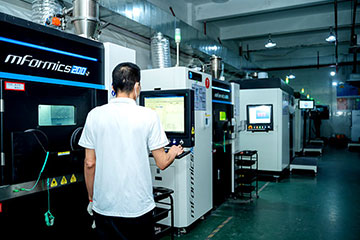
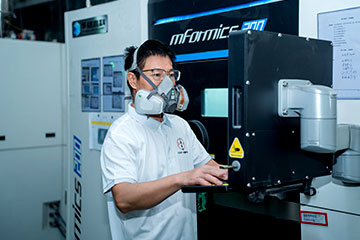
- DT Industrial 3D Printers: The power is 500W (dual-laser).
- Printing Layer Thickness: 0.03mm, 0.06mm, 0.09mm.
- Natural Surface Features: Pitting (surface roughness: approx. Ra 16).
- Placement Direction: Generally, flat placement or 45° inclined placement delivers the best print quality.
- Printing Tolerance: For products with a size of 50mm or less, the printing tolerance is approximately ±0.2mm. For larger products, the printing tolerance will be determined based on the drawings.
- Note: Wall thickness, groove width, groove depth, structural clearance, and font size that are less than 0.5mm cannot be guaranteed to be printable.
- Note: The hole diameter should not be less than 0.8mm. Generally, the hole diameter will shrink by approximately 0.2mm after printing.
- Note: For threads (including internal and external threads), tapping is recommended rather than direct printing.
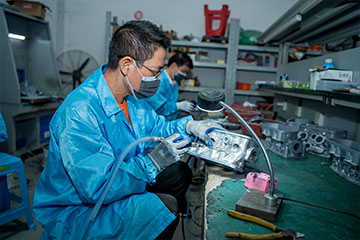
- Post-processing of Metal 3D Printing Materials: Similar to traditional materials, these materials can undergo further processing.
- For Assembled Parts: Please be reminded to provide the assembly drawings. The parts will be assembled before delivery. If no such reminder is provided, we will not be responsible for assembly.
- Note: For products with assembly clearance positions, a unilateral allowance of 0.15mm must be reserved.
- Note: For parts with high-precision local assembly requirements (such as bearing holes, diameters, or flat assembly positions), machining allowances must be reserved in advance, and the parts should then be matched through secondary finishing.
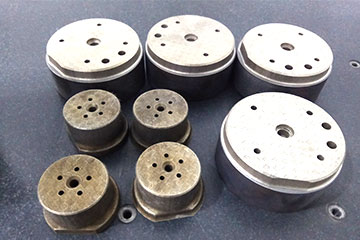
- Note: After high-temperature sintering in metal 3D printing, some slender parts, thin-walled parts, and shell-like structures may deform. The advantage of metal 3D printing lies in manufacturing parts with complex structures, while its accuracy and surface finish are inferior to those of CNC machining.
- Note: For products requiring secondary processing, vi must confirm with the customer whether the 3D drawing has included allowances. If allowances have not been included, we must communicate with the engineering department or make a note on the production order: Appropriate allowances for secondary processing must be reserved before printing.