Aller au contenu
  • Témoignages
  • Visite de l'usine
  • French
    • English
    • Japanese
    • French
    • German
    • Italian
    • Spanish
    • Swedish
    • Irish
    • Dutch
    • Portuguese
    • Korean
    • Greek
    • Turkish
    • Vietnamese
    • Thai
    • Indonesian
    • Malay
    • Danish
    • Finnish
    • Hindi
    • Hebrew
    • Icelandic
    • Romanian
    • Russian
Nouveau logo de DT 3D Printing

Service d'impression 3D DT

Fabricant OEM – SLM (Impression 3D métallique) Spécialistes

  • Accueil
  • 3Service d'impression
    • SLM (Fusion sélective par laser)
    • SLA (Stéréolithographie)
    • SLS (Frittage sélectif par laser)
    • DLP (Digital Light Processing)
    • FDM (Modélisation par dépôt fondu)
    • MJF (Multi Jet Fusion)
    • BJ (Binder Jetting)
  • Usinage CNC
    • Tournage CNC
    • Fraisage CNC
    • Post-traitement
  • Guide des supports
        • Matériaux d'impression 3D en plastique
          • Résine (ABS-Like, PC-Like)
          • Nylon (PA6, PA12, TPU)
          • Red Wax
          • PLA, TPU, PA, Fibre de carbone, PC
        • Matériaux d'impression 3D métalliques
          • Alliage d'aluminium (6061 / AlSi10Mg / 7075)
          • Acier inoxydable (316L / 304L / 17-4 / 347)
          • Alliage de titane (TC4 / TA1)
          • Acier à moules (S136/HB/CX/1.2709)
          • Alliage riche en nickel (GH4169 / GH3128 / INCONEL625)
          • Alliage de laiton (CuCrZr / Tin Bronze)
        • Matériaux métalliques pour l'usinage CNC
          • Aluminium / Alloy / Titane / Nickel
          • Acier inoxydable / Acier à outils / Acier allié
          • Acier au carbone / Laiton / Cuivre / Bronze
        • Matériaux plastiques pour l'usinage CNC
          • ABS / Acrylique / Delrin / Nylon / PP
          • HDPE / PE / PC / Île-du-Prince-Édouard / ULTEM
          • PEEK / POM / TECAFORMAH
  • Service client
        • Solutions sectorielles
          • Mold / Moisissure
          • Aerospace & UAV
          • Pièces automobiles
          • Télécommunications
          • Électronique grand public
          • Secteur médical
          • Robotics & Automation
          • Artisanat / Cadeaux
        • Studio de design
          • Modification gratuite de dessins 3D
          • Dessin 3D gratuit (disponibilité limitée)
        • Processus de commande
          • Retour & Politique de remboursement
          • Politique d'expédition
          • Foire aux questions (FAQ)
        • Blog
          • Vidéo de visite d'usine
  • Témoignages
  • À propos de DT
  • Contacte-nous

DT SLM Metal : liste d'applications et témoignages de réussite des moules d'impression 3D

Mis à jour le 30/12/2025 Par DT 3dprint

Detailed List of Mold Types That Can Be Printed by the DT SLM 3D Printer
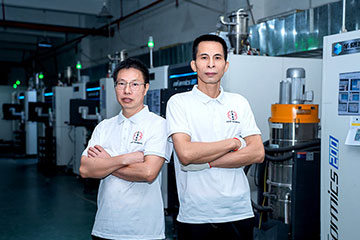
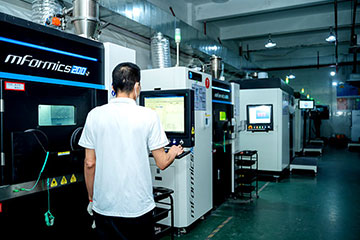
DT's Workers in Front of Our SLM Metal 3D Printers
Les employés de DT devant nos imprimantes 3D métalliques SLM
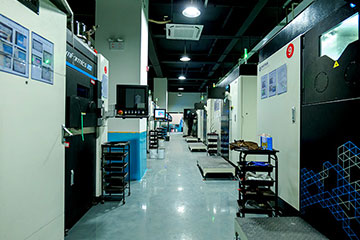
Les imprimantes 3D industrielles SLM pour le métal chez DT Factory
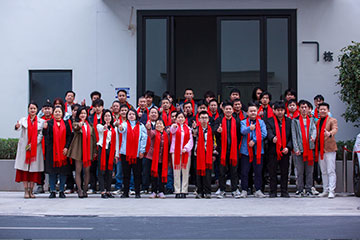
Équipe principale de DT 3D Printing Factory
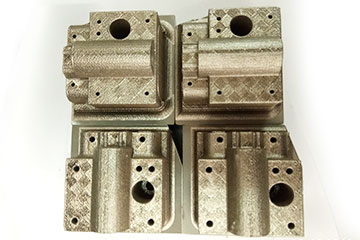
Metal 3D-printed hydraulic valve block mold (fluid control element mold)
3D-printed metal mold for injection molding sprue bushing
Metal 3D-printed dental molds made by DT's SLM printers
Metal 3D-printed dental molds made by DT’s SLM printers
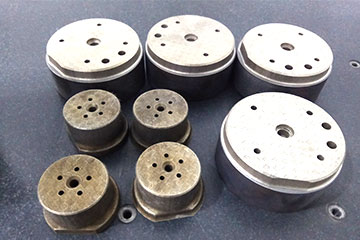
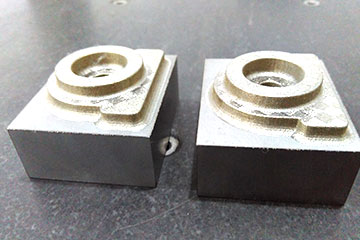
Metal 3D-printed precision mold components made by DT's SLM printers
Metal 3D-printed precision mold components made by DT’s SLM printers
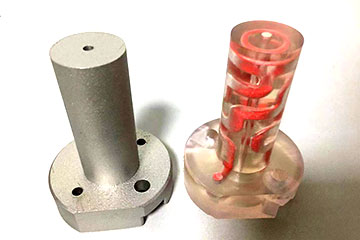
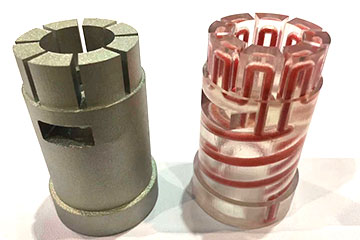
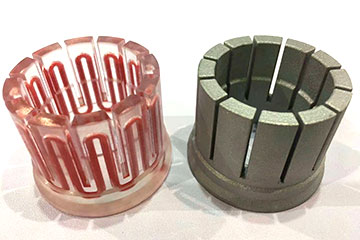
3D-printed injection mold insert (with conformal cooling channels)
Metal 3D-printed injection mold insert (with conformal cooling channels)
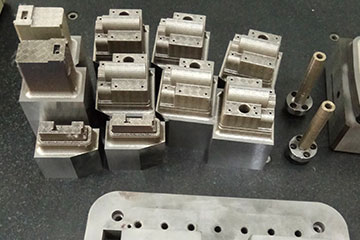
Metal 3D-printed injection mold core components made by DT's SLM printers
Metal 3D-printed injection mold core components made by DT’s SLM printers
Metal 3D-printed mold inserts (mold core components) made by DT's SLM printers
Metal 3D-printed mold inserts (mold core components) made by DT’s SLM printers
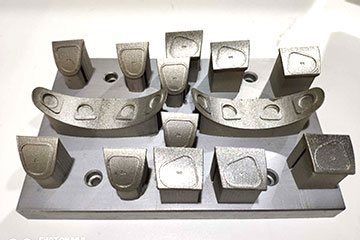
Metal 3D-printed injection mold cavity inserts made by DT's SLM printers
Metal 3D-printed injection mold cavity inserts made by DT’s SLM printers
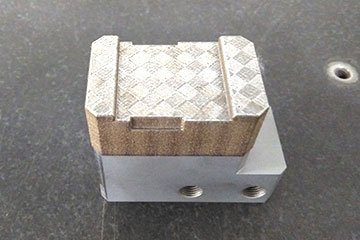
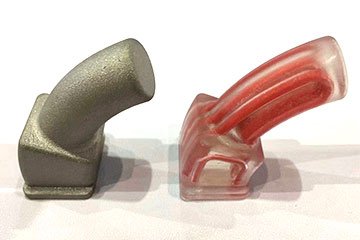
Metal 3D-printed injection mold with elbow core-pulling mechanism
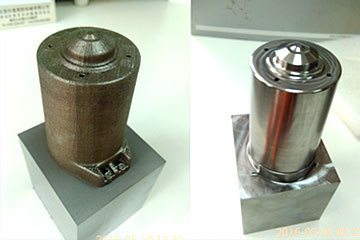
Metal 3D-printed injection mold core blanks and finished products
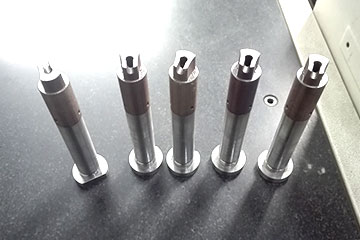
Metal 3D-printed injection mold insert pin (core) components
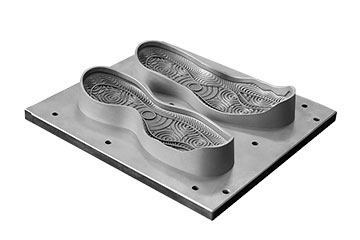
Shoe Mold Printed by DT SLM 3D Printers
The High-Precision Industrial SLS 3D Printers in DT Factory
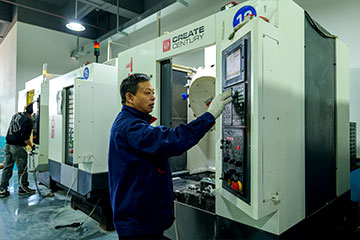
Our colleague is operating a CNC machine
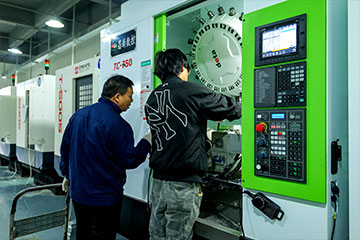
Our colleagues are operating a CNC machine
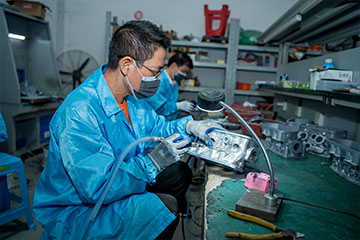
Ce collègue de notre atelier de post-traitement travaille avec attention

Detailed List of Mold Types That Can Be Printed by the DT SLM 3D Printer
Metal 3D printing technology, with its remarkable advantages, has been widely applied in various mold manufacturing processes.

The following is a detailed list of mold types that can be printed by the DT SLM 3D printer:

I. Injection Molds

  1. Conformal Cooling Injection Molds
    With metal 3D printing technology, cooling channels that conform to the cavity surface can be directly generated, increasing the cooling efficiency by over 30% and shortening the plastic part molding cycle by 20% – 40%. These molds are especially suitable for products with high requirements for cooling uniformity, such as automotive interior parts and electronic enclosures.
  2. Precision Optical Injection Molds
    Optical lens molds printed with DT’s high – polished mold steel (polishing grade A1) can achieve a surface roughness of less than Ra0.05μm. They can meet optical – grade accuracy requirements without subsequent mirror polishing and have been used in the manufacturing of mobile phone camera lenses and medical endoscope lenses.
  3. Insert – type Injection Molds
    Through the “grafting process”, complex 3D – printed cores are combined with traditionally machined mold bases. For example, in the mold for the transmission housing of Toyota cars, laser cladding technology is used to print conformal cooling channel inserts on an H13 steel substrate, extending the mold life to four times that of traditional processes.

II. Die – casting Molds

  1. High – temperature Hot – working Die – casting Molds
    DT hot – working die steel specifically designed for die – casting (impact toughness of 35J) can withstand temperatures above 600°C and the erosion of molten metal. Combined with a heatable substrate (pre – heated to 200°C) and multi – laser synchronous printing technology, a large die – casting mold insert with dimensions of 515×485×206mm has been successfully manufactured, increasing the thermal fatigue life by 50%.
  2. Thin – wall Die – casting Molds
    Using the 3D – printing unsupported structure technology, complex cooling channels with a thickness of 0.8mm can be directly manufactured, solving the heat dissipation problem of thin – wall molds that is difficult to achieve with traditional processing. This has been applied to the die – casting molds for new energy vehicle battery housings.

III. Forging Molds

  1. Isothermal Forging Molds
    Isothermal forging molds printed with H13 steel. By optimizing the internal reticulated rib structure, while ensuring strength, the weight is reduced by 25%, which is suitable for the precision forging of aerospace titanium alloy blades.
  2. Precision Forging Molds
    Combining selective laser melting (SLM) and electrical discharge machining (EDM), precision forging molds with a surface roughness of Ra0.8μm can be manufactured, used for the near – net – shape or net – shape forming of complex forgings such as gears and turbine discs with less or no machining.

IV. Special – forming Molds

  1. Blow Molds
    Blow molds printed with stainless – steel powder are 40% lighter in weight than traditional aluminum molds. With the conformal cooling channel design, the cooling efficiency is increased by 30%. They have been used in the manufacturing of automotive fuel tanks and industrial containers.
  2. Paper – plastic Hot – pressing Molds
    Using the breathable steel printing process, micron – sized pores (pore diameter 5 – 10μm) are formed on the mold surface, and heating elements are embedded on the back. This can enable the rapid evaporation of moisture during the hot – pressing forming of paper – plastic products, reducing product bubble defects.
  3. Foaming Molds
    The print – free – reduction molds developed for automotive interior foaming parts. Taking advantage of the wear – resistant characteristics of stainless steel, they can be used after simple surface treatment. The mold development cycle is shortened by 60% and the cost is reduced by 50%.
  4. Silicone Molds
    3D – printed silicone injection molds can achieve a fine texture replication of 0.1mm, such as the anti – slip patterns of mobile phone cases and the scale markings of medical silicone catheters. The molding accuracy reaches ±0.05mm.

V. Moules de prototypage rapide

  1. Direct Metal – printed Prototype Molds
    Rapid prototype molds directly printed with superalloys (such as GH4169) can be completed from design to trial – mold within 48 heures, which is suitable for the development of new consumer electronics products. The trial – mold cost is reduced by 70%.
  2. Sand – casting Molds
    Combined with binder jetting technology, complex sand – casting molds can be quickly manufactured. For example, a sand – type 3D printer can produce large – scale casting molds for heavy – duty equipment, shortening the delivery cycle from 6 weeks to 2 weeks and reducing the cost by 40%.

VI. Mold Repair and Modification

  1. Local Repair Molds
    Laser cladding technology is used to repair the worn cavity of injection molds. For example, a certain automobile factory uses 17 – 4PH stainless steel to repair the positioning pins of stamping molds, with a hardness of 42HRC and an extended service life of 25%.
  2. Modular Modification Molds
    By replacing local modules (such as cores and sliders) of the mold through 3D printing, mold modification can be completed within 3 days. For example, the rapid switch of mobile phone case molds from straight – to – curved surfaces, reducing the modification cost by 80%.

VII. Emerging Application Fields

  1. Biomedical Molds
    Customized surgical guide plate molds for dental implants printed with titanium alloy. Through CT data reverse modeling, they can achieve precise matching with the patient’s alveolar bone, with a surgical accuracy of ±0.1mm.
  2. Glass – forming Molds
    Glassware molds printed with high – chromium stainless steel. After surface PVD coating treatment (hardness 2000HV), they can achieve more than 100,000 glass pressings, with a three – fold improvement in anti – sticking performance.

Technical Advantages and Material Innovations

Material Breakthrough: DT offers a range of metal materials (such as high – polished steel, high – thermal – conductivity steel, hot – working die steel) for your selection, and provides various certification reports required by foreign customers (such as CE, FDA/UL, etc.). Among them, the impact toughness of DT’s hot – working die steel is twice that of traditional H13 steel, providing a new option for high – temperature mold applications.

Equipment Upgrade: DT’s SLM metal 3D printer adopts a 2/4 – laser system, with a forming size of up to 400400390mm, supporting various materials such as die steel, aluminum alloy (AlSi10Mg), stainless steel (316L, 17 – 4PH), and titanium alloy (Ti6Al4V).

Process Optimization: The “zero – point positioning” technology realizes seamless connection between printed parts and post – processing equipment, with a positioning accuracy of ±0.02mm, reducing clamping errors. It has been applied in the mass production of automotive molds.

Solutions industrielles et témoignages de réussite

Post navigation

Article précédent: Témoignages de réussite et impression 3D métallique Liste des applications pour les moules et composants automobiles
Article suivant: Impression 3D métallique Aérospatiale & Liste des applications des pièces et composants pour drones et Témoignages de réussite DT

Produits associés

Impression 3D métallique Aérospatiale & Liste des applications des pièces et composants pour drones et Témoignages de réussite DT Solutions industrielles et témoignages de réussite
3Liste des applications d'impression 3D pour les pièces et composants du secteur médical et exemples de réussite DT Solutions industrielles et témoignages de réussite
3Liste des applications d'impression 3D pour les pièces et composants d'électronique grand public et exemples de réussite DT Solutions industrielles et témoignages de réussite
Témoignages de réussite et impression 3D métallique Liste des applications pour les moules et composants automobiles Solutions industrielles et témoignages de réussite
3D Impression robotique & Liste des applications des pièces et composants pour l'industrie de l'automatisation et exemples de réussite DT Solutions industrielles et témoignages de réussite
3Liste des applications d'impression de pièces et composants pour les télécommunications et exemples de réussite DT Solutions industrielles et témoignages de réussite

Service client
FAQ
Modification gratuite de dessins 3D
Dessin 3D personnalisé gratuit (Disponibilité limitée)

Mentions légales
Politique d'expédition
Politique de retour et de remboursement
Déclaration de confidentialité
Conditions d'utilisation
Mentions légales
Avertissement
Politique en matière de cookies

À propos de nous
Vidéo de visite d'usine
Blog
Coopération
À propos de DT
Contact

YouTube Twitter TikTok Facebook Instagram Quora LinkedIn Pinterest Reddit Moyen


Copyright © 2025 DT 3D Printing
Tous droits réservés.
Propulsé par PressBook Grid Blogs Theme


Gérer le consentement aux cookies
Pour offrir la meilleure expérience possible, Nous utilisons des technologies telles que les cookies pour stocker et/ou accéder aux informations de l'appareil. En acceptant ces technologies, tu nous permets de traiter des données telles que ton comportement de navigation ou des identifiants uniques sur ce site. Refus de consentement ou retrait du consentement, peut nuire à certaines fonctionnalités.
Fonctionnel Toujours actif
Le stockage ou l'accès technique est strictement nécessaire à la finalité légitime de permettre l'utilisation d'un service spécifique explicitement demandé par l'abonné ou l'utilisateur, ou dans le seul but d'assurer la transmission d'une communication sur un réseau de communications électroniques.
Préférences
Le stockage ou l'accès technique est nécessaire à des fins légitimes de stockage des préférences qui ne sont pas demandées par l'abonné ou l'utilisateur.
Statistiques
Le stockage ou l'accès technique utilisé exclusivement à des fins statistiques. Le stockage ou l'accès technique utilisé exclusivement à des fins statistiques anonymes. Sans mandat, respect volontaire de la part de ton fournisseur d'accès à Internet, ou des enregistrements supplémentaires provenant d'un tiers, Les informations stockées ou récupérées à cette seule fin ne peuvent généralement pas être utilisées pour t'identifier.
Marketing
Le stockage ou l'accès technique est nécessaire pour créer des profils d'utilisateurs afin d'envoyer de la publicité, ou pour suivre l'utilisateur sur un site web ou sur plusieurs sites web à des fins marketing similaires.
  • Gérer les options
  • Gérer les services
  • Gérer {vendor_count} fournisseurs
  • En savoir plus sur ces objectifs
Afficher les préférences
  • {Titre}
  • {Titre}
  • {Titre}
Gérer le consentement aux cookies
Pour offrir la meilleure expérience possible, Nous utilisons des technologies telles que les cookies pour stocker et/ou accéder aux informations de l'appareil. En acceptant ces technologies, tu nous permets de traiter des données telles que ton comportement de navigation ou des identifiants uniques sur ce site. Refus de consentement ou retrait du consentement, peut nuire à certaines fonctionnalités.
Fonctionnel Toujours actif
Le stockage ou l'accès technique est strictement nécessaire à la finalité légitime de permettre l'utilisation d'un service spécifique explicitement demandé par l'abonné ou l'utilisateur, ou dans le seul but d'assurer la transmission d'une communication sur un réseau de communications électroniques.
Préférences
Le stockage ou l'accès technique est nécessaire à des fins légitimes de stockage des préférences qui ne sont pas demandées par l'abonné ou l'utilisateur.
Statistiques
Le stockage ou l'accès technique utilisé exclusivement à des fins statistiques. Le stockage ou l'accès technique utilisé exclusivement à des fins statistiques anonymes. Sans mandat, respect volontaire de la part de ton fournisseur d'accès à Internet, ou des enregistrements supplémentaires provenant d'un tiers, Les informations stockées ou récupérées à cette seule fin ne peuvent généralement pas être utilisées pour t'identifier.
Marketing
Le stockage ou l'accès technique est nécessaire pour créer des profils d'utilisateurs afin d'envoyer de la publicité, ou pour suivre l'utilisateur sur un site web ou sur plusieurs sites web à des fins marketing similaires.
  • Gérer les options
  • Gérer les services
  • Gérer {vendor_count} fournisseurs
  • En savoir plus sur ces objectifs
Afficher les préférences
  • {Titre}
  • {Titre}
  • {Titre}